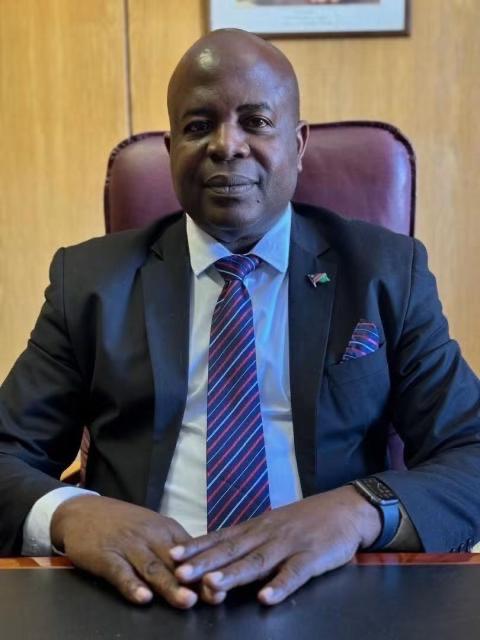
Prime minister Elijah Ngurare has urged young people to come up with new ideas to develop the country.
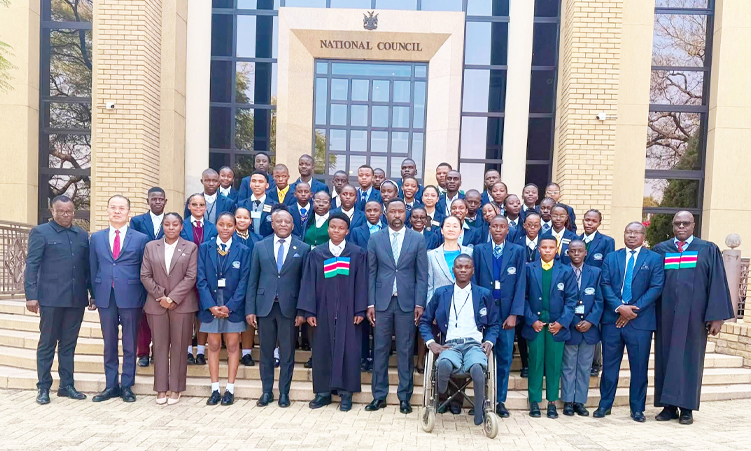
Ngurare made the remarks yesterday while opening the first session of the fourth Junior National Council in Windhoek.
He told junior councillors from the country’s 14 regions that they were not visitors to parliament, but participants in Namibia’s parliamentary democracy.
He also challenged the junior councillors to become problem-solvers and consider innovative ways of protecting Namibia’s scarce water resources.
“Our country needs young people who do not only identify what is wrong, but who are prepared to help imagine what can be done differently,” he said.
He said young people must be given meaningful opportunities to speak on issues affecting them, including education, job opportunities, climate change, clean water and sanitation.
“You are citizens of Namibia now,” Ngurare said.
This year’s Junior National Council theme is ‘Towards Universal Access to Water, Sanitation, Hygiene for Every Namibian Child’.
Ngurare said inadequate access to water, sanitation and hygiene affects children’s health, education, dignity and future opportunities.
He said the issue goes beyond infrastructure such as boreholes, pipes and toilets, and concerns the kind of society Namibia wants to build.
Young Namibians are urged to stop waiting to inherit the country’s future as they are already citizens with a responsibility to shape Namibia.
Ngurare said the sixth National Development Plan targets increasing household access to potable water from 90.75% to 94.8% by 2030, while basic sanitation access is expected to rise from 57.15% to 64.2%.
He acknowledged that gaps remain, particularly in communities affected by drought, distance, infrastructure constraints and population growth.
“The government, therefore, carries a continuing responsibility to plan, invest and implement with urgency,” he said.
However, Ngurare said the government cannot achieve universal access alone and called for cooperation between the government, local authorities, communities, development partners, the private sector and civil society.
Ngurare said leadership was not about titles, but service, responsibility and integrity.
“A good leader listens. A good leader reads. A good leader asks questions,” he said.
Meanwhile, United Nations Children’s Fund deputy country representative Toshiko Takahashi, who spoke on behalf of country representative Samuel Ocran, yesterday said Namibia has made progress in access to basic water services, with 93.9% of Namibians having access.
However, regional disparities remain, with access at 99.8% in Khomas, 79.8% in ||Kharas and 77.3% in Kunene.
“Sanitation remains a major challenge, with only 66.6% having access to improved sanitation, while 47.2% still practise open defecation,” she said.
Newly elected Junior National Council chairperson Fritz Hangue has pledged to lead with integrity and impartiality.
“I see this position as an opportunity to help ensure that the voices of young Namibians are not merely heard, but taken seriously,” Hangue says.
He urges members to work together, saying the council should not only discuss Namibia’s future, but begin shaping it.