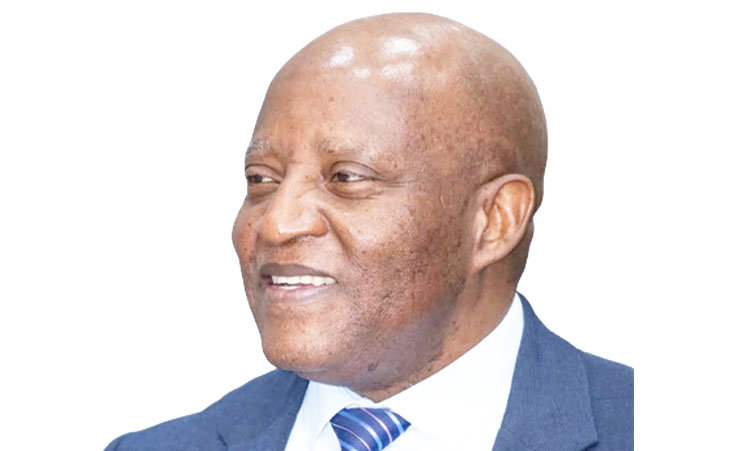
Prime minister Elijah Ngurare says the government will revive ‘The Prime Minister’s Question Time’ television programme to strengthen public engagement and improve accountability.
Ngurare made the announcement on social media yesterday, saying the initiative forms part of the government’s efforts to improve stakeholder engagement.
He has also announced plans to establish a separate platform where social media and community activists from across the country will periodically meet with the prime minister to discuss governance issues outlined in the sixth National Development Plan (NDP6).
Ngurare says governance is a collective responsibility, adding that public views and suggestions will be valuable to the work of the eighth administration.
He adds that the national interest, security and the welfare of Namibians must remain the guiding principles of these engagements.
‘The Prime Minister’s Question Time’ was previously broadcast on the Namibian Broadcasting Corporation (NBC) as a bi-weekly live call-in programme that allowed citizens from across the country to question the prime minister directly on government policies and service delivery.
The programme was discontinued in early 2014 after then prime minister Hage Geingob asked NBC to remove it to avoid perceptions that he was using the state broadcaster as a personal political campaign platform.
Although it briefly returned in late 2020, it did not continue as a regular programme.
Office of the Prime Minister spokesperson Shingo Mutambo says the revived programme will largely follow its previous format but will be pre-recorded rather than broadcast live.
“We do not have a commencement date yet, but it will be announced in due course,” Mutambo says, adding there will be no live call-ins.
Political commentator Dobson Kwala welcomes the decision but says the programme should go beyond defending government ministries.
He says the prime minister must openly acknowledge poor performance where it exists and explain delays in service delivery instead of offering generic responses.
“He must call out any ministry that is underperforming without withholding information as to why they are not performing or why services were delayed. Gone are the days of brushing off issues with convincing answers,” Kwala says.
He says the programme should become a permanent accountability mechanism and not fade away after a short period.
Kwala also questions the decision to pre-record the programme instead of allowing live public participation.
He says if live calls are not possible, the government should conduct public consultations beforehand to gather issues requiring responses.
He says restoring public trust will depend on the government’s willingness to answer difficult questions honestly, adding that the platform could help clarify recurring concerns over issues such as electricity connections, borehole allocations and other public services.