



DESPITE struggling to pay bulk water and electricity suppliers, the Bethanie Village Council has undertaken a project to provide its residents with affordable housing.
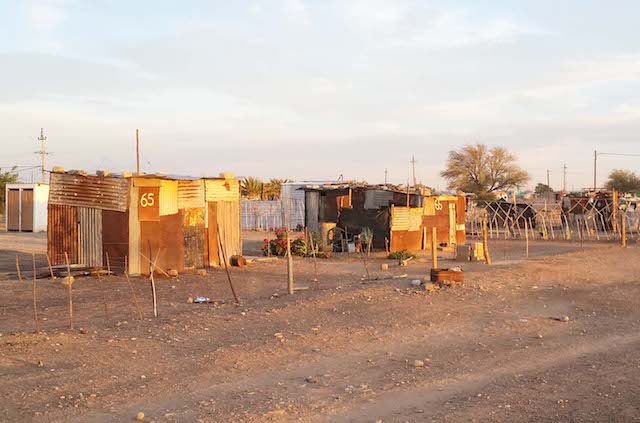
The majority of Bethanie residents, a settlement in the //Kharas region, are living in zinc shacks.
The village council’s chief executive officer, Hendrik Gaobaeb, told The Namibian in an interview on Friday that the council strives to restore dignity through the House for Hope project that was started early this year.
He said the need for decent housing at the village had necessitated council to initiate, in collaboration with a commercial farmer in the Bethanie district, Jorg Gaugler, a housing project. Through the project, the council says it is targeting 100 houses within the next five years.
Two one-bedroom houses, he revealed, had already been constructed at less than N$40 000 at the village’s township as a pilot project.
The CEO explained that the beneficiaries of these houses are only required to make a contribution of N$10 000 to cover labour and cement costs, with the remaining costs being co-funded by council and funds raised by Gaugler.
He said under the project, four more houses are currently under construction at the village, expected to be completed by end of November.
“The government can copy our pro-poor housing concept to address the housing backlog countrywide since it appears that the state-funded Mass Housing and Built together Housing programmes have failed,” he said in jest.
Among those who have already benefited from the House for Hope initiative is 80-year-old Lucia Windstaan. During the handover of her house in June this year, Windstaan was quoted by Nampa as saying “I never thought at 80 years [old] I would own a brick house”.
Expressing gratitude for the initiative, Windstaan called for the project to continue for the benefit of those in need of decent housing.
Gaobaeb revealed that the council currently owes NamPower N$7 million in electricity bills while the NamWater debt stands at N$300 000.
“With the little income we generate due to the high unemployment rate at the village, it is very difficult to pay the water and electricity bulk suppliers bills,” he said.
He said the council continues to ensure benefits from projects it initiates through temporary job opportunities, and he revealed plans to start a gardening project soon.
“We have budgeted N$100 000 for the project, and only await approval from the urban and rural development ministry to start with the implementation,” he stated.
According to him, the water bill burden has been lessened since the council started supplying water from boreholes to residents.
He revealed that council had entered an agreement with NamPower to pay at least N$50 000 bi-weekly on the outstanding electricity bill to avoid power disconnections to the village.
“We are trying our best to pay-off the electricity arrears, but the paltry amounts we pay are being swallowed by interest charges on the account,” he said.