Health experts warn new HIV preventive jab does not protect against other STIs, pregnancy
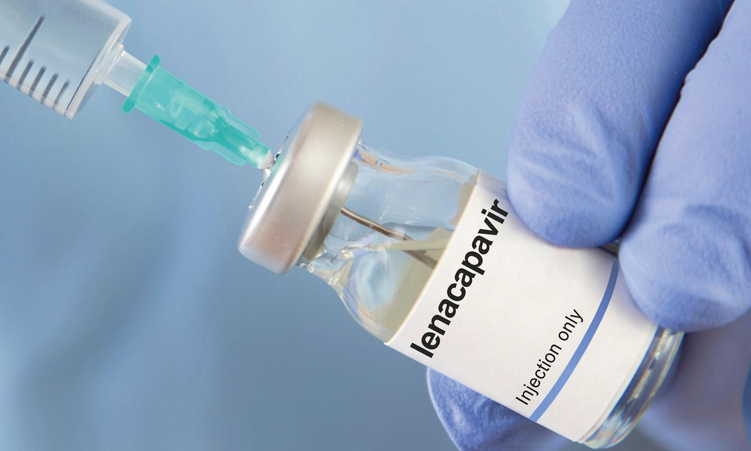
Health experts are welcoming the registration of a twice-yearly injection to prevent HIV, while warning that condom use is still crucial to prevent other infections.
They say while the new Lenacapavir injection is an important addition to Namibia’s HIV-AIDS prevention toolkit, it is not a replacement for other preventive measures.
Dr Bernard Haufiku says the registration of Lenacapavir is a step in the right direction and a long-overdue intervention for those most affected by HIV-AIDS.
“It should be welcomed by all as additional ammunition in our collective national response to HIV in Namibia,” he says.
“These include woman sex workers, people who use drugs, those who are incarcerated, the transgender community, lesbians and gay men, or men who have sex with men. One may add truck drivers and young women and adolescent girls to this list.
“Adolescent girls and young women remain at heightened risk for acquiring HIV because of many factors, including cultural practices,” he says.
Haufiku says these high-risk groups should be prioritised for access to long-acting injectables like Lenacapavir.
“No person who is in need of prophylaxis should be denied access to this proven preventive intervention.
It must be accessible at both private and public health facilities without any discrimination based on affordability or other parameters,” he says.
Haufiku recommends community-level delivery to reduce the strain on public health facilities.
‘GAME CHANGER’
Dr David Uirab says the registration of the new injection is a game changer that gives healthcare providers hope to reduce new HIV infections.
“We are elated indeed and support the efforts by the World Health Organisation and our government to make it accessible to the widest range of people,” he says.
Despite its promise, Uirab stresses that Lenacapavir is strictly an anti-HIV medication.
“It does not prevent the transmission of other sexually transmitted diseases. And it does not prevent unwanted pregnancies.
The continued use of condoms and other preventive measures must continue to be observed,” he says.
Dr Tuhafeni Nakale cautions that as a new medication, some individuals may react to or be allergic to it, and its long-term effects are yet to be fully determined.
“Every medication has side effects, and some patients might not tolerate it due to these reactions,” he says.
Nakale says common side effects include injection site reactions such as pain, swelling, nodules, redness, itching, bruising, and hardening of the skin.
Some patients may also experience nausea, vomiting, diarrhoea, and headaches.
“Liver disease and interactions with other medications are also important factors that need to be considered,” he says.
REDUCING THE PRICE
The Ministry of Health and Social Services has confirmed that the injection, which was approved in Namibia last week, requires only two doses per year.
Ministry spokesperson Walters Kamaya says Namibia is among the first African countries to register this next-generation pre-exposure prophylaxis (PrEP) option, alongside South Africa and Zambia.
Kamaya says the long-acting nature of Lenacapavir makes it easier for people to adhere to prevention schedules compared to daily oral PrEP.
“It should be rare for somebody to default, because you only need two doses per year,” he says.
Kamaya says negotiations are ongoing to reduce the price so the injection can be integrated into public sector programmes without placing an unsustainable burden on national health resources.
Namibia has achieved the Joint United Nations Programme on HIV-AIDS’ 95-95-95 targets, meaning 95% of people living with HIV know their status, 95% of those diagnosed are on treatment, and 95% of those on treatment have achieved viral suppression.
Despite this progress, the country continues to record new infections, emphasising the importance of comprehensive prevention measures.
Walvis Bay-based HIV activist Bernhard Kamatoto highlights the need for strong community education about HIV-AIDS prevention.
“People don’t always know how to use PrEP or what it is for. We need mobilisation and accurate information to give to communities,” he says.
“Prevention is not only about HIV, but also about protecting ourselves from other risks, including unwanted pregnancies,” he says.
Kamatoto says misinformation and a lack of awareness remain key challenges.
“We need to ensure people understand what each tool does, and that no single intervention can fully protect them,” he says.
“Lenacapavir is a step forward, but condoms and education remain indispensable.”
In an age of information overload, Sunrise is The Namibian’s morning briefing, delivered at 6h00 from Monday to Friday. It offers a curated rundown of the most important stories from the past 24 hours – occasionally with a light, witty touch. It’s an essential way to stay informed. Subscribe and join our newsletter community.

The Namibian uses AI tools to assist with improved quality, accuracy and efficiency, while maintaining editorial oversight and journalistic integrity.
Stay informed with The Namibian – your source for credible journalism. Get in-depth reporting and opinions for
only N$85 a month. Invest in journalism, invest in democracy –
Subscribe Now!