



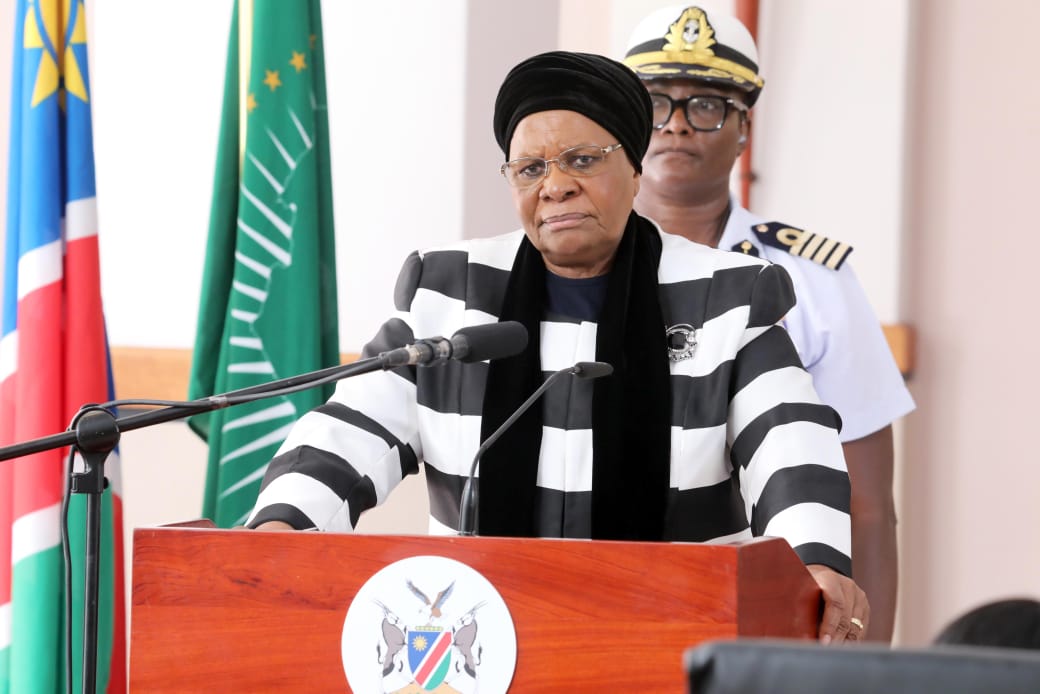
Statement by Netumbo Nandi-Ndaitwah, president of the Republic of Namibia, Supreme Court, Windhoek, 5 February 2026.
___________________________________________________________
Today, we gather at the heart of our constitutional democracy to mark the opening of the 2026 legal year, a moment that calls us not only to ceremony, but to reflection, renewal, and recommitment to the rule of law that binds us together as one Namibian people.
In this solemn and significant space, I reflect on the wisdom and leadership of the late founding president and Father of the Namibian Nation, Sam Shafiishuna Nujoma, who, at the dawn of our independence, recognised the fundamental importance of the separation of powers and championed the establishment of an independent and impartial judiciary.
Through his visionary leadership, Article 78 of the Namibian Constitution enshrined the independence of the judiciary, and in 1990, the Supreme Court of the Republic of Namibia was formally opened. On that historic occasion, president Nujoma affirmed these enduring words:
“This honourable court will interpret laws made by the democratically elected representatives of the Namibian people. This honourable court will interpret laws that reflect the aspirations of the Namibian people”.
These words continue to echo across the generations, reminding us that the law is not an abstract ideal, but a living covenant between the state and its people.
There is an ancient principle, drawn from the earliest traditions of human civilisation, that teaches us that where the law stands firm, society stands strong.
From the earliest codes that sought to bring order and fairness to human conduct, to the enduring belief that justice must always prevail, history reminds us that nations endure not by the strength of their armies or the wealth of their treasuries, but by the trust their people place in the fairness and integrity of their laws.
It is for this reason that we must never allow that trust to erode. For when confidence in the law is lost, uncertainty takes its place, and where uncertainty prevails, peace and progress cannot flourish.
It is therefore with honour and a deep sense of responsibility that I join the judiciary today for the first time since my inauguration as the fifth president of the Republic of Namibia, on 21 March 2025, under the eighth administration. This occasion not only marks the opening of the 2026 legal year but also provides a meaningful opportunity for engagement, dialogue, and mutual understanding, always in a manner that respects and upholds the constitutional independence of the courts. This annual gathering also serves as a moment of reaffirming our unwavering commitment to justice, the rule of law, and the values enshrined in our Constitution. It reminds us of the critical role the judiciary plays in shaping our democratic destiny and in safeguarding the rights and freedoms of every person who calls Namibia home.
I take this opportunity to extend my heartfelt congratulations to chief justice Peter Shivute and deputy chief justice Petrus Damaseb for their leadership, foresight, and administrative stewardship of our judicial system.
Equally, I recognise the dedication, resilience, and tireless service of the esteemed members of the legal profession, our judges, magistrates, prosecutors, and legal practitioners, whose daily work advances access to justice, strengthens constitutional democracy, and sustains peace and social cohesion across our nation. Despite the challenges and constraints that confront our justice system, our judiciary has remained steadfast in its independence, diligent in the administration of justice, and resolute in strengthening public confidence in the rule of law.
The judiciary stands as the moral and constitutional compass of our democracy. Our Constitution, as the supreme law of the land, vests judicial power in the courts, ensuring that justice is administered independently, without fear, favour, or prejudice.
The courts are entrusted with the interpretation and application of the law, the protection of fundamental rights, and the peaceful resolution of disputes. In doing so, they give practical meaning to the promise of equality before the law for every Namibian.
The courts also play a vital role in our national development agenda as articulated in the Sixth National Development Plan, which commits our nation to building a safe and secure country with equitable access to justice and a firm adherence to the rule of law.
Good governance, socio-economic development, and a culture of accountability rest upon the foundation of a strong and effective judiciary. As one of the three co-equal arms of the state, the judiciary must operate free from undue influence, whether from the executive, the legislature, or any other external force.
It is an accepted norm that legal professionals are people of the highest integrity who cannot be compromised, a principle that must be respected at all times.
Any perception that a decision taken by our courts is based on negative influence would be the greatest threat to our democracy and to the protection of our people. We must know that the independence of the judiciary is not a privilege granted by the government, but a constitutional duty owed to the people of Namibia.
At the same time, our democracy is built on the principle of the separation of powers, not as a system of isolation, but as a framework for respectful collaboration in the national interest.
Together, the organs of state must work in harmony to uphold the rule of law, promote economic growth, and advance the shared vision of a prosperous and just Namibia.
Socio-economic progress cannot take root in the absence of peace and justice. Likewise, constrained and unequal development undermines social stability and erodes public confidence in institutions of governance.
A strong judiciary fosters an environment that is conducive to investment, innovation, and opportunity. It reassures investors, protects the vulnerable, and enables the realisation of Namibia’s developmental aspirations. Where the rule of law is weakened, corruption, crime, and impunity find space to grow, and public trust begins to falter.
For this reason, access to justice as a fundamental human right must be guaranteed to all, regardless of gender, race, socio-economic status, geographic location, or any other circumstance. Justice must not only be done, but it must also be seen to be done.
As we affirm the independence and role of the judiciary, we must also confront the threats that undermine its effective operation. In recent times, the safety and security of judges, magistrates, prosecutors, and legal practitioners have become a matter of concern.
I welcome the establishment of a task force to review these security challenges, and I urge that this work be concluded as a matter of urgency. No officer of the court should be required to discharge their duties under fear, intimidation, or threat.
Where dissatisfaction arises with a judicial decision, our justice system provides lawful avenues for appeal and review. No individual or group should ever take the law into their own hands. Respect for the courts is respect for our own constitutional order.
I am also concerned by recent reports of increasing criminal acts against visitors and tourists in our country. Some nations have begun to classify Namibia as an unsafe destination for their citizens. This trend poses a serious risk and threat to the tourism sector, which remains one of the leading contributors to our gross domestic product and a vital source of employment for many Namibians.
Our courts must continue to guarantee equitable access to justice for all, regardless of nationality, and ensure that those who commit crimes are held accountable under the law. A trusted and effective justice system strengthens Namibia’s reputation internationally as a safe, reliable, and welcoming destination.
The eighth administration, guided by the clear expectations of our people that we must effectively deliver services and deliver with purpose, is hard at work to improve the living standards of our people.
Namibians expect equitable and timely access to justice. They expect cases to be heard and concluded within reasonable timeframes. The backlog of cases is a long-standing challenge that must be addressed with urgency and resolve.
Some of these matters involve the abuse of public resources. When such cases remain unresolved for extended periods, public confidence in our institutions is weakened, and our national development efforts are compromised.
I therefore call upon all stakeholders in the legal fraternity to work together to turn this situation around, in pursuit of a just and accountable Namibia, in alignment with Vision 2030, Agenda 2063 of the African Union, and the United Nations Sustainable Development Goal 16 on peace, justice, and strong institutions.
The eighth administration reaffirms its unwavering commitment to supporting a strong, independent, and effective judiciary. We will continue to strengthen alternative dispute resolution mechanisms and address persistent challenges related to budgetary allocation, human resources, and infrastructure development. These matters demand coordinated and decisive action from all relevant stakeholders. I also take note, with appreciation, of the resolution of the recent matter concerning the striking of magistrates, which had brought legal services to a temporary standstill. The restoration of normal judicial operations is essential to maintaining public trust and institutional stability.
We must ensure that our legislative and regulatory frameworks are strong, transparent, and inclusive, so that our natural resources are managed in a manner that benefits all Namibians, today and for generations to come.
In this context, upon assuming office, I directed that any law requiring amendment or repeal be forwarded to the Ministry of Justice and Labour Relations for review.
This initiative is intended to enhance effective service delivery, promote local beneficiation, and ensure that our legal framework remains responsive, inclusive, and aligned with the aspirations of our people.
In closing, I extend my sincere gratitude to the judiciary and to all members of the legal fraternity for your steadfast commitment to administering justice without fear, favour, or bias, in accordance with the Constitution of the Republic of Namibia and the laws of our land.
I reaffirm the unwavering support of the executive to the judiciary, always within the bounds of our constitutional framework.
Let us continue to work together, in our respective roles, to build a Namibia where justice is accessible to all, where the rule of law reigns supreme, and where the rights and freedoms of every person are protected and cherished. May wisdom guide our judgements, courage inspire our actions, and integrity anchor our institutions. Let there be justice and peace for all.
Together, let us build a just Namibia, where the law is a shield for the vulnerable and a guide for the strong.
I wish you all a productive, successful, and transformative 2026 legal year.
I thank you.
In an age of information overload, Sunrise is The Namibian’s morning briefing, delivered at 6h00 from Monday to Friday. It offers a curated rundown of the most important stories from the past 24 hours – occasionally with a light, witty touch. It’s an essential way to stay informed. Subscribe and join our newsletter community.

The Namibian uses AI tools to assist with improved quality, accuracy and efficiency, while maintaining editorial oversight and journalistic integrity.
Stay informed with The Namibian – your source for credible journalism. Get in-depth reporting and opinions for
only N$85 a month. Invest in journalism, invest in democracy –
Subscribe Now!