




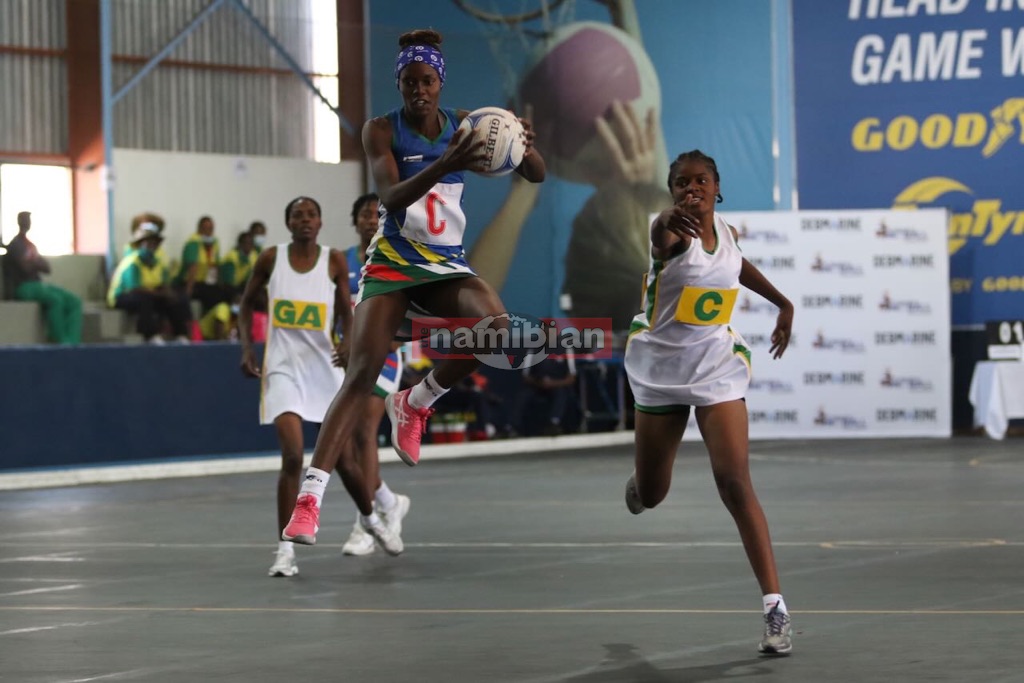
The hierarchy of Netball Namibia (NN) is currently in Johannesburg, South Africa, for a week-long benchmarking exercise on how to professionalise the sport.
Part of the national netball governing body’s delegation are NN president Rebekka Goagoses, vice president Connie Samaria, Omaheke regional sport officer Sakaria Mwala, acting secretary general Isack Hamata, and deputy director of community and school sport Irvine Ndjavera as the head of the delegation.
The trip is made possible by the Ministry of Sport, Youth and National Service.
Speaking to Desert Radio this week, Hamata said the sport body intends to learn from its counterparts who have already professionalised netball.
“The programme in Gauteng includes meeting the Netball South Africa executive, Gauteng Netball executive, and one of the professional netball clubs in the province,” he said.
“We will speak to them to understand how much effort it took and how much in terms of financial capital it took them, so that when we start our process, we know exactly what others went through and did they succeed.”
He said it is important for the netball executive to know the pitfalls its South African counterparts have gone through and overcame so that those pitfalls can be avoided when NN kick-starts with their professionalisation drive.
“We are also going to see the infrastructure and structures they have set up. We are truly thankful for the opportunity accorded to us by the government to accelerate the professional drive of netball,” Hamata said.
The interim secretary general said netball is the single biggest sport code for girls.
As such, NN aims to create a platform for them to benefit from opportunities that a professional set-up presents.
“The study tour to South Africa includes issues of structures, officials, volunteers, umpires, coaches and administrators, and how all of those functions must come together to form one productive unit,” Hamata said.
“How do we get all of those people to play a particular role and measure our strength and see where we are in terms of capacitating our umpires, coaches and administrators?
“Obviously it includes a lot of elements. It’s not just waking up tomorrow and professionalising the sport,” he said.
Hamata said a road map of what needs to be done in the next 10 to 15 years needs to be developed and implemented.
“We all know that not many of our young people are academically inclined or will pass through the doors of tertiary institutions, but through sport they are able to really scale the highest heights and get a good team earning an income from having a professional set-up,” he said.