




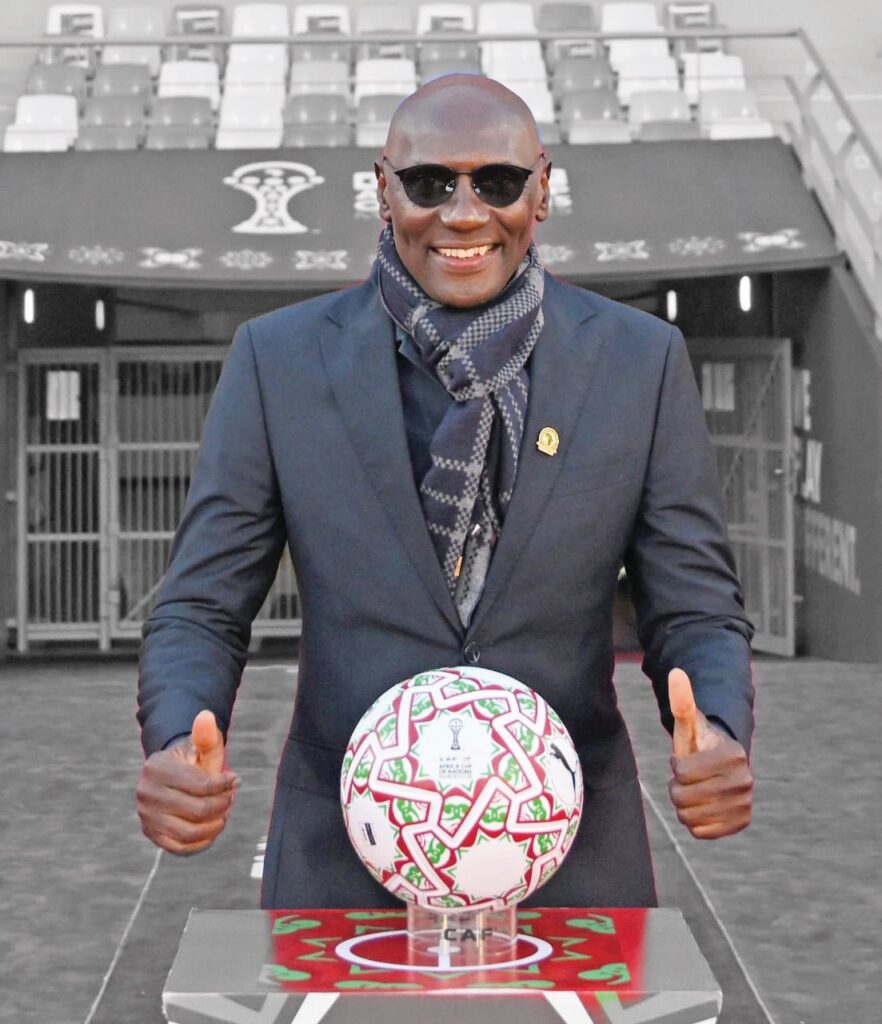
Namibia Football Association (NFA) head of operations and CAF general coordinator Titus Kunamuene says the recent Cosafa workshop he facilitated in Botswana highlighted the importance of empowering local football officials.
In an interview with the Council of Southern Africa Football Associations (Cosafa), Kunamuene says the Cosafa Potential General Coordinator workshop was attended by officials from the Botswana Football Association, the majority of whom were women.
“We had 70% representation of women in the workshop. The workshop took place during the Cosafa Women Championship hosted in Gaborone.
“For us, the idea was to make sure that women are properly empowered, especially in the discipline of general coordinators.”
He says the workshop was fruitful and interactive.
“One has noticed that there is a lot of potential. There is potential and a will for the people of Botswana to make sure that they take this initiative ahead.”
Kunamuene says workshops of this magnitude normally take place when there are tournaments in any given country.
“There is a Cosafa programme called the Legacy Programme. We as Cosafa make sure that wherever we go, we leave a legacy with the people of that certain country.”
He says there were different workshops such as a referee course, a general coordinators workshop and a technical study group.
“That is what we do when we go to countries that host tournaments. We make sure when Cosafa leaves a specific country, the people of that country are empowered to run their football affairs in all disciplines.
“I have been in Gaborone, Botswana, conducting the general coordinators workshop. The workshop consisted of 30 people, who came from different regions.”
Kunamuene says general coordinators play a vital role in keeping the ship steady.
“When you have a match, an event or a tournament the general coordinator is the chief executive of the match or at the competition,” he says.
He says a general coordinator is either appointed by the Confederation of African Football (CAF), International Federation of Football Associations (Fifa) or Cosafa.
“The general coordinator has to make sure that the match is properly organised according to the regulations depending on which competitions, and all the football aspects are in place.”
Kunamuene gives an example that if a match starts at 17h00, the general coordinator should be in the stadium five hours before kickoff, and if the match is done by 19h00, the general coordinator stays in the stadium for another three hours.
“The idea is to make sure that you close down the venue properly. But a key responsibility of the general coordinator before the match is to inspect the stadium, dressing rooms, VIP areas, media tribune, doping control room and medical facility so that all facilities meet the set regulations” he says.
He adds that the general coordinator is the chairperson of the match coordination meeting, which normally takes place a day before a match.
“In your coordination meeting, you have all the stakeholders that are going to be involved in the match on match day.”
He says during the meeting, referees, security personnel, broadcasters, medical teams, marketing, and the local organising committee all need to be present.
“These are the people that are involved in the match coordination meeting. In that meeting you have to confirm the team’s arrival, hotels, transport, training venues including commercial aspects.
“You need to ensure and engage with sponsors, signage, pre-broadcast and set up all CAF and Fifa or Cosafa regulations,” Kunamuene says.
“During the match day, you should remember that the general coordinator has the final authority to make sure everything is in place.”
He says the general coordinator is the senior official in the stadium who coordinates with other stakeholders such as the match commissioner, referee assessor, doping officials, local authority, and stadium management.