

Global governance is under threat.
Multilateralism is being challenged and undermined by multipolarity as executed by the most powerful states.
Their expansionist agendas violate international law and the legal principles of the United Nations Charter as the framework for global order.
Ukraine, Gaza, Venezuela and Greenland are the most obvious tipping points.
In these volatile times, governments need to take a stand: which side are they on?
The World Economic Forum in Davos was the latest (but not the last) battlefield.
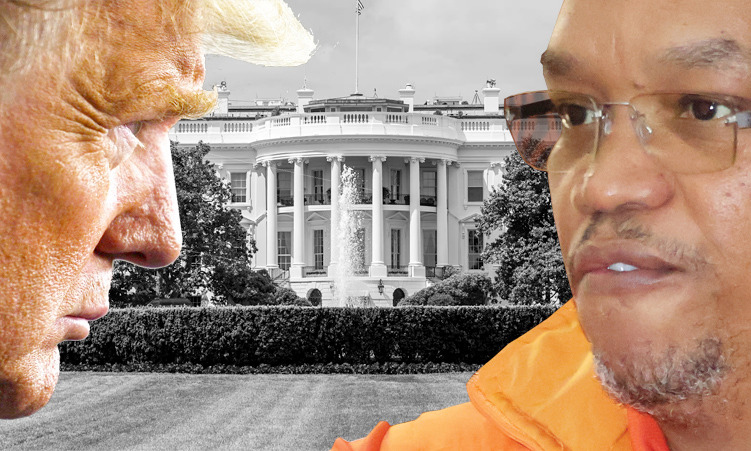
A so-called Board of Peace, just established under United States (US) president Donald Trump’s command, wants to institutionalise a new global body of the ‘selected ones’ in a vain effort to replace the United Nations (UN).
WHICH WORLD ORDER?
The UN is, of course, the very body which played a decisive role in facilitating Namibian independence.
The UN-supervised transition towards sovereignty under a Swapo government was an act of global solidarity in which the UN was the midwife.
Namibia now has a choice: strengthen multilateralism with the UN system as the imperfect but best of all options, or take sides with unilaterally imposed dividing lines.
The current controversy in South Africa over Iran’s participation in a marine exercise off her coast illustrates that in some countries there is no agreement over what course to take.
Since the G20 Summit in Johannesburg, South Africa has become a leading voice on strengthening the fundamental values and principles of multilateralism as embodied in the UN normative framework.
President Cyril Ramaphosa joined other heads of state standing up to the expansionist agendas of those residing in Moscow, Washington, and in Jerusalem.
FOREIGN POLICY
Such open debate is absent in Namibia.
As the dominant party, Swapo has always followed an internal command-and-obey structure euphemistically called democratic centralism.
In practice, it is a term which translates into considerable centralism and little to no democracy.
Visible debates over policy strategy and concepts are absent in public. But the writing is on the wall.
With the visit of our foreign minister to Moscow and the visit of Russia’s foreign minister to Namibia in February, combined with the all-weather friendship with China, Namibia’s foreign policy orientation remains firmly in place despite lip service to non-alignment.
Entering a trade deal with Iran when the regime killed thousands of demonstrators demanding democracy is another confirmation of a policy siding with might before right.
THE COST OF CHOICES
Meanwhile, the US Congress has just voted to extend the African Growth and Opportunity Act (Agoa).
It allows selected African countries beneficial access to the US market for trade in certain commodities.
Namibia has benefited significantly from this law. However, membership can be revoked at any time.
This is a matter of concern in South Africa, whose economy relies to a considerable degree on Agoa’s benefits.
With the White House’s current policy, Namibia’s positioning will not remain unnoticed. The country’s foreign policy orientation might lead to direct punishment.
Namibia would not be the first country to be at the receiving end of American punishment.
The obsession with access and control over strategically relevant natural resources like rare earth deposits or uranium, oil and gas adds to the perspectives of those competing for dominance.
ACCOUNTABILITY
On 17 January, which marked the 80th anniversary of the United Nations General Assembly’s first meeting, secretary general António Guterres defined the United Nations as a place in which people put their faith for peace, for security, and for a better life.
In Namibia, where our president attributes much value to faith, these are words which deserve to be noted.
It would do no harm to openly discuss what position Namibia should take in these turbulent times, when how countries and their governments align themselves are closely observed.
Under Ramaphosa, South Africa has made a choice and firmly declared itself on the side of a multilateral global order in recognition of the UN normative framework.
It would be good if Namibian citizens were able to judge where their government stands and how it justifies its position.
As the old adage goes: one cannot have one’s cake and eat it.
It would be a very slippery affair to try to butter the sandwich on all sides.
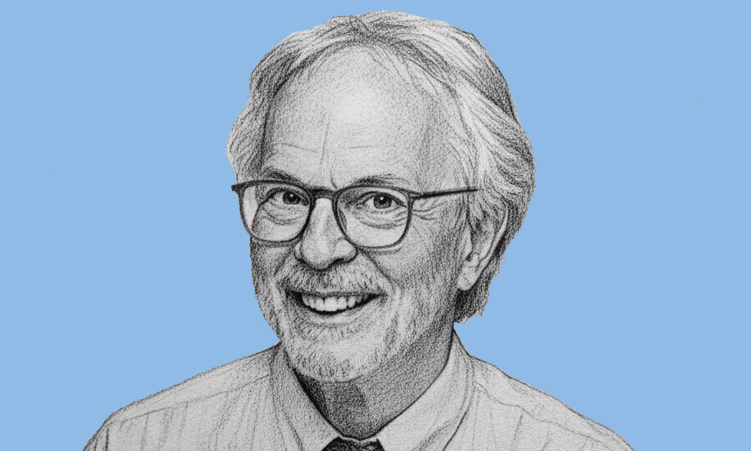
- Henning Melber is an associate of the Nordic Africa Institute in Uppsala, and extraordinary professor at the University of Pretoria and the University of the Free State in Bloemfontein.
In an age of information overload, Sunrise is The Namibian’s morning briefing, delivered at 6h00 from Monday to Friday. It offers a curated rundown of the most important stories from the past 24 hours – occasionally with a light, witty touch. It’s an essential way to stay informed. Subscribe and join our newsletter community.

The Namibian uses AI tools to assist with improved quality, accuracy and efficiency, while maintaining editorial oversight and journalistic integrity.
Stay informed with The Namibian – your source for credible journalism. Get in-depth reporting and opinions for
only N$85 a month. Invest in journalism, invest in democracy –
Subscribe Now!