




Many years ago, while I was rummaging through some old magazines from the 60s, I came across an article about famous woodcarver Ruth Wolter, who lived on a farm in the Omaheke region, bordering the Kalahari Desert.
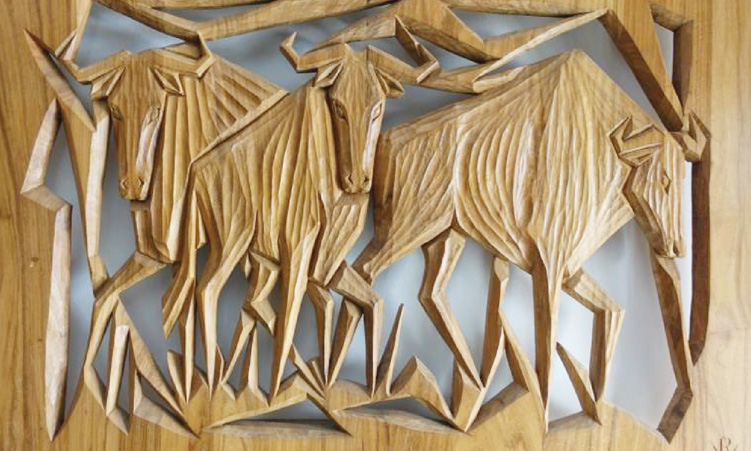
Her 26 panels of woodcarvings still grace the top floor of the former cabinet building where she immortalised Namibia’s domestic animals and wildlife in wood.
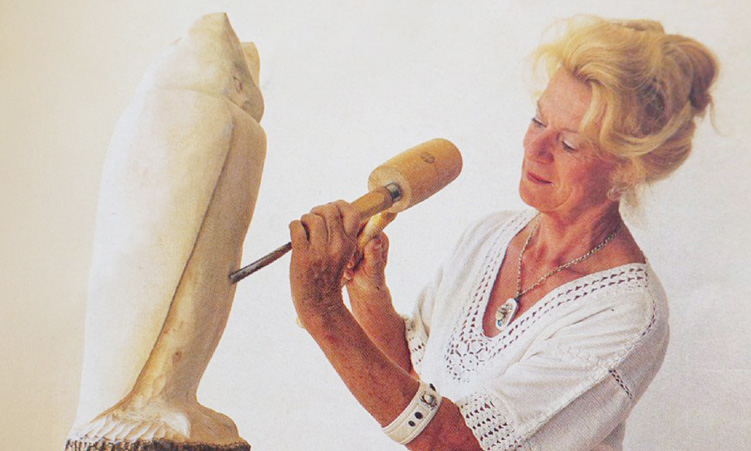
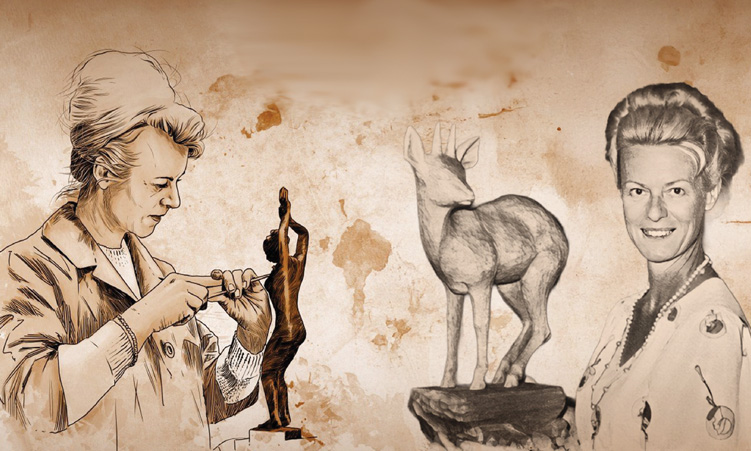
The black-and-white image of a woman with a mop of long, blonde hair swirled into a bun and a chisel in her hand, as she transformed the wood in front of her into a sculpture with a life of its own, stayed with me.
And whenever I came across her work, I wondered what had happened to this Kalahari woodcarver.
In 1997, I found out that she had moved to South Africa in the late 70s and I wrote her a letter inviting her to Namibia as a guest of the Gondwana Collection. She unfortunately couldn’t make it at the time.
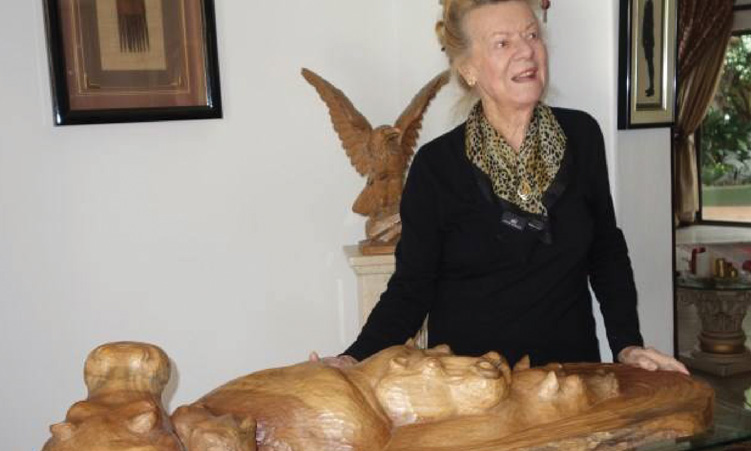
Finally, 20 years later, I had the opportunity to visit her (now Wolter-Stijn) in South Africa.
I met up with her at her home in Pretoria in 2018, when she dug out old photographs from boxes and recounted the intriguing story of her life, which took her on a journey from her birthplace at Doebeln, in former East Germany, to a farm near Gobabis, and then to Kleinmond and Pretoria.
Still filled with enthusiasm for life at 90 years old, she related her story.
Born in April 1928, she was always attracted to art and to Africa.
One of her uncles had been to German South West Africa in the early 1900s, and his hat still hung in her home at Doebeln, an ever-present reminder of the vast continent where wild animals roamed free.
This was also fuelled by her mother’s stories about his time in Africa, and her suggestion that her daughter find a pen pal there to correspond with.
Wolter-Stijn began to write to a girl who lived on a farm near Gobabis.
Their correspondence was interrupted by the war, but it resumed afterwards. During this time the family suffered great hardship and tragedy in East Germany when Russian officers knocked on their door and took her father away.
She never saw him again. Wolter-Stijn and her mother tried to make ends meet and to survive the difficult period after the war however they could.
She remembers making dolls from papier-mâché to sell for income. The letters from her pen-friend stopped around this time, presumably when her friend left the farm.
One day, to her surprise, she received a letter from a Gobabis farmer, Mr Schroeder, who had missed her letters, which had been shared with him and reminded him of his homeland.
Wolter-Stijn began communicating with him and he, in turn, sent them packages of coffee and tobacco, which they exchanged for food.
Later, he invited them to leave their difficult circumstances in Europe to come and help him on his farm bordering the Kalahari Desert.
He offered to pay the travel costs.
While delighted to accept the kind invitation, it was a risky undertaking in the suspicious post-war period in Soviet-occupied East Germany.
First, Wolter-Stijn wrote to the prime minister of South Africa, Dr DF Malan, requesting permission to immigrate.
Then she had to find a convincing reason to travel to West Berlin.
She took the maizemeal sacks that had been wrapped around the old man’s food parcels, dyed them and sewed them together to make a dress to wear, and went to the mayor of the town asking permission to audition for a film in Berlin. Her plan worked.
Ruth and her mother left all their worldly belongings in their home with a note to a friend on the dining room table.
They travelled to London by plane, where they took a ship from Southampton to Cape Town.
The year was 1950 and Wolter-Stijn was 22 years old.
The passage by ship took three weeks. It took another three days to reach Windhoek by train and another day before they arrived at the Gobabis railway station where Schroeder was waiting to meet them.