The country’s livestock sector finds itself at a familiar but critical crossroads.
The emergence of live cattle exports to Mauritius, reportedly around 3 000 slaughter-ready animals every 40 days, has reignited a long-standing debate: should we prioritise immediate market access, or long-term value creation?
At first glance, the answer appears simple.
Farmers are responding rationally. They receive immediate payment, competitive prices, and fewer administrative burdens. In a challenging production environment, that is not just attractive, it is necessary.
But what is rational at farm level is not always optimal at national level.
Namibia has spent decades building a reputation as a supplier of premium, value-added beef into high-value markets such as Norway, the United States and the European Union.
This positioning is not accidental, it is the result of sustained investment in traceability, compliance, animal health systems, and processing capacity.
That model depends on one critical factor: throughput.
When slaughter-ready cattle are exported live at scale, they are effectively removed from the domestic value chain. The impact is immediate and measurable: reduced slaughter volumes, underutilised abattoirs, and increasing difficulty in meeting export quotas.
And let us be clear, those quotas matter.
They are not simply commercial opportunities; they are strategic footholds in some of the most lucrative markets in the world.
Failing to fully utilise them does not just affect Meatco or processors, it weakens Namibia’s long-term credibility as a reliable supplier.
This is where the debate must mature.
Live exports are not inherently negative. In fact, they provide useful market diversification and pricing signals.
But scale matters. If left entirely unchecked, large-scale exports of slaughter-ready cattle risk hollowing out the very industry that created value in the first place.
We have seen this before.
The experience of the Small Stock Marketing Scheme remains a cautionary tale of how well-intentioned but poorly calibrated interventions can distort markets and produce unintended consequences.
That lesson cuts both ways: it warns against heavy-handed regulation, but it also warns against policy complacency.
THE CHOICE
Where does it leave us?
Firstly, we must acknowledge that this is not a binary choice. The goal is not to stop live exports but to ensure they operate within a framework that protects national value.
Secondly, policy tools must be reconsidered. A calibrated levy on live exports, for example, should not be viewed as punitive.
Properly designed, it can serve as a balancing mechanism – ensuring that when value is exported in raw form, there is a corresponding contribution to sustaining the domestic value chain.
Thirdly, we need better coordination. Government, producers, processors and regulators must align around a shared objective: maximising the value derived from Namibia’s livestock resources. Ultimately, this is the real issue.
Namibia does not produce cattle at scale compared to global competitors. Our strength lies not in volume but in value premium markets, quality assurance, and a trusted national brand.
If we erode the foundation of that model, we risk becoming price-takers in lower-value markets rather than price-makers in premium ones.
The question we must therefore confront is not whether live exports should continue.
It is far more fundamental: are we exporting cattle or are we exporting value?
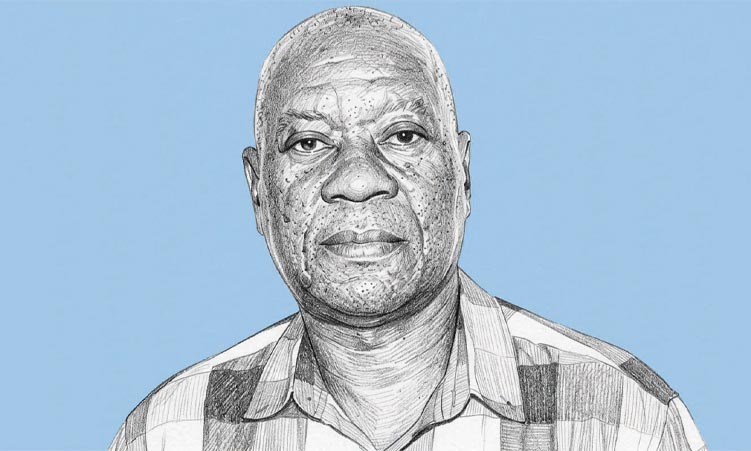
* Albertus Aochamub is the interim chief executive of the Meat Corporation of Namibia.