




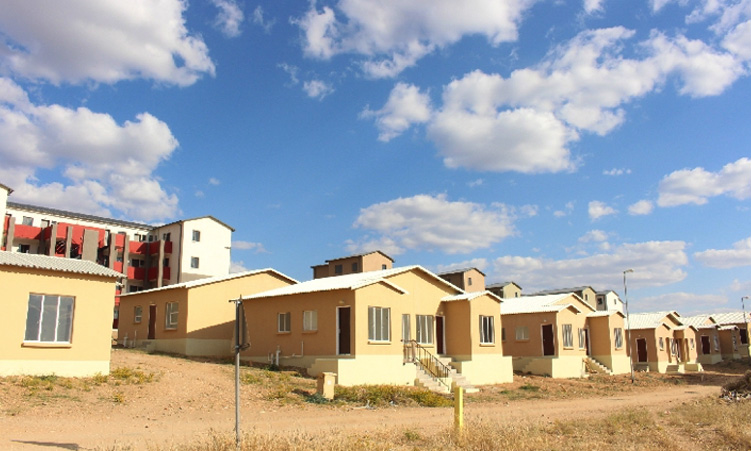
Although interest rates have decreased, Namibians are still not taking up loans, with home loan uptake remaining flat at 0.3%.
This is according to data on January private sector extensions by Simonis Storm Securities.
Credit growth for January remained weak at 2.6% for January when compared to 3.1% in December, says Simonis Storm.
Mortgage credit growth was virtually flat at just 0.3%, showing that even with stable interest rate expectations, consumer sentiments towards home financing remains fragile.
“This continued stagnation in consumer borrowing underscores the strain from higher real interest rates, sluggish income growth, and tighter lending conditions, all of which are dampening household credit uptake,” notes the report.
Additionally, people are also borrowing less through overdrafts when compared to the same period last year.
Bank overdrafts saw a decrease of 8.6%.
“This further reinforces the notion that households are actively deleveraging and prioritising liquidity over additional borrowing.”
However, businesses have been taking advantage of the low interest rates.
Total corporate debt stock stood at N$49.3 billion in January, which is a N$887-million increase from December.
“The widening gap between corporate and household credit growth underscores an asymmetric recovery in credit markets – one where businesses appear to be capitalising on improved financing access, while households remain constrained by affordability challenges and conservative spending behaviour,” says the report.
According to Simonis Storm, corporate credit expanded by 6.1%, with businesses continuing to invest in infrastructure, technology and capacity expansion.
Economist Josef Sheehama says due to high interest rates over the past few years, the cash flow of many Namibians has been affected, and, therefore, a decrease in interest will not lead to an increase in credit extension.
“As interest rates have decreased, many people have chosen to save money or pay off debts if they have extra.
Keep in mind that Covid-19 pushed people to take on more debt in order to pay for medications and to keep their businesses afloat,” says Sheehama.
He adds that weak interest in home loans indicates that some households are still experiencing financial difficulties.
“Consumers are not in a rush to purchase homes due to reduced interest rates or other economic factors.
Instead, they are laser-focused on properly planning for all of the costs associated with home ownership,” says Sheehama.
He adds that the slow growth in credit will lead to the government losing revenue from corporate taxes.
“A low credit extension to the business community will prevent expansion and make job opportunities scarce.
Because of the slower growth or decline in banking loan facilities, the government is losing money through corporate taxes,” says Sheehama.
In an age of information overload, Sunrise is The Namibian’s morning briefing, delivered at 6h00 from Monday to Friday. It offers a curated rundown of the most important stories from the past 24 hours – occasionally with a light, witty touch. It’s an essential way to stay informed. Subscribe and join our newsletter community.

The Namibian uses AI tools to assist with improved quality, accuracy and efficiency, while maintaining editorial oversight and journalistic integrity.
Stay informed with The Namibian – your source for credible journalism. Get in-depth reporting and opinions for
only N$85 a month. Invest in journalism, invest in democracy –
Subscribe Now!