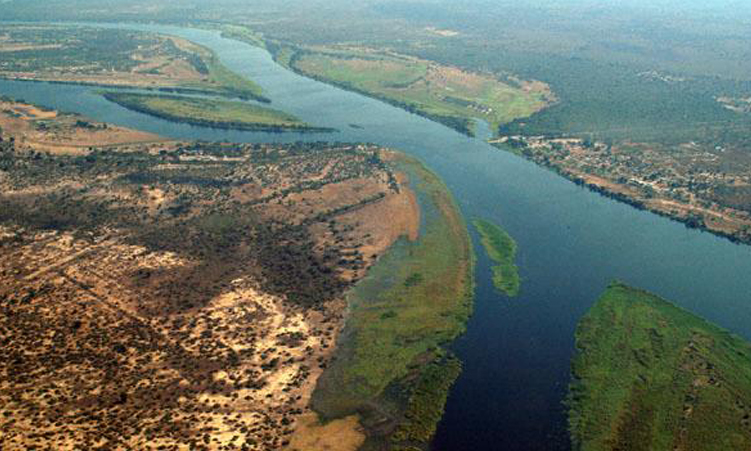



To cast your eye over Namibia’s landscape is to travel through time.
Backwards as one takes in geology dating back 2,6 million years and the lingering structural legacies of colonialism and forward as the country’s sole city expands beyond the centre shaped by a new breed of architects faced with the challenges of rapid urban sprawl, topography and acute water shortages.
In ‘Namibia: Archaeology of the Future – The Landscape of Tomorrow’, architect Nina Maritz alongside various members of the local architectural community presents a synopsis of Namibian architecture.
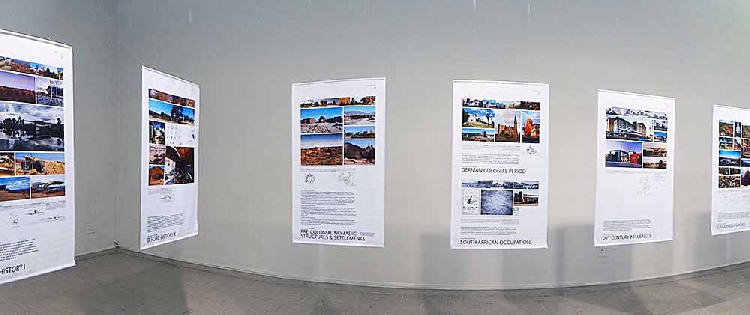
Currently on display at the National Art Gallery of Namibia as a series of panels considering Namibian architecture in the context of the past, present and future, the exhibition which first showed at the Casa dell’Architettura in Rome in 2016 provides intriguing insight into the landscape we traverse each day while ruminating on the existence of contemporary Namibian style and how best to shape the environment.
Presenting a snapshot of the current work of Namibian architects in the context of history and location, the exhibition expounds on the influences of landscape beginning with the ancient geology of the country and travels through the different areas of coast, hinterland, north and south with a particular focus on Windhoek.
Characterised by suburban sprawl, large arterial roads and mono-functional zoning, Windhoek is described as a ‘Capital at a Crossroads’.
Faced with the legacy of apartheid and rapid urbanisation, Windhoek is a microcosm of Namibian society with architecture playing a role in various socio-economic spheres, from rich to poor, from private to public.
With the poor relegated to informal settlements on the outskirts in continuation of apartheid planning, little public space and the middle class beginning to cluster in gated communities, public life is almost non-existent as people retreat into their individual homes.
According to the display, Kleine Kuppe in particular is a troubling sign of the times in which developers produce repetitive duplexes creating an urban fabric that can be described as ‘Notopia’.
A term which according to an article published by archdaily.com is “characterised by a ‘loss of identity and cultural vibrancy’ and ‘a global pandemic of generic buildings’. Notopia is – in overly simplistic terms – a consequence of the cold logic of market forces combined with a disinterested populace.”
Issuing a call for architecture that reflects Namibia’s complexity while confronting issues of heritage, transformation and sustainability, the exhibition sheds light on architectural challenges and considerations including the question of durability.
Described as not just physical but both functional and cultural, durability refers to how and if our buildings will allow successive layers to be added and whether our current methods of production will necessitate total demolition and rebuild every few decades.
The exhibition also draws attention to the Independence Memorial Museum, Heroes Acre Memorial, the Military Museum in Okahandja and the new Namibian State House built by North Korea’s Mansudae Overseas Project over professionals from our own country while highlighting the reality that in 2016 only one in eight of Namibia’s 130 architects and one in four architects-in-training are indigenous Namibians.
A fact which, 25 years after independence, does not reflect the true demographic of the 87,5% black population.
Technical and educational, ‘Namibia: Archaeology of the Future – The Landscape of Tomorrow’ is only the second exhibition of its kind after the 50th anniversary exhibition of the Namibia Institute of Architects in 2002.
This because Namibian architects have been consistently busy with the rapid development of the country since independence which has rarely given them the chance to reflect on their work and its influence in shaping the environment.
“This is a very rare exhibition for Namibia, as only one full scope architectural exhibition has ever been held,” says Nina Maritz. “This was 15 years ago and it is unlikely that another such an exhibition will take place soon, as it entails an inordinate amount of work by many people to get going.
“The exhibition is thus a must-see for anyone interested in their environment. The accompanying definitive publication discusses the issues raised in the exhibition in a lot more detail than could be shown on the panels and will probably become a collector’s piece in future, as it only has a single print run.”
Featuring more than 140 buildings and a fair range of all the architects and practices in the country, the exhibition will be on display until next week and was presented in conjunction with an art talk which took place on 25 April. The talk featured Marley Uazemburuka Tjitjo from Marley Tjitjo Architects speaking on issues of identity, monuments and memories, Maritz from Nina Maritz Architects talking about sustainability issues in Namibian architecture and pondering the question ‘where are we heading to?’ and Dr Jaco Wasserfall of Wasserfall Munting Architects expounding on architectural education and validation in southern Africa, with a specific focus on Namibia.
Changing the face of Namibia while considering what was, what is and what our architectural landscape ought to be, Maritz joins the fraternity of local architects painstakingly shaping the environment and increasingly aiming to transform public space around buildings by planting trees, creating shade, or adding benches where people can sit.
“We all live, work and play out our lives in buildings, at least most of the time,” says Maritz.
“The quality of the buildings and the spaces around them reflect the inequalities in a society, they indicate whether a society is open and free or repressed not just politically, but economically as well and they provide clues as to the respect that people have for one another.”
In an age of information overload, Sunrise is The Namibian’s morning briefing, delivered at 6h00 from Monday to Friday. It offers a curated rundown of the most important stories from the past 24 hours – occasionally with a light, witty touch. It’s an essential way to stay informed. Subscribe and join our newsletter community.

The Namibian uses AI tools to assist with improved quality, accuracy and efficiency, while maintaining editorial oversight and journalistic integrity.
Stay informed with The Namibian – your source for credible journalism. Get in-depth reporting and opinions for
only N$85 a month. Invest in journalism, invest in democracy –
Subscribe Now!