




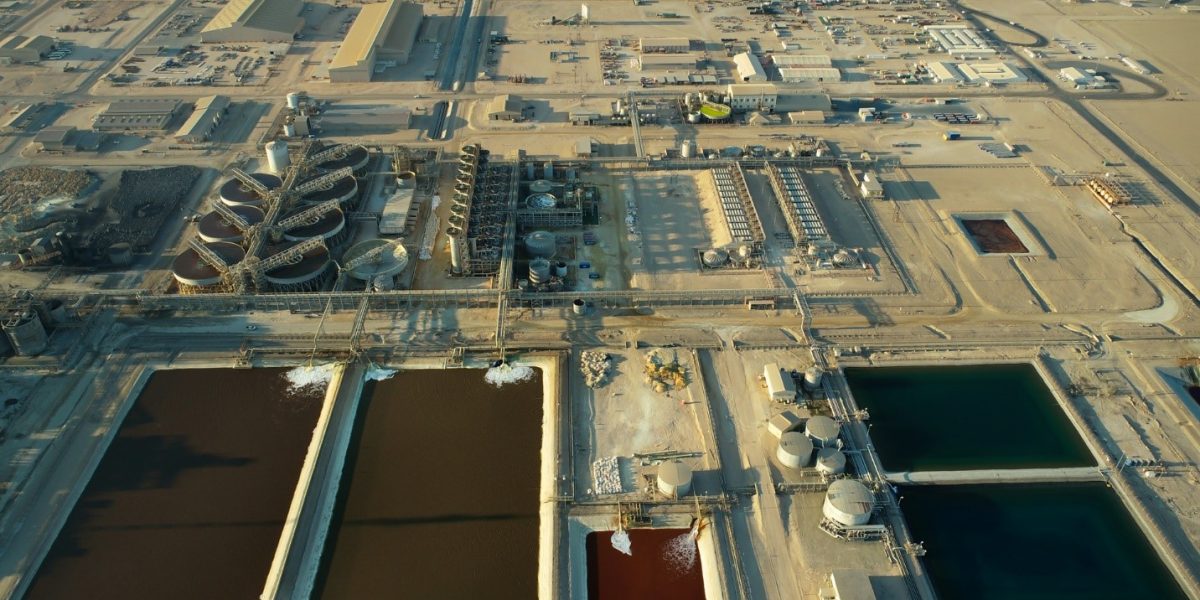
Namibia has been advised to first consider investing in a uranium conversion facility before investing in a full uranium value addition chain.
After conversion, uranium is typically enriched as it is manufactured into fuel, and then used in nuclear reactors to generate electricity.
Speaking during a stakeholder meeting, Bannerman Etango project chief executive Gavin Chamberlain says the most realistic next step would be investment in a uranium conversion facility, but the economics present significant hurdles.
“I would think that you (Namibia) would need to be targeting a conversion facility,” Chamberlain says.
However, he warns that such a plant would require extremely high volumes of uranium to operate profitably.
“The challenge around the conversion facility is the amount of uranium that you need to put through it to make it economically viable,” he says.
Chamberlain says despite Namibia’s position as the third largest producer of uranium in the world, there is still a concern around scale.
“Even though we are the third largest producer in the world, the economic step that needs to be assessed is whether that’s sufficient uranium to put through the conversion facility,” he says.
Currently, there are only four conversion facilities that operate worldwide. These facilities are found in Russia, the United States, France, and Canada.
“That gives you an idea of how much you need to put through a plant to make it worthwhile,” Chamberlain says. He adds that beyond production volumes, contractual and commercial realities would also need to be addressed.
“You would need all of the uranium suppliers within Namibia to be able to contractually send their uranium to your conversion facility.”
Chamberlain says utilities, and not producers, typically dictate delivery destinations under existing uranium contracts.
This means that when a contract is signed with a utility, the price given covers the conversion facilities worldwide and delivery is based on the needs of the buyers.
He adds that Namibia would also need buy-in from international nuclear utilities.
“You would need a degree of understanding from utilities, as well as to why they would want to send the uranium to be converted in Namibia,” he says.
Bannerman Energy’s Etango uranium project in Namibia is predicted to start production after a final investment decision is made in mid-2026.
The project is designed as an open-pit mine with a 15-year life. However, there is potential for a 27-year life span.
When production starts, Namibia will become the second-largest producer of uranium in the world.
Namibia made N$28.8 billion from uraniumm in 2025.
In September 2025, the Cabinet approved a nuclear industry strategy to establish a formal sector, including a new nuclear institute.
HISTORICAL INTEREST
Namibia’s interest in a nuclear plant started over two decades ago. In 2010, a French company, Areva, completed a feasibility assessment for nuclear power production linked to its Trekkopje project.
In 2011, the then Ministry of Mines and Energy, supported by Finland’s nuclear and radiation authority, drafted a nuclear policy that envisioned electricity generation by 2018.
However, the policy was never finalised and the discussion died.
There was also a moratorium imposed in 2007 on uranium exploration licences, which also exposed regulatory gaps. In 2017, the decision was made to lift the moratorium on new nuclear fuel exploration licences.
In an age of information overload, Sunrise is The Namibian’s morning briefing, delivered at 6h00 from Monday to Friday. It offers a curated rundown of the most important stories from the past 24 hours – occasionally with a light, witty touch. It’s an essential way to stay informed. Subscribe and join our newsletter community.

The Namibian uses AI tools to assist with improved quality, accuracy and efficiency, while maintaining editorial oversight and journalistic integrity.
Stay informed with The Namibian – your source for credible journalism. Get in-depth reporting and opinions for
only N$85 a month. Invest in journalism, invest in democracy –
Subscribe Now!