





A YEAR ago, when Namibia first locked down due to Covid-19, 18 foreign film productions that could have boosted the local economy were cancelled.
Of these, 13 were called off indefinitely, and five changed their production dates to later this year.
There were also no new applications from foreign productions in the past six months, causing local facilitation to grind to a halt.
This complicates planning and budgeting, while the cost of equipment insurance increased, with some insurance companies hesitant to provide their services due to the uncertainty caused by the pandemic.
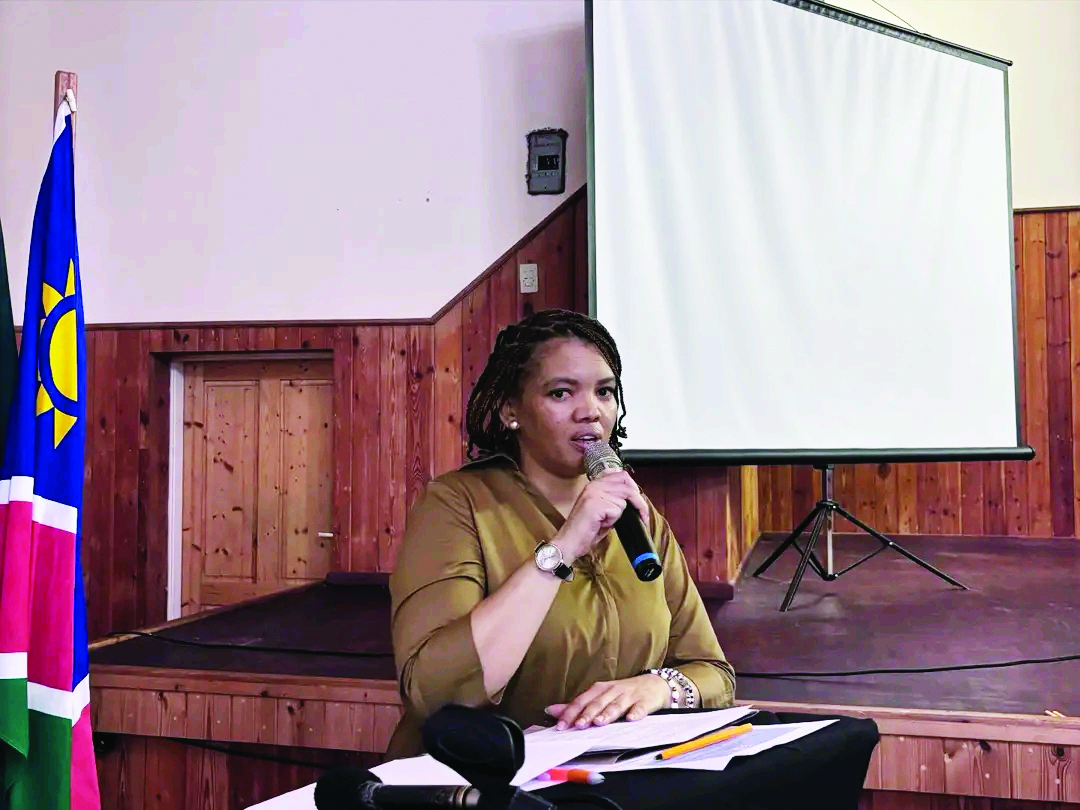
“People who invested in equipment to hire were affected, and all costs on marketing their services for foreign productions were in vain. Local crew and service providers were psychologically impacted as they were ready for upcoming jobs to support their families, but could not do so any longer,” Florence Haifene, the executive secretary of the Namibia Film Commission (NFC), says.
“This situation forced local film companies to diversify their profile to venture into other areas to make ends meet.”
Namibia has about eight film facilitators registered with the NFC.
Guy Nockels of Namib Films recently facilitated the production of National Geographic documentary ‘One Strange Rock’, with Hollywood superstar Will Smith, in Namibia.
It was the first major project in the country since the pandemic broke out.
He says Covid-19 prompted local producers to approach Namibian corporations for community-based productions, while others are working together on a single production.
Nockels says three major productions of Namib Films, one of the more established Namibian film companies, have been cancelled, and one rescheduled.
He says Covid-19 has changed the way the industry works, not just with regards to production schedules, but also production on set due to social distancing, sanitising, and the wearing of masks – all having an “immense impact on the budget”.
Nockels is not optimistic about the future of international productions in Namibia.
“International productions rely on international travel, and the near future does not look positive. We must see how travel changes with the vaccine. Local facilitators of international productions have no support from the government, and some had to close doors and look for work in other industries.
“If this goes on, there will be no facilitators left in Namibia to assist international productions wishing to come to Namibia, unless the government intervenes,” he says.
Haifene says 60 Namibians were employed through ‘One Rock’ for two weeks with a local spend of over N$3,7 million.
Another documentary production, the BBC’s ‘Planet Earth III’, will start in the country this week.
Haifene says many foreign productions consider incentives and modern studio infrastructure as a drawcard, and in the absence of those, it is “extremely hard” to market Namibia as the preferred film destination.
“We need incentives that are competitive, and we need the right infrastructure to keep the money in the country,” she says.
She says the NFC also had to scale down on marketing strategies due to budget cuts.
This was a big blow in attracting foreign projects.
Another reason for fewer productions, Nockels says, is that Namibia is a “script-determined location”.
This means if a script does not require Namibia’s kind of location, there is little need for foreign productions to be done locally.
“We don’t offer incentives to visiting producers, and we are competing with countries such as South Africa and Morocco, which offer large incentives,” he says.
Haifene says a stakeholders’ meeting is scheduled for April to pave the way for professionalism in the industry.
“We have developed criteria in consultation with the industry, which must be adhered to, and companies would be compelled to register with the NFC based on these criteria,” she says.