





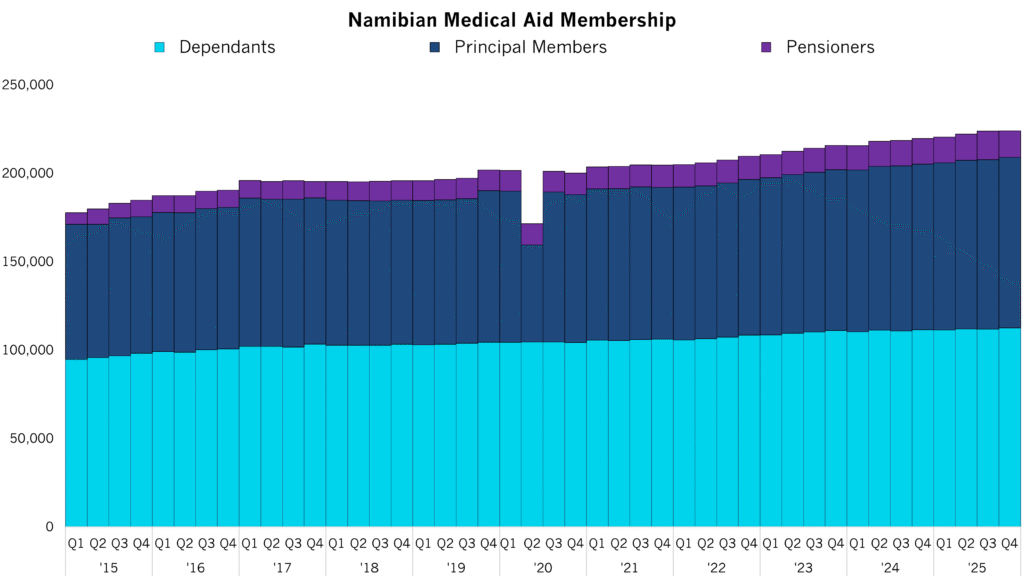
Namibian had a total of 224 078 people registered with a medical aid in 2025, which translates to roughly 7.41% of the total population covered by private medical aid.
Botswana, by comparison, recorded 375 332 medical aid members in 2024 despite its relatively smaller population.
In Namibia, the majority of medical aid members are dependants, making up 50.25%, followed by principal members at 43.05%, while the smallest proportion is pensioners at a mere 6.75%. Pensioners make up the smallest share because higher premiums are often charged, as they are considered higher risk.
Retirement also forces cuts in spending and most pensioners switch to government provided healthcare, which is lower in cost or free and gives seniors priority treatment.
The split of 96 359 principal members to 112 589 dependants works out to about 117 dependants for every 100 principal members, which points to medical aid functioning largely as family cover rather than individual cover.
This also reveals the need for increased competition among medical aid providers. In a 2024 survey, 55% of Namibians interviewed said they worry “a lot” about being unable to afford medical care, while 74% of those without cover cited affordability as the reason.
Greater competition would create an incentive for cheaper cover, as providers would have to compete more directly with one another. The most recent Namibia Financial Institutions Supervisory Authority annual report indicates that there were only seven active medical aid funds by December 2025, which is two less than in 2020.
For all Namibians who can afford medical aid, it is highly recommended that it is used, because it is never a priority until it is too late.
– Ida Williams is an economist at Cirrus