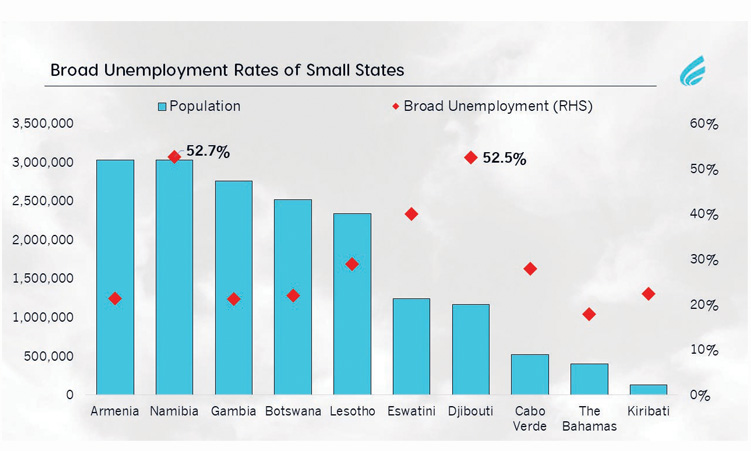






Namibia’s Starlink debate has exposed a strange contradiction: some argue the country should block a service that would, for the first time, give rural Namibians fast, reliable internet in order to protect local operators, even if that means preserving one of the slowest and most unevenly distributed connectivity systems in the world.
Others warn about dependency on a global provider, which quietly admits that Starlink’s technology would be widely adopted by the Namibian public. The position effectively becomes: “Do not let people access better internet in case it someday gets taken away” – a position of political signalling, and not economic reasoning.
The data clearly illustrates Namibia’s shortcomings with the status quo, ranking 143rd out of 152 countries in terms of median download speeds, and only 15% of households having fixed internet (rural areas = 5%).
Tens of thousands of households, farms, clinics and schools remain offline because fibre and tower-based networks cannot economically cover a country this large, this sparse, and this expensive to build in.
Satellite is the first technology that actually fits Namibia’s geography, thus blocking it comes at the direct cost of leaving under-served communities disconnected to protect a status quo that has already failed them.
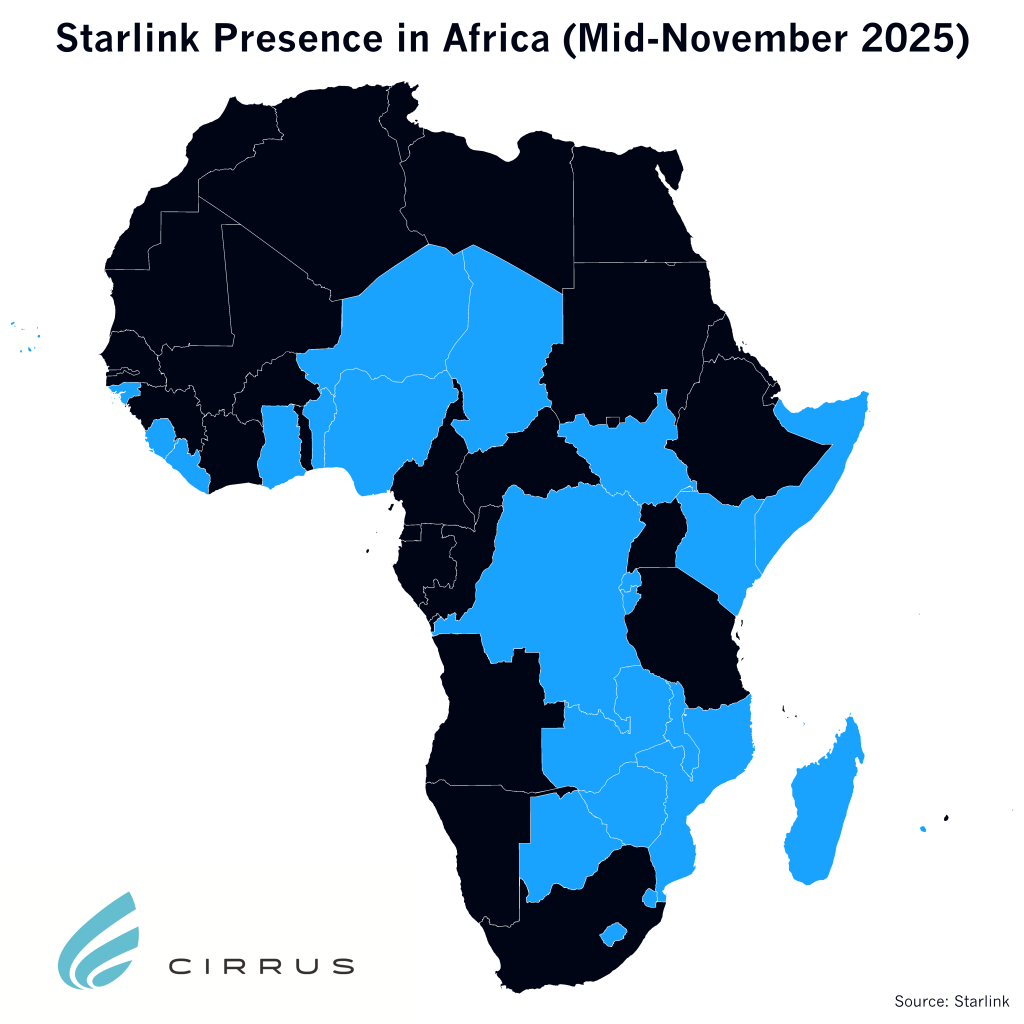
Starlink’s performance across Africa reinforces this point. Now present in 23 countries, it has repeatedly sold out due to overwhelming demand.
Where comparable data exist (12 countries), Starlink is cheaper than the lowest-cost unlimited fixed internet packages in five of these markets studied. These are countries with similar structural constraints: large rural populations, difficult terrain and high rollout costs. The pattern post-Starlink introduction is simple and predictable: competition rises, prices fall, internet access improves.
A useful example – when Paratus Namibia introduced its e-SIM service, Mobile Telecommunications Limited (MTC) immediately responded by running several aggressive specials, more-for-less deals, removing the Aweh subscription cap, and launched its own e-SIM service to keep up – outcomes which are all beneficial to Namibian consumers.
This predictable sequence shows how competitive entry forces incumbents to move, as new players and new technology instils pressure to innovate and reduces consumer complacency.
Critics often raise fairness and regulatory concerns, yet Namibia’s digital market is already highly concentrated, with a single operator in MTC controlling >80% of the mobile segment. Starlink increases choice, and household adoption is voluntary. If households see no value, nothing changes for them, and if they do, they gain a service that they have deemed to improve their ability to work, learn, trade and access digital tools currently out of reach.
Blocking that choice enforces a ceiling on connectivity – a ceiling determined by regulatory decisions, and not technological limits.