



A NAMIBIAN rangeland expert warns the country is failing to effectively adapt to climate change, citing widespread land degradation despite reports of progress.
The 2025 State of Africa’s Environment Report, released by the New-Delhi-based Centre for Science and Environment (CSE), says although Namibia is highly vulnerable to the negative impacts of climate change due to its arid and semi-arid environment and reliance on rain-fed agriculture, the country’s responses to this threat have been pre-emptive.
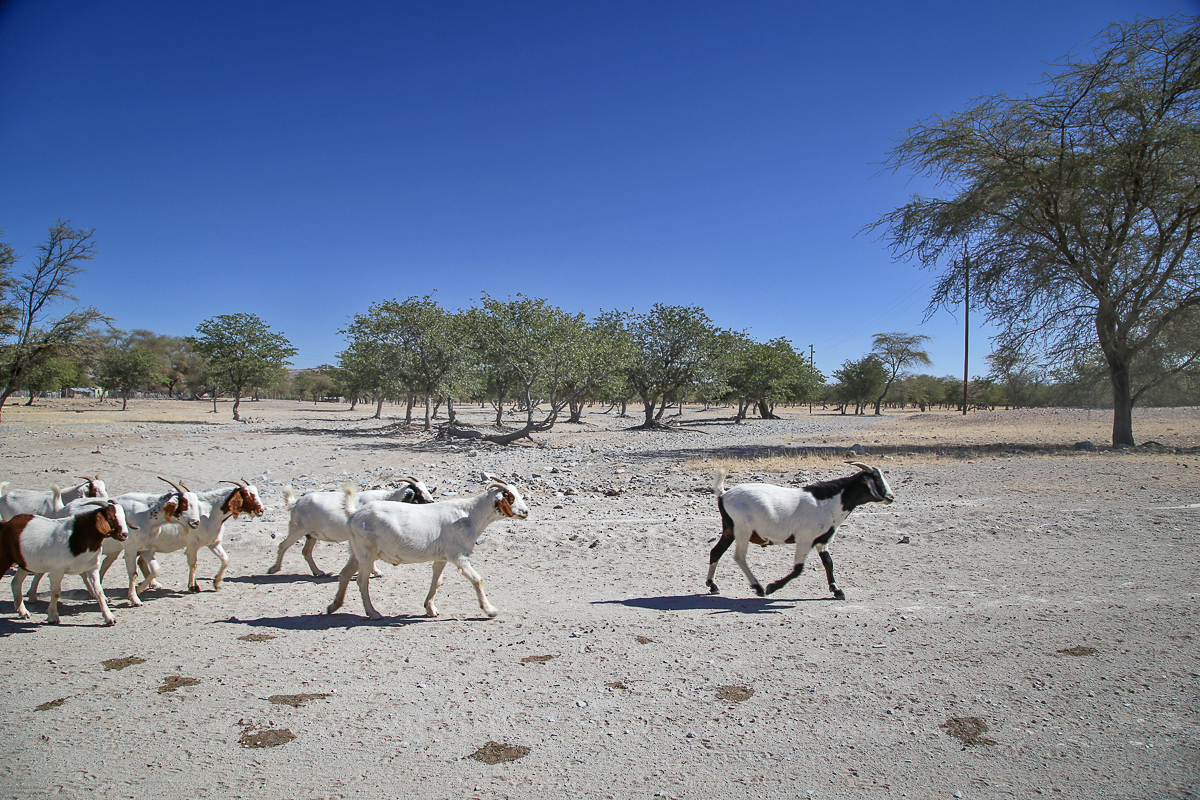
The expert, Axel Rothauge, says Namibia is not effectively adapting to the negative impacts of climate change because land degradation is happening across the country, especially in the northern communal areas.
He says his recent rangeland assessment study in the Cunene-Cuvelai Landscape (which covers areas such as Oponona, Onanke, Omuntele, King Nehale, Eastern Mangetti and Western Mangetti), found that land degradation is taking place at an alarming rate.
“I have measured it and I have data. It is not my opinion,” he adds.
He says the communal land tenure system is making it it impossible for people to manage land sustainably, because the community has the right to decide how the land is used.
He says in communal areas, when one communal farmer decides to allow land to recover for grazing, another communal farmer moves in there to graze his or her cattle because “it has now become a good-green grazing area.”
Rothauge says the entire riverine area of the Okavango River has been destroyed and turned into white desert.
“It resembles the one at Opuwo. It is just that this one is white not red. And this is bad because it brings poverty to people who are living there,” Rothauge says.
Meanwhile, a senior lecturer at the International University of Management (IUM), Sion Iikela, agrees with the report that at the continental level, Namibia is doing well in adapting to climate change.
“Even if you look around the country, we are doing very well because several adaptation projects and programmes have been implemented. You will see that some people has been given some drought-resistant animals as an adaptation strategy,” Iikela says.
However, he says, Namibia needs to focus more on sustainability plans after funding has been given to climate change adapting projects.
He adds that when funds are available for these projects, things go well but when funding comes to an end, everything starts to fall apart.
“I think these are the challenges we have in activities aimed at climate change adaptation. Overall, we are doing well but the issues of sustainability is what is lacking,” he says.
Iikela says another problem Namibia is grappling with is using foreign approaches, which do not suit the country, to adapt to climate change.
In an age of information overload, Sunrise is The Namibian’s morning briefing, delivered at 6h00 from Monday to Friday. It offers a curated rundown of the most important stories from the past 24 hours – occasionally with a light, witty touch. It’s an essential way to stay informed. Subscribe and join our newsletter community.

The Namibian uses AI tools to assist with improved quality, accuracy and efficiency, while maintaining editorial oversight and journalistic integrity.
Stay informed with The Namibian – your source for credible journalism. Get in-depth reporting and opinions for
only N$85 a month. Invest in journalism, invest in democracy –
Subscribe Now!