






Namibia is considering a new foot-and-mouth disease (FMD) levy to raise funds to protect the livestock industry against the growing threat of the disease.
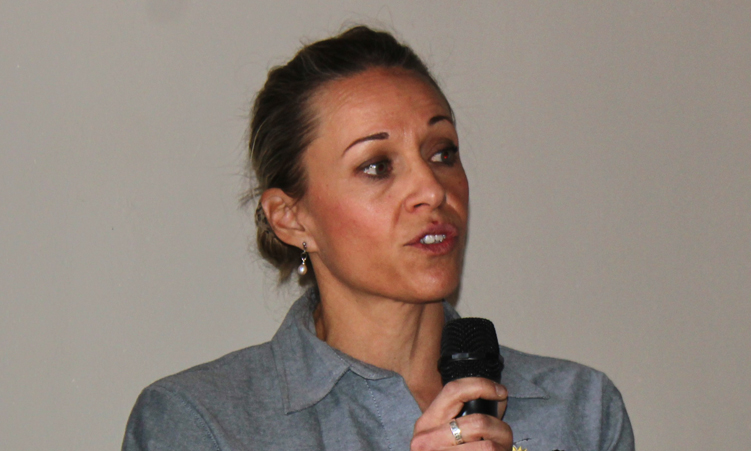
Livestock and Livestock Products Board of Namibia (LLPBN) executive for quality assurance Anja Boshoff during Schumacher Bonsmaras Farmers Day at Seeis on Saturday said: “There has been talks about an FMD levy lately, an additional levy, so we can build resilience within our livestock sector.”
She said Namibia already has an Animal Health Emergency Fund, government funding and support from the LLPBN, while farmers’ unions have also established an FMD support fund.
However, funding for veterinary services remains a challenge, she said.
She said the proposed temporary levy is still under consultation and has not yet been submitted to the minister of agriculture, fisheries, water and land reform for approval.
Boshoff said the proposed levy would be paid by both livestock buyers and sellers, unlike the existing levy which is carried by sellers.
She said money collected through the levy would be kept separately and used exclusively for FMD prevention, preparedness and control measures.
Boshoff said the proposed levy could be around 0.76% of the value of a livestock transaction, although the final rate has not yet been confirmed.
Most farming unions have supported the proposal, but full agreement has not yet been reached, she said.
“This levy could not be presented to the minister yet, since we do not have full buy-in, unfortunately,” she said.
‘TEMPORARY ONLY’
Boshoff said farming unions have also requested that the levy be temporary.
The agriculture ministry did not respond to a request for comment by the time of going to print yesterday.
Okozonduno Bonsmaras’ Vetumbuavi Mungunda says the proposed levy should only be supported if it is temporary and the money is used effectively to protect the livestock industry.
“Given the existential risk to the industry, it is supported on the basis that it is temporary,” he says.
Emok Bonsmaras Stud’s Edward Hansen also backs the proposed levy, saying sharing the cost between farmers and buyers would ease the burden on producers.
The LLPBN earlier this year increased standard livestock values used to calculate levies for 2026/27.
Live cattle values rose by 24% to N$9 596 per head, sheep by 21% to N$1 492 and goats by 33% to N$1 533.
Slaughter cattle increased by 3% to N$15 765, pigs by 6% to N$3 071, while poultry recorded the biggest increase of 70% to 59 cents per kilogramme.
The new values took effect on 1 April and will apply until 31 March 2027.
Hansen says sharing the levy between the farmer and buyer would help farmers instead of leaving producers to carry the cost alone.
This comes as Cirrus Capital last week said Namibia’s cattle market showed signs of recovery in 2026.
Between January and July, about 156 000 head of cattle were marketed, up 28% from around 122 000 during the same period in 2025.
Cirrus Capital said the increase came after cattle marketing dropped sharply from about 372 000 in 2024 to 217 000 in 2025, as farmers retained animals to rebuild their herds following favourable rainfall.
By July, live cattle exports had increased by about 64% year on year, while local slaughtering rose by approximately 15%.