Namibia and Botswana have advanced discussions on how natural resource wealth can be transformed into sustainable and inclusive prosperity, with both countries highlighting the importance of economic diversification, strong institutions and saving for future generations.
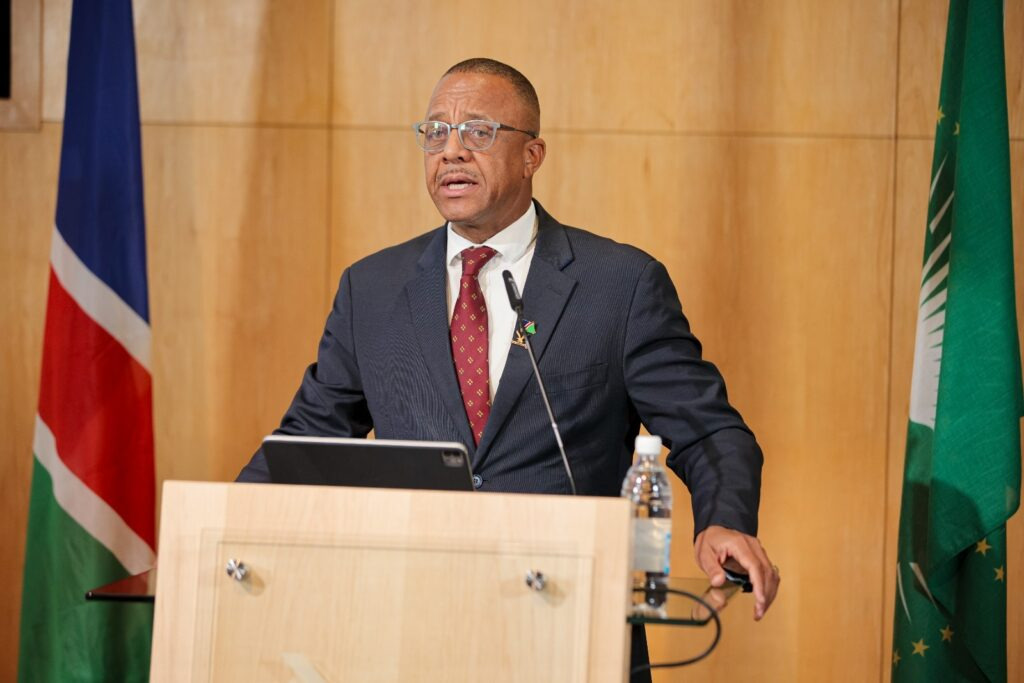
The discussion took place during a public lecture hosted by the Bank of Namibia (BoN) in collaboration with the University of Namibia (Unam) in Windhoek on Friday. The engagement brought together BoN governor Ebson Uanguta, Bank of Botswana governor Lesego Caster Moseki, students, academics, professionals and other stakeholders to discuss resource-led development, sovereign wealth management, investment, skills development and long-term economic prosperity.
Uanguta, in his presentation titled “Building Wealth Beyond Natural Resources: Creating Namibia’s Next Growth Story”, says while resources remain an important anchor of the economy, resource wealth alone cannot guarantee broad-based prosperity, particularly given Namibia’s exposure to external shocks and its capital-intensive economic sectors.
He says Namibia must focus on greater local value addition, technology transfer, knowledge development and stronger domestic supply chains as the country explores opportunities in oil and gas, renewable energy and green hydrogen.
“Resource wealth alone cannot guarantee broad-based prosperity,” Uanguta says.
He also highlights the Welwitschia Fund, established in 2022, as an important mechanism for converting temporary resource revenues into long-term financial assets for future generations.
The fund consists of an Intergenerational Fund, aimed at preserving and growing wealth for future generations, and a Stabilisation Fund, which provides a buffer during periods of revenue shortfalls.
Uanguta further calls on tertiary institutions to align research and curricula with national development priorities, while encouraging young Namibians to develop technical skills, entrepreneurial capacity and innovations required by emerging industries.
Moseki shared Botswana’s experience through a presentation titled “The Pula Fund: Past, Present and Future”, outlining how diamond revenues have supported infrastructure, education, healthcare and social protection, while some wealth was preserved for future generations.
He cautions that dependence on a single natural resource can create vulnerabilities when revenues decline.
“We believed that diamonds were forever. They are, as a stone, but not as a source of foreign earnings,” Moseki says, stressing that Botswana’s experience, including the emergence of lab-grown diamonds and weaker traditional diamond revenues, demonstrated the importance of diversifying the economy before resource revenues decline.
“A sovereign wealth fund cannot be treated simply as a pool of assets,” he says, stressing the need for clear rules, strong institutions, fiscal discipline and a long-term national vision.