





THE WALVIS Bay airport has, for the next few weeks, become the base for the National Aeronautics and Space Administration’s (Nasa) ‘Oracles’ (observations of aerosols above clouds and their interactions) mission.
Nasa is currently undertaking high-altitude flights with special research aircraft off Namibia’s coast to study the effect of smoke from veld fires on the cloud layer and the global climate.
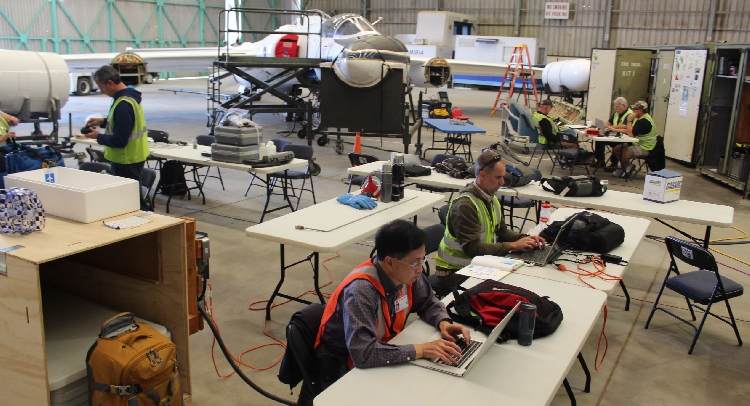
Some of the world’s top weather scientists and researchers are currently working inside a hangar at the Walvis Bay International Airport, while others are taking eight-hour flight shifts of up to 20 kilometres above the earth’s surface.
Nasa is heavily involved with scientific research worldwide. With the continued global climate change, periods of increased warming and droughts are expected to become more severe. As one of the driest countries in the region, Namibia is thought to be exceptionally vulnerable because of issues of water availability and decreasing biodiversity.
The cloud systems off the coasts of Namibia and Angola will likely be altered by the changing climate. The Oracles project was developed to study how southern African aerosols (like smoke from veld fires), and the coastal and marine cloud systems off the coast of Namibia interact. The project utilises airborne and remotely-sensed observations of these clouds, and combines them with collaborative ground-based observations.
Warren Gore, the Nasa-Ames Research Centre’s chief for Atmospheric Science branch, who has 30 years’ experience in his field and manages 20 scientists, told The Namibian last week that the information gathered by the Earth Resource Two (ER2) airplane and P-3 flying science lab will be transmitted to the hangar base, where top scientists will study the various elements being researched.
“From the information that we get, we will be able to simulate the earth’s meteorological environment and be able to create models to better project future climate events,” Gore said. “This is why we need this very important information.”
The coast of Namibia is one of three places on earth with persistent low-level clouds, and the only such location with a steady supply of tiny aerosol particles in the form of smoke from inland fires that mix with the clouds. These particles interact with clouds, apparently changing their ability to warm or cool the planet. Two of Nasa’s only four ER2 pilots, James Nelson and Steward Broce, take turns of eight hours each to fly the one-man-seater about 20 kilometres above the earth’s surface. For their safety, they have to wear a space suit – the same as astronauts wear when rocketing into space.
“If we do not wear the suits, we will die. Our blood will stop flowing in our veins because of the pressure. The suit keeps the pressure, temperature and oxygen levels stable,” explained Nelson.
Broce, who has many years’ experience as a fighter pilot for the US air force and navy – having flown missions during the first Gulf War – said he is familiar with the ER2, which is a scientific do-over of the old US air force’s U2 reconnaissance aircraft.
“The one we fly here is 1960s technology, though. Today’s U2s are super-modern,” he said, showing off the old dashboard inside the cockpit.
Amongst the older gadgets is a control panel for several ultramodern sensors. The sensors are fixed on different parts of the plane to collect different aspects of meteorological data.
“This is our part in the research. We fly the plane and control the sensors, which sends the info to the guys in the lab inside the hangar,” he said. “Otherwise the flights can be long, and sometimes we watch a movie up there.”
Nasa-Ames’ engineer Ted Hildum and technician Kent Dunwoody were busy inside the hangar, tweaking a type of camera that scans and makes an image of the atmosphere. Some of the instruments used during the research could form the basis of similar instruments used on satellites placed into the earth’s orbit.
There are about five major instruments mounted on the ER2 which are used for reading different parts of the atmosphere, such as light, heat and particle chemistry, that mixes with the clouds.
The readings are transmitted to a satellite, which then gives a real-time transmission to the scientists on the ground.
Another plane, the P-3, is a flying science lab, where several scientists sit and study their various instruments for information gathered from sensors mounted on this much larger plane than the ER2.According to this plane’s pilots, Mike Singer and Mark Russell, their mission is to inspect areas identified by the ER2 and take more samples, which are more specific at lower altitudes.
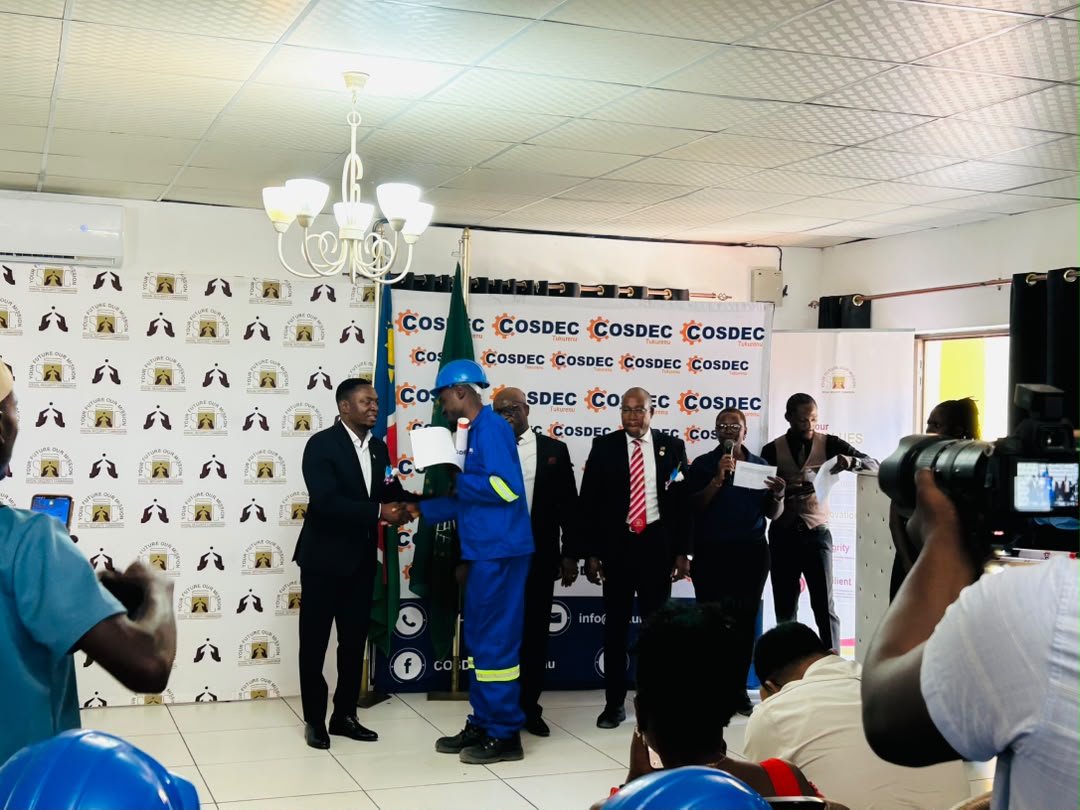
Both Singer and Russel are former US air force pilots. They have already flown five missions since Oracles came to Walvis Bay in the last week of August. Oracles will for the next three years work with students from the Namibia University of Science and Technology and scientists from the Gobabeb Research and Training Centre. The university will also give logistical support in the fieldwork, and collaborate in data analysis and modelling.