





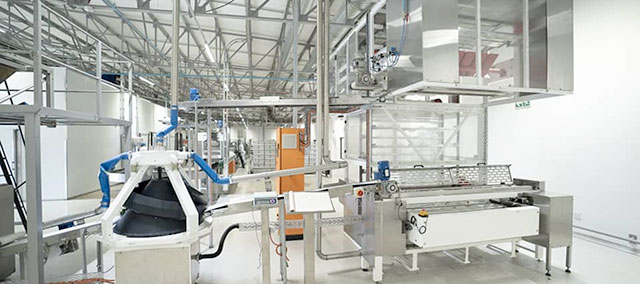
NAMIB Mills has invested N$134,6 million in a state-of-the-art bakery situated north of Windhoek.
News of the bakery comes with the launch of Bakpro superior loaves which were introduced on the market in September this year. The new loaves are presented in either 600g white or brown bread with a bumper 20 slices per loaf, or the 700g superior white or brown bread loaf with bigger portions of 18 slices per loaf.
The new venture has created 120 new jobs along the entire production line. Of these, 20 are upskilled and trained to work in the automated baking plant, a first for Namibia.
Namib Mills’ senior brand manager, Marne Bouwer, said the plant is referred to as a travelling plant, employing world-class technology. The system runs like a conveyor belt through the entire process of mixing, fermenting, baking and packaging.
Namibian consumers now thus have the option of purchasing a locally made superior loaf of bread which not only has a longer shelf life, but also provides unparalleled quality.
Bouwer explained that Namibians love their bread, and research performed by Namib Mills shows that around 90 million loaves are sold every year. Namib Mills is targeting a maximum of 25 million of these with the first phase of the bakery that can produce 4 500 loaves every hour.
She said what sets a superior loaf apart from a regular loaf of bread is the cooling process. By controlling the cooling process over a set period of time, the quality of the loaf could be determined, as well as extending its shelf life.
To this end, one of the most expensive components of the plant is a N$7 million cooling tower.
“This is particularly important for those Namibians who do not have access to fresh bread on a daily basis. The superior loaf not only lasts longer on the shelf, staying fresh for days, but freezes exceptionally well,” she added.
In a bid to offer the consumer the best product on the market, the labelling also includes a breakdown of the ingredients and the energy value of the bread.
The baking process is fully automated and sterile, and there is no human contact at all during the entire process.
“Ideally, bakeries across the country will now have the opportunity to focus on value-added, high-end products, including confectionery, brötchens and niche market bread products,” said Pieter van Niekerk, commercial manager at Namib Mills.
According to Neels Cronje, the bakery manager, bread must be packaged at a uniform 28 degrees to prevent moisture loss. He added that controlling the cooling process strengthens the crust, providing a loaf that will not cave in, as well as one that will last.
After complex mixing and splicing of the dough to ensure even coverage of the yeast and a uniform mixture, the bread is allowed to ferment for an hour at a fully controlled 80% humidity and 40 degrees.
The facility has a 21-metre oven, which burns at 490 degrees Celcius, then bakes the bread for 25 minutes. When the loaves come out of the oven, their core temperature is 97 degrees, after which they enter the cooling tower.
Bakpro bread is manufactured under a well-established brand name, and stays fresher for longer. Bakpro bread is also low in fat, high in energy and a source of dietary fibre and protein.
Over the past decade, Namib Mills has created 1 010 new jobs, and has invested roughly N$1,3 billion into the local economy.
The Namibian spoke to a consumer in Shoprite at Lafrenz Industrial Area 22-year-old Selma Ndengu, who said she has not tasted the superior bread yet, and doubts she will soon as she is unemployed and cannot afford the bread. Thirty-three-year old Phillip Shiweda said he does not usually consume bread, but has purchased the Bakpro bread before. He also appreciates that the bread is made to last longer on the shelf. “I’m just glad I don’t have to throw it out after two days as [was] the case with everyday bread,” he added.