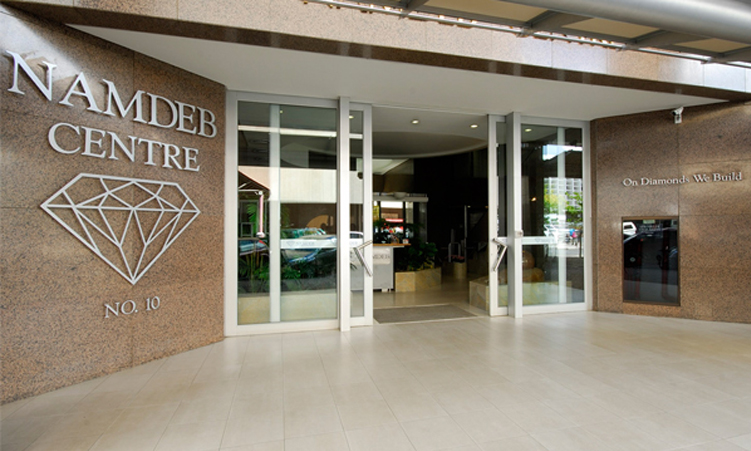
Namdeb Holdings, comprising diamond companies Namdeb and Debmarine Namibia, has asked the government for financial assistance as falling global diamond prices cut into its revenue and one of the state’s oldest sources of income.
Namdeb in August this year said low global prices since mid-2022 wiped out nearly N$13 billion of its value.
Minister of finance Ericah Shafudah yesterday told civil society the country’s finances have been affected by global developments, especially the diamond sector.
“This is the sector we have known for many years. At [one] point, you could even get N$5 billion [a year] from the diamond sector. Now, as I’m speaking, the two companies in the diamond sector are now seeking relief from the government,” she said.
“Why? Because we are the shareholder, 50:50, with De Beers. And they are now seeking relief, which is very strange because we used to say ‘how much in dividends are you going to pay?’,” she said.
Shafudah said the country has become used to receiving revenue from diamonds through dividends and corporate income tax, as well as other benefits such as a higher employment rate.
Diamond mining companies contributed N$239 million in corporate tax and N$1.16 billion in royalties in the 2024/25 financial year, according to the latest budget.
“This time around, the global developments have negatively impacted the diamond sector, and that has contributed to the revision of our revenue downwards,” Shafudah said.
Speaking to The Namibian on the sidelines after the event, Shafudah said Namdeb Holdings approached the government in September, proposing recapitalisation.
Recapitalisation is a financial process through which a company asks shareholders for fresh capital to restore its financial position.
The minister did not announce what the additional capital would be used for.
Shafudah said Namdeb has not finalised its proposal, which means the government does not yet know how much money it requires.
Namdeb’s weak financial position is, however, public knowledge.
Revenue has been 60% lower than what the company predicted before diamond prices began to fall, according to Namdeb chief executive Riaan Burger.
“How does any company survive with 60% less revenue? It wiped out nearly N$13 billion net present value of Namdeb,” he said at the 2026 Mining Expo.
Namdeb spokesperson Grace Luvindao yesterday declined to comment on the proposed recapitalisation.
“Due to internal processes and engagements we cannot comment further on this,” she said.
Chairperson of the Namdeb board of directors Alex Gawanab yesterday told The Namibian that the sustained period of low diamond prices has put pressure on the company.
“Management is doing whatever they can, looking for all sorts of ways to sustain operations. As the board of directors, we were kept informed [of the issues] and escalated the matter to our shareholders,” he said.
He said management has also made contingency plans for worst-case scenarios.
“These discussions are occurring at a very high level,” Gawanab said.
WARNING FOR YEARS
Economics professor Roman Grynberg says he has been warning about the decline in the diamond industry for 15 years. He says it is clear that Namdeb and Debmarine are in financial distress.
“Diamonds are a semi-precious stone. They only had value for as long as De Beers had a monopoly, which was 20 years ago,” Grynberg says.
The price of diamonds has been in decline for a decade because of competition from lab-grown diamonds.
“There’s still a future for large, high-quality diamonds, but not the bog-standard diamonds you find in most mines,” he says.
In 2024, De Beers, the 50% owner of Namdeb Holdings, announced a 94% decline in overall profits and wrote down the value of the company.
Economist Nghiinomenwa Erastus says it is not surprising that Namdeb Holdings has reached out to its shareholders for intervention. Even if Namdeb had reserves to cushion itself, this must have been exhausted by now, he says.
“They are asking for shareholders to step in. Recapitalisation means a shareholder has to top up their existing capital. The government is, however, not a normal shareholder; they can utilise various options,” he says.
As diamond companies pay royalties and corporate tax, the government can reduce those first as their capital contribution to help support the companies operation, he says.
‘DEPENDENT ON DIAMONDS’
According to an IJG report prepared by economist Robin Sherbourne last year, Namibia is still highly dependent on diamonds despite efforts to diversify the economy.
“Rough as well as cut and polished diamonds contributed almost 30% to Namibia’s overall exports in the past few years. A reduction or loss of these export earnings would have a significant impact on Namibia’s trade balance, overall balance of payments and foreign exchange reserve,” Sherbourne says.
The diamond industry as a whole employs 3 000 people directly, he says.
Namdeb’s own studies in 2024 show that 45% of households at Oranjemund, where Namdeb operates, included a member working for Namdeb.