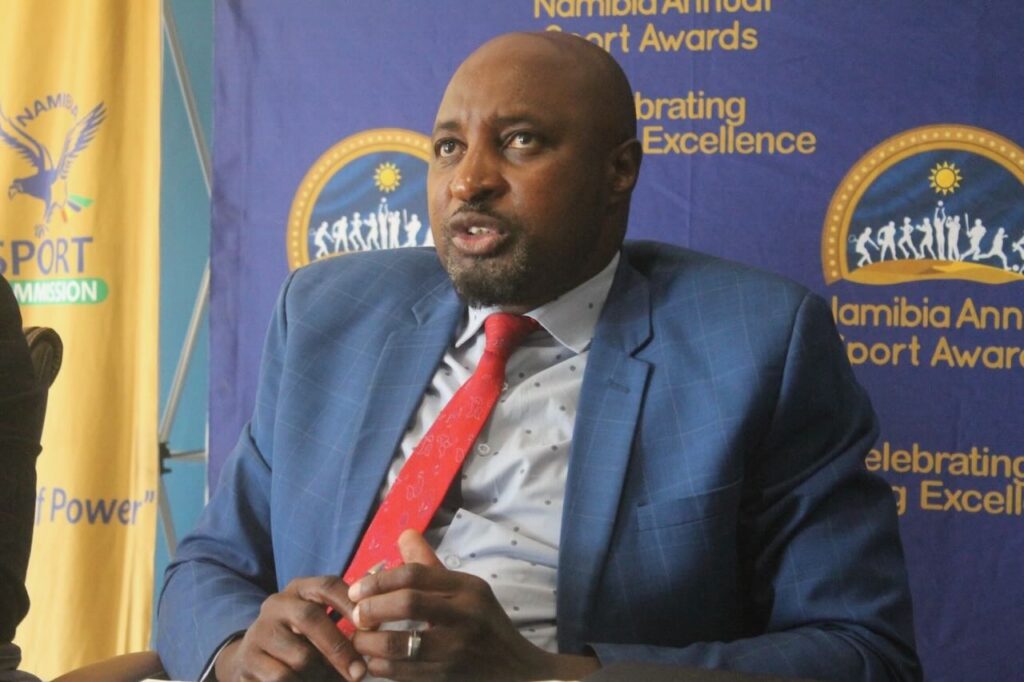
Namibia Sports Commission chief administrator Freddy Mwiya has called for a new funding ecosystem to properly develop grassroots school talent into elite athletes.
Mwiya was speaking at a Namibia Schools Sports Union (NSSU) workshop on funding, sponsorship and resource mobilisation in Windhoek last week.
He said the purpose of his briefing was to guide the NSSU and other sport structures on positioning school sport, leagues, competitions and development programmes for funding, sponsorship, partnerships and broader resource mobilisation.
“The central message is that Namibia must change the way sport is funded and sustained,” he said.
“The Namibia Sports Commission (NSC) remains the anchor public funder and regulator of sport, with government allocation continuing to provide an important foundation for national sport development,” Mwiya said.
“However, government funding alone cannot sustainably finance the growing needs, opportunities and ambitions of the entire sport ecosystem.”
Mwiya said the challenge is is to build a new sport funding ecosystem in which the government, the private sector, philanthropists, development partners, donors, communities, commercial sport clubs and other stakeholders all have defined roles in financing and sustaining sport.
“This requires a fundamental shift from asking for money to presenting sport as an investment in people, talent, communities, development and the economy,” he said.
“The NSC is therefore taking the lead in promoting a structured transformation of sport funding, sponsorship and resource mobilisation in Namibia.
“Namibia has enormous sporting talent. However, talent does not automatically become performance,” he said.
Mwiya said a talented child needs opportunity, participation, identification, development, competition, coaching, performance, elite sport and international representation.
“At present, one of the major risks is that talented young people can disappear from the sport system because the structures required to identify, develop and retain them are not sufficiently resourced.”
He said: “If Namibia wants international athletes, national teams, professional leagues and internationally competitive sport, it must first invest in the structures that identify talent at the grassroots and regional levels.”
SCHOOLS SPORT AS ANCHOR
He said the NSSU has an important strategic role in this transformation.
“The NSC should support efforts to revive and strengthen annual regional schools football and netball competitions as an important anchor for grassroots participation and talent identification.
“These competitions should not be viewed merely as annual sporting events. They should become part of a national talent development pipeline.”
The school system must become one of the most important talent identification entry points into the national sport system, Mwiya said.
“Football and netball provide strong examples because of their broad participation base, but the principle must extend to all sporting codes.”
Mwiya said the NSC remains the anchor funder of sport through government allocation.
“However, the traditional model in which sport structures primarily approach the NSC or government whenever they require money is not sufficient for long-term sustainability,” he said.