



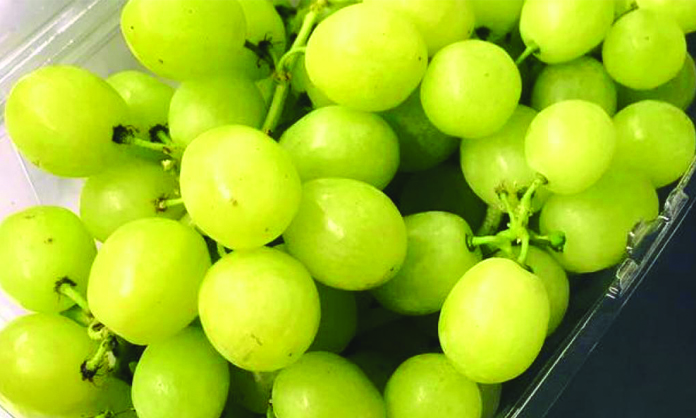
NAMIBIAN company Kunene Grapes and Citrus Et Al (Pty), is embarking on a N$600 million project to grow grapes, citrus and avocado on a 670-hectare plantation in the north-western part of Namibia.
According to company director Uushona Shiimi this is the first grape project north of the cordon veterinary fence, as the sector has been dominated by commercial farmers in the south, mainly along the Orange River.
He said the project, which will be developed in phases, is unique in that it is located in the communal area at Otjomaungu village in the Epupa constituency, home to one of the most marginalised sections of the Namibian population.
The area is mainly inhabited by the traditionalist Himba and Zemba people.
The agricultural plot is located some 16 kilometres west of the town of Ruacana, bordering Angola towards the north and located close to the Kunene River.
According to environment specialist Kaukurauee Ismael Kangueehi, the project could transform the area, whose vegetation can broadly be classified as western highlands thorn bush shrub land.
He said potential environmental impacts associated with the proposed development have been identified and will be assessed in the Environmental Scoping / Impact Assessment (EIA) study.
The first phase of the project will create 350 permanent jobs as grapes, avocado and citrus will be grown on a rotational basis throughout the year. Seasonal workers will be hired as the need arises,” he said, adding that this will help stem people’s migration to look for work in urban areas.
Kunene Grapes and Citrus Et Al is a wholly owned Namibian agribusiness.
A partner in the business, Kevin Thembikozi, said studies had shown that growing grapes in the development-deprived Kunene region would give them a three-week marketing advantage over growers in Aussenkehr valley because the more favourable climate conditions will make the grapes ripen faster.
He said they had conducted successful pilot projects on five hectares each between Tsumeb and Tsintsabis for grapes, and at Outjo for citrus fruits.
Thembikozi said the project will start as soon as all statutory requirements have been completed, including water drawing rights from the Kunene River and the EIA.
He said they have engaged the Ukolongahui Traditional Authority over the project for the past six or so years – who have welcomed the project.
Shiimi said the project will be an economic boost for Ruacana’s secondary industries making it unnecessary for vendors to drive to the south to buy grapes.
He said they had done a study of the market and will sell part of their produce locally, although most would be for the European export market.
“We also plan to build a juice-making factory to create more employment opportunities and we will use the Omakange-Ruacana road to send produce to Walvis Bay for export. Farmers in the south export through South Africa,” he said.
The horticulture industry in Namibia is growing steadily, but is faced with many challenges such as drought, high input costs, pests and diseases.
Namibia remains a net importer of mainly fresh fruits, while the production of most vegetables has been on the increase for the past 10 years after the Namibian Agronomic Board (NAB) introduced the market share promotion scheme, which requires traders to buy a certain minimum, currently 47% of the value of locally produced products from local producers, as a condition for importation.
The NAB says local production primarily targets the fresh produce domestic market and exports of mostly table grapes and onions. The agro-processing subsector is still in an infancy stage, with less than 1% of production going to agro-processing.
The NAB said the local production of citrus fruits in Namibia amounted to 448 tonnes in the 2021/2022 financial year.
Namibia imported 7 281 tonnes of citrus fruits in the 2021/2022 financial year. This comprised 4 916 tonnes of oranges, 1 520 tonnes of tangerines, and 845 tonnes of lemons and limes.
– email: matthew@namibian.com.na
In an age of information overload, Sunrise is The Namibian’s morning briefing, delivered at 6h00 from Monday to Friday. It offers a curated rundown of the most important stories from the past 24 hours – occasionally with a light, witty touch. It’s an essential way to stay informed. Subscribe and join our newsletter community.

The Namibian uses AI tools to assist with improved quality, accuracy and efficiency, while maintaining editorial oversight and journalistic integrity.
Stay informed with The Namibian – your source for credible journalism. Get in-depth reporting and opinions for
only N$85 a month. Invest in journalism, invest in democracy –
Subscribe Now!