Lawmakers are questioning how the National Youth Development Fund monitors funded projects, after a parliamentary committee has struggled to trace some beneficiaries.
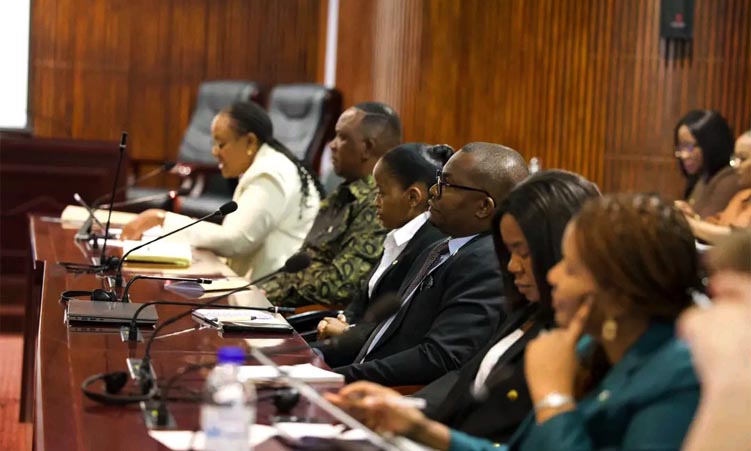
This comes amid concerns over loan repayments, monitoring and the use of public money, which emerged during a session with the parliamentary committee on youth, civic and community development yesterday.
Lawmakers questioned how financial institutions were tracking beneficiaries and verifying whether funded projects were operating as intended.
“We struggled to find these youth projects and even your own officials on the ground do not know where these projects are located. So how are you monitoring these projects after funds have already been given?” deputy committee chairperson Austin Samupwa asked.
He said a comprehensive report will be compiled and submitted to the National Assembly.
The National Youth Development Fund (NYDF) was launched last September to combat the high youth unemployment rate by developing young people into job creators through entrepreneurship.
Over 300 youth projects were approved last year.
Minister of finance Ericah Shafudah yesterday acknowledged that the government had suffered losses under the programme, which offers loans at interest rates of between 2% and 4%.“We have lost money,” Shafudah said, without disclosing the amount lost or the number of beneficiaries who had failed to repay their loans.
She warned that some beneficiaries who had failed to meet their obligations continued approaching the government and participating financial institutions for further assistance.
Shafudah said the fund was designed to help young entrepreneurs who struggle to access conventional financing because they lack collateral.
She said the government was developing a database with participating financial institutions to track beneficiaries and assess the programme’s impact.
The government initially aspired to allocate N$500 million annually to the programme but could only afford N$200 million during the 2025/26 financial year, she said.
The fund is administered through the Development Bank of Namibia (DBN), Agribank and the Environmental Investment Fund (EIF), which was engaged by the committee.
MONITORING UNDER SCRUTINY
DBN head of small and medium enterprise financing Nelson Simasiku yesterday said the bank had disbursed about N$52 million from N$76 million in approved loans.
He attributed delays partly to capacity constraints and beneficiaries failing to register their businesses after approval.
“If your capacity is to, for instance, assess a thousand applications in a month if you receive 10 000, there will obviously be delays,” Simasiku said.
The bank has employed fixed-term workers and recruited 15 interns to help process applications.
Simasiku said loan approvals do not automatically trigger disbursements, because beneficiaries must register their businesses before contracts can be prepared.
Members of parliament (MPs) yesterday questioned whether applicants who qualified for funding but could not immediately access the money would have their applications reconsidered or removed from the system.
They also challenged the requirement for applicants to be bankable, arguing that the fund was intended to remove barriers to financing.
Derek Klazen questioned whether the five-year repayment period could be extended for beneficiaries experiencing difficulties, while Tuhafeni Kalola criticised the DBN’s alleged lack of engagement with communities and beneficiaries.
Lawmakers called for stronger monitoring, greater transparency on funded projects and more equitable regional allocations.
MISUSED LOANS
Agribank senior manager for sales Taleni Katoma said projects funded by the bank worth N$37.3 million were expected to create 5 432 jobs.The projects mainly cover food production, agriculture, agro-processing and aquaculture.
Katoma identified poor project management and the diversion of loan funds from their intended purposes as key challenges.
Agribank has trained 83 beneficiaries and recruited 11 graduates to assist with assessing applications.Katoma urged MPs to advise how to hold non-compliant beneficiaries accountable without unfairly excluding deserving young entrepreneurs.
Meanwhile, EIF head of business development and portfolio management Yvette Hausiku yesterday said poor awareness and misinformation were limiting the fund’s reach.
The EIF received 178 applications, comprising 118 men and 60 women, and reported the disbursement of 86% of its approved funding value.
Hausiku also warned that individuals were charging applicants for assistance, despite applications being free.
The EIF has disbursed N$45 million from N$86 million in approved loans.