





Otjiwarongo, Otjozondjupa region. 13 April 2026.
___________________________________________________________
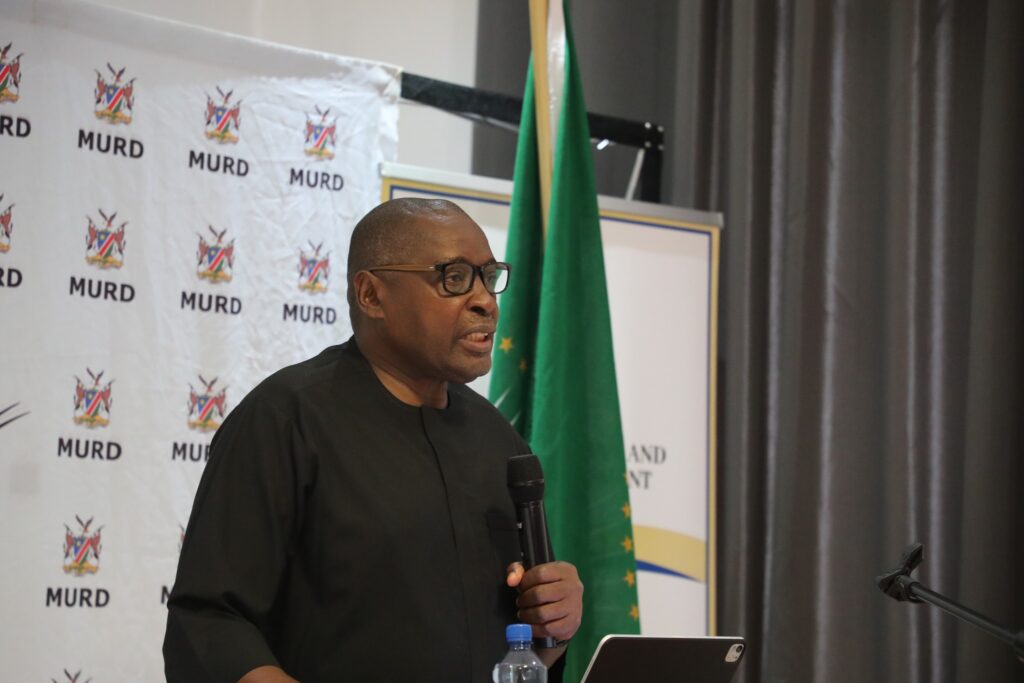
It is with a deep sense of honour and commitment to our traditional leaders that I stand before you today. I am pleased to welcome you all to this crucial consultative workshop, which aims to review, amend, modernise and even overhaul the Traditional Authorities Act, 2000 (Act 25 of 2000), as agreed at the meeting held on 5 February 2026 in Windhoek. On this occasion, we will also confirm the inputs provided on the amendment of the Council of Traditional Leaders Act during that meeting.
Let me take this moment to acknowledge the chairperson and deputy chairperson of the council of traditional leaders, Immanuel /Gaseb and Fillemon Shuumbwa Nangolo, as well as traditional leaders who travelled from across the country to attend this workshop. Your presence reflects your dedication to serving your communities and strengthening the legal framework governing traditional authorities. I also extend sincere gratitude to facilitator and drafter Advocate Harmse, as well as technocrats and legal officers from the ministry of justice and labour relations for their role in this workshop.
The Traditional Authorities Act of 2000 and the Council of Traditional Leaders Act of 1997 have served the country for over two decades. While they provided a foundation for recognising and regulating traditional communities after independence, the landscape has changed. We face ongoing leadership succession disputes, an increase in communities seeking recognition, the need for improved financial management, and a dynamic operating environment. Some provisions of these Acts no longer serve their purpose, while new challenges require amendments or new provisions.
The implementation of the current Act has proven problematic. It is increasingly being used for political gains rather than the promotion and preservation of traditions, customs and cultures.
For example, the definition of “chief” in section 1 of the Act raises serious concerns about its intended application. It refers to the supreme traditional leader of a traditional community, read together with the definition of a communal area. This raises critical questions about whether a traditional community is equivalent to a tribe, whether chiefs govern communities or tribes, and how many such entities should exist in Namibia.
A tribe is generally defined by shared ancestry, culture, customs, language and social structures, creating a strong sense of identity and belonging. These characteristics distinguish one tribe from another. In contrast, community leaders often represent groups based on geography or shared interests.
The current Act’s interpretation has led to divisions, with tribes fragmenting into smaller groups based on geography rather than shared ancestry, customs and traditions. Namibia risks becoming more divided as more groups seek recognition as traditional authorities.
A key challenge lies in distinguishing between a chief and a community leader. Titles such as Omukwaniilwa, Fumu, Gaob, Mulena and Ombara refer to traditional leaders, while roles such as Mwene-o-Mukunda and Silalo-Induna refer to community leadership. Increasingly, district headmen and headwomen are being referred to as chiefs, which is incorrect. This trajectory threatens national unity.
Section 4(1) of the Traditional Authorities Act allows members of a traditional community to designate a chief or head in accordance with customary law. However, this does not imply that every community should be recognised as a separate traditional authority.
Government, under the direction of the president, remains committed to upholding the rule of law and ensuring that traditional leadership functions effectively without unnecessary division. Existing traditional authorities will be required to demonstrate their legitimacy and clarify whether they should exist as independent authorities or as sub-structures under established traditional authorities.
During our deliberations, let us critically examine these Acts and the proposed amendments, ensuring they are aligned with Namibia’s context and promote peace and stability in our communities.
Let us strengthen governance and accountability as we contribute to the amendment process.
I call on all participants to engage in open, honest and constructive dialogue over the next five days. This is an opportunity to shape laws that will govern communities for generations. Let us ensure our traditions and customs foster unity, peace and development rather than conflict.
I look forward to meaningful discussions and recommendations that promote unity in Namibia.
With these remarks, I declare this workshop officially open.