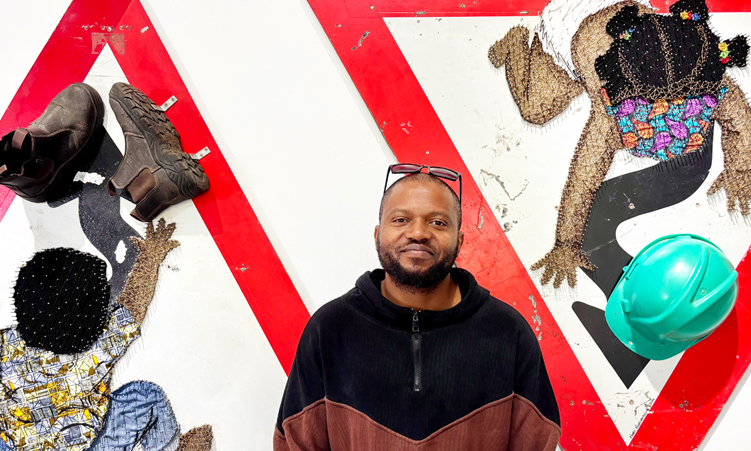






Veteran musician Erich Mahua says Namibian artists are better off united than trying to compete against each other.
The award-winning singer and songwriter says local artists should try to find their own identity and not just follow trends both locally and from South Africa.
“It is obvious that people are just competing against each other, which is not necessary. We are better off as a united front and we should support each other. I, like Big Ben, am a township disco artist, but we don’t sing the same way and our stage act is different,” he says.
“What stops me from supporting, firstly as a fellow artist, and secondly as a fellow Namibian? Maybe our artists should study the concept of music and start being proud of their own talent.”
MUSIC IN THE BLOOD
Mahua scooped three awards at the 2001 NBC Music Makers competition, including the overall award after also clinching the AIDS song and solo male categories.
Born at Okahandja, the singer says he comes from a musically inclined family.
“Both on my paternal as well as my maternal side. My father, Albert Mahua, and his brother, Theodore Mahua, are renowned singers. My mother is from the Rukero and Kauapirura families who are also singers,” Mahua says.
“Music is in my DNA through and through. The fact that I started singing from a very young age also served as therapy for my vocal cords, and my voice was shaped to perfection during my choir years.”
Mahua says he started singing in the school choir at Omatjete village in the Erongo region in 1990.
“I also sang in the Otjohorongo Male Vocal Quartet with three of my childhood friends.
“I am very comfortable with any vocal range and I was singing bass for the quartet before I was converted to tenor when I joined the acclaimed Soli deo Gloria choir in Windhoek. In fact, the leaders of Soli spotted me while I was singing with the Otjohorongo quartet.”
He says his fellow choir members encouraged him in 2000 to take part in the Music Makers competition, but he only entered for the 2001 edition.
“Our choir members were very supportive and they told me I had a good voice and a strong personality and should seriously consider entering. I must admit I didn’t have the courage and readiness to enter a competition as a solo artist,” Mahua says.
“But I can only thank them today for giving me the courage to sing on my own. I learnt a lot from people like the late Willy Mbuende on aspects like the correct way to hold the mic while singing. I didn’t know much about showbiz and winning came as an absolute shock to me.”
STREET ANTHEM
His song ‘Tjevereye Ehinga’ became a street anthem and earned the singer instant stardom throughout the country.
Mahua says the Music Makers competition in 2001 was his first big gig, with his second-biggest gig being his solo show at the old Warehouse Theatre in the same year.
The award-winning singer is one of the many performing artists who decry the closure of this venue, which was the mecca of live bands.
Mahua, who now mostly concentrates on farming, says his love for singing was inspired by reggae music.
He says music is an ongoing part of his life – “even while I’m sleeping, my soul is singing”.
“I am currently just concentrating on my gospel career. The township disco gigs I only do on request. Right now, I’m powering ahead by composing and releasing gospel music, and it really gives so much pleasure to stay connected with my Maker through music,” he says.
“I have six township pop albums and four gospel studio albums now.
“Music has become a very rare and exclusive business. Getting gigs depends on who you know. Our people should stop inviting musicians from outside the country to headline our events.”