National Assembly speaker Saara Kuugongelwa-Amadhila has clarified that members of parliament (MPs) are not automatically entitled to leave of absence, stressing that such requests can be declined under the assembly’s standing rules.
Kuugongelwa-Amadhila made the clarification on Tuesday in response to a growing number of leave notices submitted by MPs from various political parties.
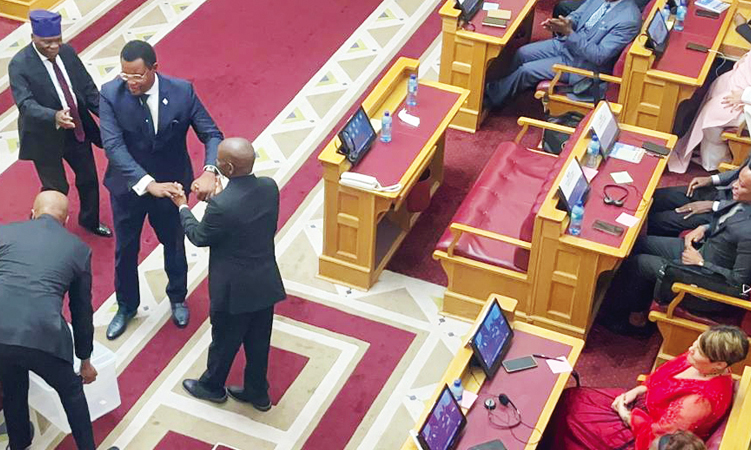
During yesterday’s sitting, more than 10 MPs requested for leave of absence.
Citing Standing Rule 76, Kuugongelwa-Amadhila explained that it says the assembly “may” grant leave, not that it “must”.
This, she said, makes it clear that approval is not automatic and can be declined where necessary.
“These are the rules of the assembly and not the prescriptions of the presiding officer,” she said.
She stressed that MPs, as representatives of their respective parties, have a duty to attend sittings of the house.
While members can be excused, such decisions remain subject to the approval of the assembly, she added.
The speaker said her remarks were prompted by a perception among some MPs that simply submitting a notice to travel or be absent guarantees approval.
“There seems to be a misunderstanding that once a notice is submitted, the leave will automatically be granted. That is not the case,” she said.
Kuugongelwa-Amadhila added that if MPs believe attendance should not be compulsory, they should seek to amend the standing rules.
“Until then, the current rules will continue to be enforced,” she said.
She outlined that leave of absence is typically granted only under specific circumstances.
She said these include situations where a member is unable to perform their duties due to illness, bereavement involving close family members, official committee responsibilities, or travel related to parliamentary functions.
Any request for leave must be formally submitted through a motion of notice, clearly stating the reasons and the period of absence, she said.
The request must also be agreed upon by party chief whips. Failure to follow the required procedures may result in the application being rejected.
“You must provide reasons why applications for leave of absence must be granted,” she said.
Meanwhile, Swanu of Namibia president Evilastus Kaaronda suggests that the standing rules may need to be reviewed.
He argues that matters relating to leave of absence should be handled by party chief whips instead of being debated on the floor of the assembly, unless exceptional circumstances arise.
Kaaronda also questions the practice of the president authorising the speaker’s leave, saying it does not imply that a similar arrangement should apply to MPs.
Affirmative Repositioning chief whip Vaino Hangula says the current practice is fine, although more clarity is needed on the reasons attached to leave applications, some of which do not need to be disclosed.
He adds that absence of leave needs to be addressed carefully to avoid having too many MPs on leave, which could affect parliamentary functions.
In a separate concern, Independent Patriots for Change parliamentarian Michael Mwashindange has raised issue with the attendance monitoring system.
He cites instances where members present in the chamber were incorrectly recorded as absent on the system on two occasions, raising questions about the reliability of the attendance register.