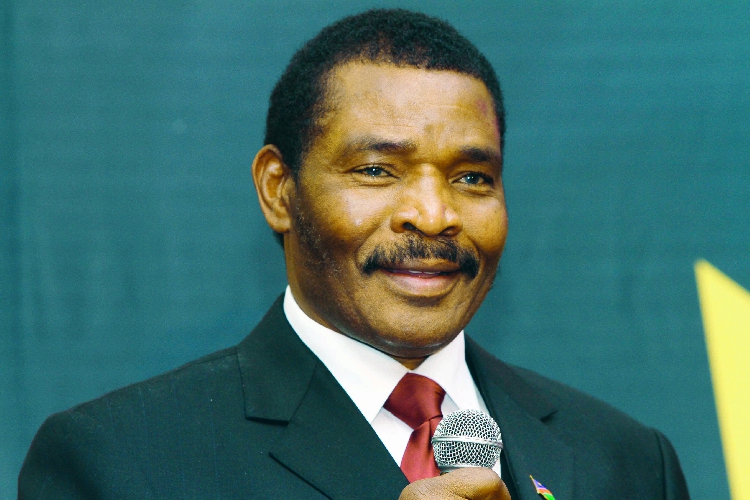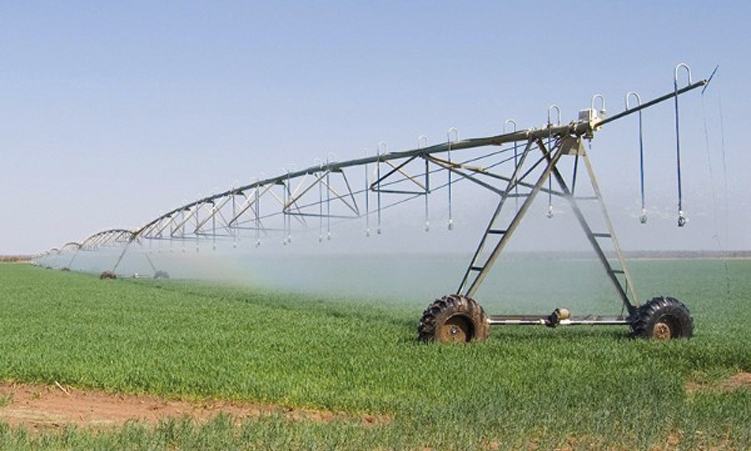
Kavango East governor Julius Hambyuka says government-run green schemes in the region are showing signs of improved production.
Hambyuka recently told podcast ‘Farmers Inside Track’ that some of the green schemes are now fully operational.
Several schemes, however, still lack enough equipment and farming implements, he said.
The Kavango East region has six green schemes – the Shadikongoro, Shitemo, Mashare, Sikondo, Ndonga Linena and Uvungu-Vungu projects.
Hambyuka said government-run green schemes currently receive funding from a central pool. He said giving schemes dedicated budgets would help them become fully operational and productive.
Ministry of Agriculture, Fisheries, Water and Land Reform spokesperson Romeo Muyunda says the shortage of equipment and implements has been a long-standing challenge because of budget constraints.
He says the ministry is aware of the problem and is prioritising buying more equipment and implements.
“It is something we should be able to resolve in the long run,” Muyunda says.
Hambyuka’s latest assessment comes after he raised concerns about green schemes in the region’s performance last July.
At the time, he called for dedicated budgets and decentralised management to revive dormant green schemes and improve food production in the region.
His concerns followed visits to some green schemes, during which he found some were not operating at all, while workers continued to receive salaries despite not working.
In the same year, agriculturalist Winni Metzger, the private operator of the Musese green scheme in the Kavango West region, sent Hambyuka proposals on how green schemes could become productive, sustainable and profitable.
Metzger proposed that each green scheme should have a 12-member advisory board comprising representatives from communities, traditional authorities and regional councils, as well as agricultural extension officers and green scheme managers.
He also proposed that 50% of green schemes be privately operated, arguing that government-run schemes use taxpayers’ money while struggling to make a profit because of a lack of ambition, entrepreneurship and ideas.
“This ration must be adjusted after 10 years towards the better operating model with compensation of the inputs to investors,” Metzger said at the time.
He proposed that green schemes contribute N$40 per hectare each month to traditional authorities to secure their support.
Traditional authorities are an integral part of “our age-old functioning structures in Africa and must be maintained”, he said.
Metzger further proposed that green schemes be double-fenced and serve as buying stations or markets for surrounding villages.
He said they could also serve as quarantine stations for cattle being fattened for the market.