• VERINJAERAKO KANGOTUETO most Namibians, a property/house is considered an asset. Even if you ask your grandparents, they will tell you that real estate is the greatest asset you will ever own in your lifetime.
But before we go far, let us define an asset: ‘an asset is something that we own, something of value that brings us cash flow. That is why even from an accounting perspective, a house owned by a company will be reported on the asset side of balance sheets.’
However, if we view a property/house from a cash-flow perspective, few things will change. My understanding is anything that increases our cash flow should be considered an asset, and anything that decreases our cash flow should be considered as a liability.
With that background, I can simplify that an asset is something that puts money in our pocket, while liabilities take money out of our pockets. Many people believe that their homes are assets to them, but is this true? Your house is an asset yes, but your mortgage is a liability because a mortgage is debt you need to pay off before your house or property becomes a full asset. However, a school of thought is obstinate that your house is a liability. A simple way of looking at it was popularised by Robert Kiyosaki in his book “Rich Dad Poor Dad” with focus on an individual’s cash flows.
A good example will be to ask a group of prudent investors whether their house is an asset or liability, and most of them will tell you that a house is a liability because they look at assets as things that earn them money. Let me put this into perspective: if you are living in your house as opposed to renting it out and getting an income, that house is not making you money. In fact, it is a money pit because when the geyser breaks or the roof is leaking, you need to spend more money to fix that. Even after you purchase your house, you keep paying monthly mortgage instalments, so in that sense, a house is a liability. Let us assume you have paid the house off; you will still have to pay monthly expenses on that property such as municipal tax levies, insurance and annual maintenance costs.
One may argue that the value of the house increases annually, and I do not dispute that since generally, the housing prices are on the rise. However, it will be naive to believe the growth achieved over the past decade would constantly be achieved in the future. Look at what is happening in the property market in Windhoek; prices are falling. Another important factor is that the long-term value of your house may be irrelevant since one only receives the value of the house when you sell it.
Many people retire in their houses, and most will live there until they die. So, only their heirs will receive the benefit of the increased value of that particular property.
Others will then ask: does that mean real estate is a bad investment? My answer is, not necessarily. If you are buying a house to rent out a section thereof and your rental income covers your expenses, then your house is an asset and not a liability. But if not, then it is a liability.
The cruel truth is that our homes are in fact not assets, but liabilities to most of us. But they are assets to the banks since they produce positive cash flows to the banks on a monthly basis. The main point of this article is not to discourage you from buying a house or investing in properties, but rather to make you aware that you could make a serious financial mistake should you purchase your house with the idea that it is an investment.
To have future financial independence, we should strive to have income from multiple sources. This is achievable by only increasing our asset base and diversification, or by investing in things like company shares which pay out dividends, or perhaps purchasing a property with the intention of renting out a section or whole house to tenants, and get positive cash flow to cover the costs of the house’s monthly expenses. One can even study further, which will enable you to earn a higher salary.
Our future financial independence will not come from purchasing multimillion-dollar properties or buying boats or cars and using every dollar earned to pay off our debts, but from making prudent, financially sound investments with positive cash flows.
The bottom line here is, before you buy your next house, you should be able to ask yourself “what’s it going to cost me?”, as opposed to “how much can I make from it?” My personal advice is that do not commit a huge percentage of your income to buying an ‘asset’ that may turn out to be a liability. In fact, that will even help you keep your monthly housing costs in line with your monthly income.
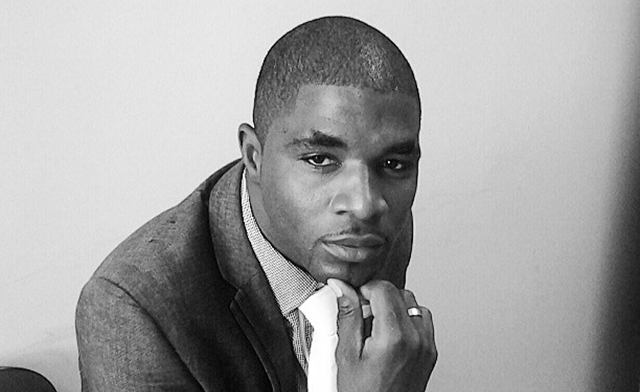
* Verinjaerako Kangotue is a junior lecturer in the department of land and property sciences at the Namibia University of Science and Technology (NUST). He writes this opinion in his personal capacity.