








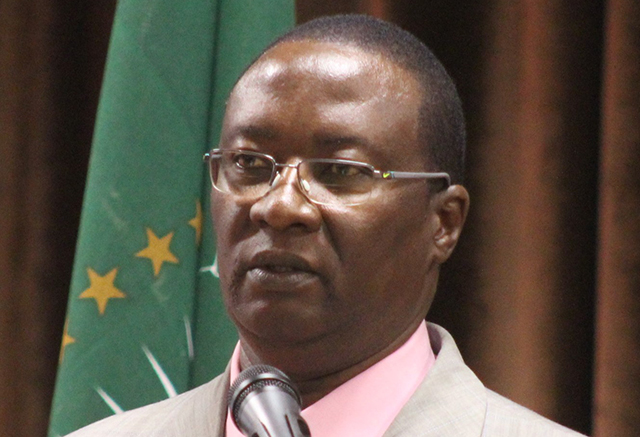
ERONGO governor Cleophas Mutjavikua says the time is over for only a few individuals to enjoy fishing rights while the majority of Namibians suffered.
He addressed nearly 1 000 people who crammed into the Tamariskia community hall at Swakopmund on Friday for a fishing rights public information session. Similar sessions are being held across the country.
The meetings come a few weeks after the new fishing rights guidelines were gazetted by fisheries minister Bernhard Esau.
The conditions set for the application of new rights are reportedly aimed at curbing corruption, although mixed reactions have greeted the new guidelines, and it was no different at the information session at Swakopmund.
While many applaud the new guidelines as a step in the right direction to stop the elite few from exploiting Namibia’s resources alone, others said the new conditions would do the opposite – widening the divide between those who have the means, and those who do not.
There are 96 fishing rights to be issued this year in nine fisheries species, namely hake, horse mackerel, monk, red crab, rock lobster, line fish, large pelagic, mullet and seals. The deadline for submitting applications is 31 July.
One of the biggest changes is the rule making it compulsory for fishing quota applicants to submit applications as a proprietary limited company instead of a close corporation, as was the case in the past.
A close corporation or a trust can, however, be a shareholder in a private company if they are issued with share certificates, and have a shareholders’ agreement with the applicant.
The reason for the change was that CCs lured vulnerable communities and innocent people to apply for rights, but once the rights were issued, the communities and those promised shares were dumped.
Other conditions include that only Namibian citizens could apply; that applicant companies should not be listed on a stock exchange; that individuals and non-profits could not apply, unless they were certified members of a company; and that trustees were also beneficiaries.
Mutjavikua said if Namibia wanted to transform its economy, all Namibians needed to have a share in the economy and the country’s resources.
“It is futile if we announce these plans today or tomorrow, and after a month it is still the same people that are part of this. It is futile. If the lion’s share is still concentrated at the top level, it is going to be futile. We must make sure that the workers who go to fishing grounds are benefiting from resources too,” he emphasised.
“It is time to get serious about the change we talk about. We must not talk about change which we are not willing to make,” said Mutjavikua.
Some people at the information session still questioned the rule changes, and said these were just a smokescreen to benefit the elite.
“The government knows that the poor are unable to do certain things, such as know what a Pty (Ltd) is and how to establish it, and also the business skills required to have such a company, or have contacts with such companies with whom we poor people can connect.
“You have given us two months to do all this, while the ‘fat cats’ and connected politicians have such companies already, or have even been warned before the time to get ready for the move,” a frustrated community member, who wished to apply for rights, said.
There was general agreement that the fisheries minister should at least push the application deadline to the end of the year to allow all interested parties to get their business in order.
Another member of the audience also said politicians were eager to only ensure that every Namibian knows how to participate in elections, and to vote.
“Why not give the same time and make the same effort and have the same zeal to ensure everyone knows about the fishing rights? If it is really your motive for all to be included, you would do that,” another prospective applicant said.
Swakopmund constituency councillor Juuso Kambueshe said the meeting was constructive, but the frustrations were also real.
“I have recognised valid concerns, and I am certain these will reach the minister’s office. I’m also confident that he will determine the right way forward. We need to appreciate his empowerment efforts. There is no under-handedness here, and we should allow for the process to develop,” he added.