






THE sign board indicating the direction to Negumbo Senior Secondary School is easy to miss, unless you look for it carefully.
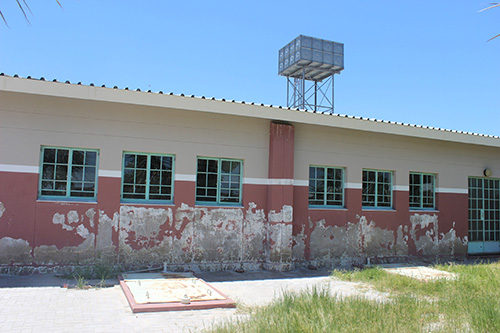
Once the metal gate is flung open and you drive through, the buildings loom large ahead. And as you draw closer, you will notice that the paint on some of the walls is peeling off.
There is a big open space in front of the administration block with a beautiful view, which is used as a small garden.
The school is about 16 years old, but it is still in good condition. The floors are clean and look well cared for, and the windows are visibly intact. None of the classrooms has air-conditioning, but there is a natural breeze that fills the buildings.
This is the same sight that greets you when you visit the six hostel blocks. Although the girls’ hostels are overcrowded, it is evident that a lot of care is put into keeping them clean.
“We have repaired quite a few of the window panes,” says the hostel superintendent Simeon Hamunyela.
Hamunyela, who is also an agriculture teacher, joined the school in 2005, at its inception, there has never been any major renovations, except maintaining drains, replacing windows and fixing lockers.
The boys’ rooms are spacious because they can accommodate 192 pupils, but currently have 180 only. The normal room capacity is eight, but Grade 11 and 12 girls stay up to 13 in a room.
The girls’ hostel matron Theofilia Shikongo said the secret behind the clean rooms is “plain discipline.” Shikongo said they teach the pupils how to take care of their rooms from the very beginning when they are admitted to the hostel. While the staff is responsible for cleaning and mopping the hostel floors and the entire block every day, the pupils take over that responsibility during weekends when the cleaners are off duty.
“They should always make sure their beds are made in the morning before they leave for classes,” she said, adding that pupils are punished if they do not clean up.
Hamunyela said they collect N$30 per pupil per term for maintenance and renovation of the school. He also said if they wait for the Ministry of Works and Transport to do the maintenance, things would never be done.
“Response from the ministry is very slow, and sometimes they do not have the materials. There was, however, a time we had a problem with our sewage system and they responded promptly,” he said.
Hamunyela said at times they also struggle with money to buy cleaning materials.
“Now we want to focus on repainting the administration block, and later move on to classrooms as money comes in,” he explained.
The school has also switched to using an electric bell to signal the end of each lesson. It also rings for tea break, and lunch hour as well as study time.
The dining hall is a stone’s throw from the girls and boys’ hostels. The hall cannot accommodate all the pupils at once, so some have to remain standing outside waiting for others to finish their meals. This is especially the case during lunch and dinner.
The pupils take their breakfast at 05h50 on Monday and Friday because of the morning devotion which starts at 06h30. From Tuesday to Thursday, breakfast is at 06h00; tea break from 10h35 to11h15; lunch at 13h15; and dinner at 18h00.
During weekends, their breakfast is at 08h00 while lunch is at noon on Saturday and at 13h00 on Sunday. Dinner is at 18h00 on both days.The computer elaborately which has neatly drawn curtains, is well equipped with 20 computers and has air-conditioning. The school also has a library. There are three teachers’ houses, 12 flats, one soccer field, a netball court and a basketball court.