IN THE tumultuous 1980s during Namibia’s independence struggle, 400 children, some as young as three and many orphans, were shipped off to East Germany to be groomed as model communists and their country’s future elite mdash; until the Berlin Wall fell.
Their forgotten odyssey, sealed in a deal between Swapo, Namibia’s Soviet backed liberation movement, and the East German regime, is now told in a new play, ‘Oshi Deutsh: The GDR Children of Namibia’.
And four decades later the question remains mdash; was it bad luck or good fortune, to be removed from families and friends, but also from war and desperate refugee camps?
‘For me, it was to save my life,’ said Lucia Engombe (43), who was plucked from a camp in nearby Zambia at only six years old and put on a bus to the airport. ‘Even as a child, I understood that.’
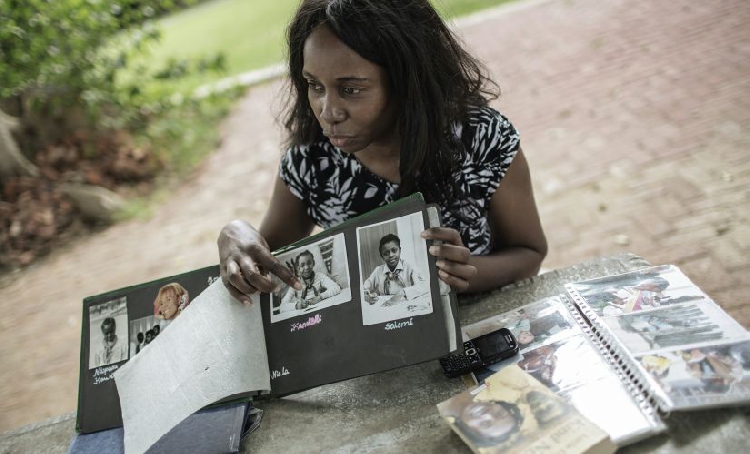
Flipping through the pages of an old album, Engombe pointed to yellowed photos of her classmates: one now a lawyer, another an engineer, two others married and living in Europe.
The young black Namibians were then pupils in a small village school in East Germany, and their maths, biology and other lessons were heavily infused with hardline communism.
At the time, Namibia, a former German colony, was under South African occupation.
War raged between the troops of the apartheid regime and Swapo resistance fighters as thousands of Namibians fled to refugee camps in Angola and Zambia.
‘I knew that Zambia was not good for us because there was war,’ recalled Engombe.
‘If they said, ‘Throw yourself on the floor’, you had to throw yourself on the floor. If they said ‘Run’, you ran for your life. We were living in constant fear.’
She would learn years later that she was severely malnourished at the time and her mother played a role in sending her away.
When she and the other youngsters arrived in East Germany, they were set up in a castle in the village of Bellin.
Under the strict supervision of both German and Namibian teachers, they learnt German mdash; Engombe still speaks fluently mdash; along with their political education and regular classes.
‘It was intense military training,’ recalled Monica Nambelela, who was taken to East Germany when she was just three years old.
‘Swimming, fighting. You know, they said we were going to liberate our country. We were going to be the elite.’
Nambelela, a government official, refuses to see herself as a victim.
‘I consider myself very, very privileged,’ she insisted.
‘That education system embraced everything you need to know in life, important values about hard work, and punctuality, about standing up for one’s country, about being incorruptible.’
‘Oshi Deutsh: The GDR Children of Namibia’ – the title is a twist on German and Oshiwambo, the most spoken local language in Namibia – will be staged in both Namibia and Germany, looking back at this period.
‘With all our history, it’s easy to see how (the play) could be dark, but you really have to be able to liberate yourself and see what good came out of those years of struggle,’ playwright Ndhinomholo Ndilula told AFP ahead of a performance in the capital, Windhoek.
Engombe, now a producer of German language education programmes on Namibian national television, recorded her own experience in an autobiography entitled ‘Kind nr 95’ (‘Child number 95’).
Isolated from her parents for years, she eventually learnt that her mother was living as a refugee in the Soviet Union.
But when she asked to be allowed to write to her father, she received a categoric no. She was told he was a traitor: an enemy of Swapo.
‘I was only a child, I didn’t understand those things, so I asked, ‘what’s a traitor?’ When they told me, I cried.’
When that didn’t dissuade her, a teacher told Engombe her father was dead.
Her hunch was right, and when she returned home years later she found him.
The fall of the Berlin Wall in 1989 brought an abrupt end to the German exile of the young Namibians.