





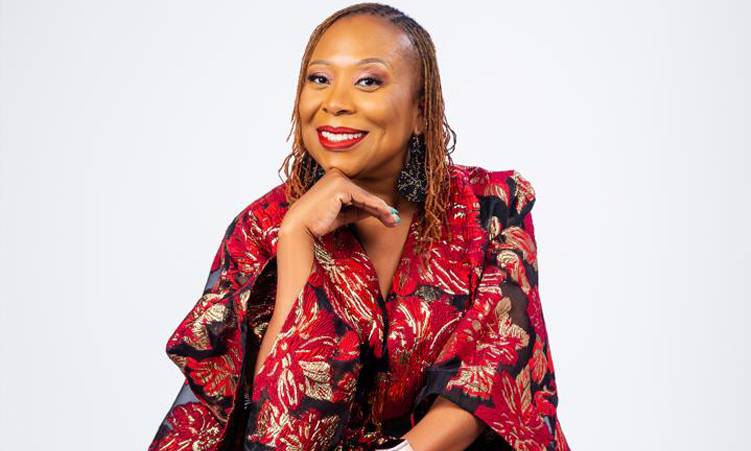
When Karen Nakawala (53) found out she had cervical cancer, she could not believe it because she did not feel sick at all.
For almost 10 years, her gynaecologist friend had been urging her to go for a cervical cancer screening. Nakawala says she had been ignoring the idea, since 2010.
In 2019 she finally went. for the screening and the result changed her life.
“I died in that moment. It was a cold moment for me. I was numb. I saw my life shattered … I wasn’t sick at all, cancer didn’t look like me,” she says.
Nakawala says she remembers being very angry, anxious and frustrated. She thought she was going to die and leave her two children, aged nine and 23 then, without a mother.
“I was healthy and doing everything right … I was sure I was going to die,” Nakawala says.
She says the screening was random and unplanned, adding that she wanted her friend to stop pestering her about getting screened.
“I thought okay, let me get it out of the way,” she says.
During the process, she says she began bleeding and thought the instrument had pinched her internally. However, the gynaecologist gave her shocking news – the screening showed a growth on her cervix.
Results came in a week after and she was told she has cancer on her cervix. She started treatment a month later.
“There were needles in, needles out, checkups, CT scans and X-rays. At that point I was numb. I could not feel pain,” Nakawala says.
She says although she was scared at first, she felt lucky because the diagnosis was in its early stages, and she started treatment immediately.
The Zambian former radio host and media personality, who spent decades telling other people’s stories, is now an advocate for cervical cancer.
“Everything was happening in real time,” she says.
Her breakthrough came after she completed the treatment, having feared she would not make it through.
She urges women to get screened because it helps with early detection.
“I kept the diagnosis a secret because I did not know how people were going to take it. Only my partner, sister, two daughters and a few friends knew,” Nakawala says.
“Before anyone could stigmatise me, I stigmatised myself. But it wasn’t as harsh as I expected it to be,” she says.
She says she ignored the symptoms, assuming it was menopause. She finished her treatment in September the same year she was diagnosed. Since then she had been going for screening every three months.
“I transformed to four months, then six months, and now I only go once a year,” she says.
There is no specific age for developing cancer, she says.
\She urges fellow women to undergo regular cervical cancer screening and young girls to get vaccinated.
Studies show that cervical cancer is the second most common cancer in women in Namibia, with over 450 women diagnosed every year.
In Zambia, it is the number one killer of women, with over 4 000 diagnoses a year and 60% deaths annually. Globally it is the fifth most commonly diagnosed cancer in women, with around 604 000 new cases and around 280 000 deaths in 2024.
It is also the leading cause of cancer death in women in sub-Saharan Africa and parts of South and Central America, Melanesia, and Southeast Asia.
In 2016, The Namibian reported that there were 1 426 cases of cervical cancer reported during the period.
Cancer Association of Namibia (CAN) chief executive Rolf Hansen says human papillomavirus (HPV) infection is a major cause of cervical cancer.
HPV is a group of more than 200 related viruses that can cause growths called papillomas. Hansen says the virus infects cells on the surface of the mouth, skin, genitals, anus and throat.
“It can spread from one person to another during skin-to-skin contact or through sexual activities,” he says.
Hansen says HIV, smoking, a weakened immune system and a lack of screening can increase the risk of HPV infection and, eventually, cervical cancer.
He urges parents and guardians to ensure that girls aged between nine and 14 receive the HPV vaccine, which helps prevent HPV infection and reduces the risk of developing cervical cancer.
He says cancer remains one of Namibia’s biggest challenges, despite many efforts.
“Every woman deserves the opportunity to live a healthy and productive life. Every family deserves the chance to prevent a disease that should no longer claim so many mothers, daughters and sisters,” he says.