ACCESS to water and sanitation is still a pipedream for some Namibians and in the Hardap region, close to 35% of households do not have toilets.
The situation is worse at Schlip, a settlement situated about 130km north-west of the Mariental. Only 1% of 1 500 people living in Schlip have access to sanitation. This translates to 100 people having to share one toilet.
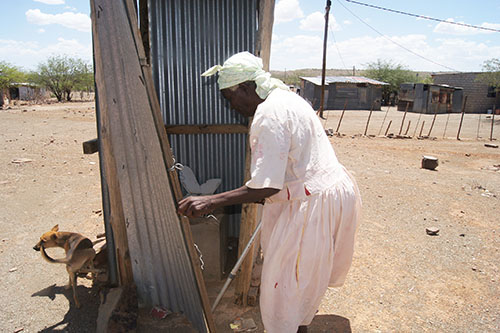
Grandma Katrina Garises (77) hopes that one day she will own a toilet in her yard, a toilet that she will not be forced to share with neighbours.
She is among the 99% of people at the settlement who often have to use open fields when nature calls.
Garises and many others use a very unhygienic toilet that previously belonged to the Evangelical Lutheran Church. The toilet is situated about 200 metres from her house.
“Since I sustained injuries to my leg in 2011 it has been hard for me to walk to the veld to relief myself. Now I am forced to use this dirty toilet. It is very unsafe to use, especially at night. I want a toilet at my house,” she said.
The absence of ablution services at the Schlip settlement is a clear indication of the levels of poverty and the poor quality of life of the population.
In order to address the situation, the Desert Research Foundation of Namibia, in collaboration with the Hardap regional council, the ministry of health, and the ministry of agriculture’s directorate of water supply and sanitation coordination, formulated the “Pro-poor approach to addressing sanitation and hygiene challenges in the Schlip settlement in the Hardap region” project.
The overall objective of the project is to improve the health and well-being of the population in Schlip through access to appropriate, safe and dignified sanitation and community capacity to sustain a healthy and hygienic environment.
Funded by the European Union through the Civil Society Foundation of Namibia, the project aims at constructing 20 toilets at a cost of N$649 998 over the next 12 months.
Riaan McNab, councillor of the Rehoboth rural constituency said the project is aligned to the Namibia National Sanitation Strategy of 2010 -2015, specifically community education and participation in hygiene and sanitation, as well as construction of sanitation systems.
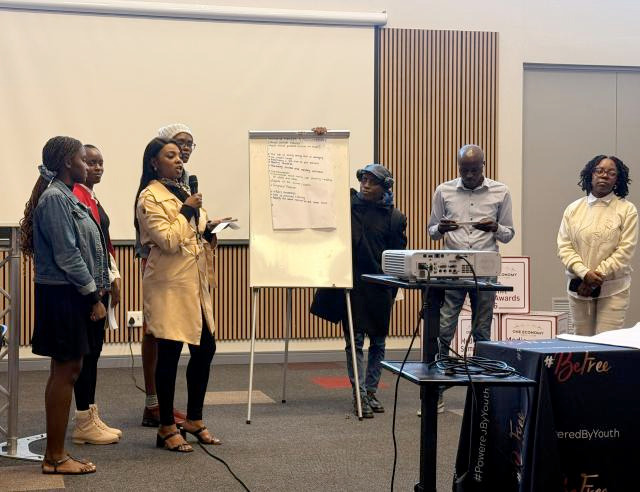
Speaking at a recent workshop held at Mariental to introduce the project to various stakeholders at the regional and local level, McNab said the project will contribute towards the realisation of the right to health.
“You will agree with me that one indicator of poverty is the general quality of life and access to basic amenities such as water and sanitation. The project will contribute towards the realisation of the right to health by creating an enabling environment for safe disposal of human waste and the adoption of hygienic practices in Schlip,” he said.
Rehoboth rural constituency has the highest proportion of households with no toilet facilities, averaging 50% of the total population.
In an age of information overload, Sunrise is The Namibian’s morning briefing, delivered at 6h00 from Monday to Friday. It offers a curated rundown of the most important stories from the past 24 hours – occasionally with a light, witty touch. It’s an essential way to stay informed. Subscribe and join our newsletter community.

The Namibian uses AI tools to assist with improved quality, accuracy and efficiency, while maintaining editorial oversight and journalistic integrity.
Stay informed with The Namibian – your source for credible journalism. Get in-depth reporting and opinions for
only N$85 a month. Invest in journalism, invest in democracy –
Subscribe Now!