



In many respects Namibia is a nation of farmers and many Namibians who are currently not farming probably hope to farm somewhere in future.
One can also argue looking at our agricultural output against the number of Namibians employed in agriculture, that we are not very efficient farmers and if we consider the amount of damage we have caused to our soil and to nature, that we are not very good farmers.
In fact, we are such bad farmers that we might put ourselves out of business sometime in the future as our farming models are not sustainable.
As a nation of farmers, we are not producing nearly enough to feed ourselves. In fact, we don’t even come close. We are a net food importer.
Just consider our food balance: Namibia exports on average 80% of all its beef, 90% of lamb/sheep and 95% of all its goats, as well as 95% of all the fish caught in Namibian waters. It imports 50% of its maize, 75% of its wheat, 50% of milk, 75% of pork, 100% of sugar; 75% of cheese, 90% of butter, 70% of chicken and 65% of fruit and vegetables.
Even if these numbers vary as they do from time to time, we only produce about 40% of the food we need to feed the nation.
Given that we import most our food, the current Covid-19 pandemic is exposing the enormous depth of our food vulnerabilities as it effects various elements in the food chain. Production is lower and transport is affected by numerous factors ranging from the suspension of aviation and, closure of borders, to political protest and violence. Some countries have started to suspend food exports to protect local food security. Finding food to import is getting more difficult and more expensive as the pandemic continues to gain momentum in the poorer parts of the world.
We should brace ourselves for the impact of these global and regional developments as we will have less food to buy and at much higher prices.
Maybe it is time to reconsider our views on becoming more food secure. Maybe it is time to reconsider our ideas on agriculture and food production. Maybe we could start by enabling everyone to grow food at home.
There are exciting, creative possibilities for food production in a small garden, and in urban areas. We need to start by rejecting the notion that agriculture is limited to rural areas. And at the same time, we need to reject the notion that it should be done on large tracts of land with mammoth supplies of water. We should embrace the idea that every individual can and should produce at least part of their food, that they can do it at home, and that they should be encouraged even to build a little business out of it.
But we need a serious mental shift. We need to change our policies and our laws and by-laws. We need to do research and we need to innovate. Education is key. We need a shared vision of how to farm, how to harvest, save and use water, how to build soil, how to grow sustainably, how to repurpose and how to generate some form of income from what we grow.
Good news is, there are plenty of places and projects where this is being done. We need not reinvent the wheel. But we need to open our minds and change our thinking.
Maybe we could all recommit to growing our own food. Maybe this is one of the blessings of the coronavirus pandemic, it is forcing us to think differently, be creative and try new ideas.
300 grams of cooked pumpkin (well-drained)
120 grams cake flour
5 ml baking powder
1 gram salt
1 large egg, beaten
Sunflower oil (for shallow frying)
Blue cheese (to serve with – optional)
125 grams of sugar
2 fresh rosemary sticks
2 fresh thyme sprigs
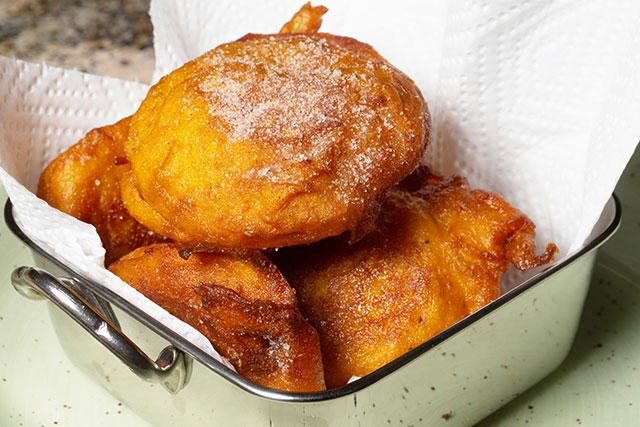
Mix all the ingredients together – then heat a non-stick frying pan with oil to fry the fritters in. Place the fritter mixture in the oil and fry until it is golden brown on both sides and cooked through. Drain the fritters on an absorbent paper towel sheet.
For an extra kick of flavour serve with blue cheese and drizzle syrup over.
In an age of information overload, Sunrise is The Namibian’s morning briefing, delivered at 6h00 from Monday to Friday. It offers a curated rundown of the most important stories from the past 24 hours – occasionally with a light, witty touch. It’s an essential way to stay informed. Subscribe and join our newsletter community.

The Namibian uses AI tools to assist with improved quality, accuracy and efficiency, while maintaining editorial oversight and journalistic integrity.
Stay informed with The Namibian – your source for credible journalism. Get in-depth reporting and opinions for
only N$85 a month. Invest in journalism, invest in democracy –
Subscribe Now!