






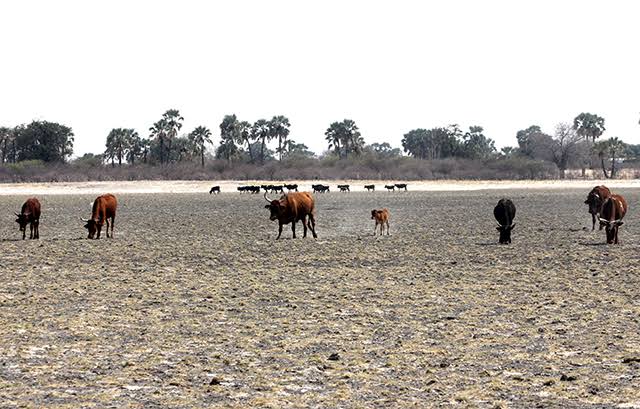
Many farming areas in Namibia have received above-average rainfall compared to some seasons in the past.
The productivity of some rangelands has improved in some areas, although the quality of the grazing materials is still not the finest.
However, the animals’ body conditions have shown improvement. It is important to note that the quantity and quality of available grazing materials directly affect livestock endurance until the next rainy season.
To this end, the next rainy season cannot be predicted with certainty, as information or warnings of a possible El Niño effect are being reported. Thus, farmers need to continuously ensure that the survival and performance of their livestock are not compromised by maintaining them in favourable health and nutritional conditions.
The normal dry season is basically characterised by two adverse conditions, namely, dry-cold and dry-hot, which threaten livestock health, nutrition, and reproductive performance.
Hence, livestock management approaches should be proactively responsive to prevailing environmental conditions.
On the topic of nutritional supplementation, livestock require a sufficient supply of nutrients throughout the year as a response to seasonal changes in rangeland conditions and body demands.
Grazing livestock such as cattle and sheep are the most vulnerable to nutritional deficiency, especially mineral deficiencies, because the soil-mineral concentration, especially in sandy areas, is beyond the grass root zones for uptake.
During the rainy season or the summer months, focus has been on mineral supplementation, with greater emphasis on phosphorus, as it is deficient in soils. Phosphorus plays a vital role in metabolic functions, among others, especially when animal feed intake is higher.
As winter approaches, the grass stops growing and enters the dormancy period where nutrients are relocated to be stored in the root system as reserves for regrowth in the next season.
During this time, grass dries up and sheds seeds and in the process, vitamin A and much of the protein are lost.
Therefore, farmers need to inoculate their animals with vitamin A to provide protein supplements.
One of the ingredients used in the winter supplements is urea, as it enhances the digestion of dry forage materials through increased population and strength of the rumen microorganisms responsible for digestion in ruminant animals.
Later in the dry season, especially from August, the animal’s demand for energy increases as the grass plants become depleted, scarcer, or grazed to the maximum.
Thus, energy supplements need to be added to the protein supplements, and in certain cases, especially when there is a grazing shortage, roughage feeds or hay will be needed to fill the rumen.
Since many farmers have planted crops, they can cheaply use processed crop residue as dry season feed supplements.
For example, residue from beans, maize, mahangu and others.
Further, forage materials such as camelthorn pods, grass, and cultivated pasture plants such as lucerne, lab-lab, saltbush, etc. can form part of the farm fodder flow plan as feed resources every year.
Winter is also the period during which goats and sheep reproduce in some kraals.
This is a critical period that requires extra effort and care to ensure that the birth processes are smooth and that the lambs and kids survive.
The most significant challenge for the lambs and kids is to survive the cold conditions of the winter months; thus, farmers need to construct shelters to keep the newborns warm.
These include houses, digging pits, and enclosures covered with heat-trapping material, such as black plastic sheets, among others.
Cold conditions can also result in respiratory distress or infections, mainly pneumonia (pasteurellosis).
Thus, the mothers must have been vaccinated already to pass the immunity to the young through milk (colostrum) at least in the first month, or the young can be vaccinated at least at two weeks of age if the mothers were not vaccinated during gestation/pregnancy.
In addition, the lambs and kids need sufficient milk and feeds (creep feeds) to generate heat to keep warm and maintain optimal growth.
Therefore, their mothers (ewes and does) need sufficient quality feeds to produce sufficient milk for the young.Another challenge for the young ones will be parasites such as mites, fleas, and lice.
These parasites compromise the health and growth potential of lambs and kids; thus, they need to be controlled.
One of the recommended methods of controlling such parasites is by dipping the young ones into an antiparasitic dip solution.
Furthermore, dirty (e.g., dusty, excessive dung) kraals will also pose health risks such as respiratory and eye infections and harbouring of parasites.
A clean, healthy, and safe kraal environment plays a vital role in the survival of lambs and kids.
Therefore, all potentially harmful conditions need to be eliminated.
In conclusion, your farm productivity depends on the animal, the environment, and your management.
A successful production cycle is one where the animal is born and raised to survive until it reproduces or is marketed for return on investment.
Therefore, farmers need to develop appropriate management plans that are responsive to the prevailing conditions in their production environments. These include seasonal feed and water shortages, diseases, and parasite infestations, among others.
A closer and regular inspection of livestock will be needed to allow quick responses to any abnormalities or changes in livestock health and behaviour.
- Erastus Ngaruka is a technical adviser on livestock and rangeland at the Agricultural Bank of Namibia.