







The country’s combined dam storage has declined slightly but remains above 80%, according to NamWater’s latest weekly dam bulletin, released on Monday.
The bulletin shows the country’s dams are 80.7% full, down from 80.9% a week earlier, with water storage decreasing by about 4.1 million cubic metres.
NamWater’s head of public relations and corporate communications Lot Ndamanomhata says the decline is expected during the dry season.
“Namibia’s combined dam storage stands at 80.7%, reflecting a slight seasonal decline from last week,” he said.
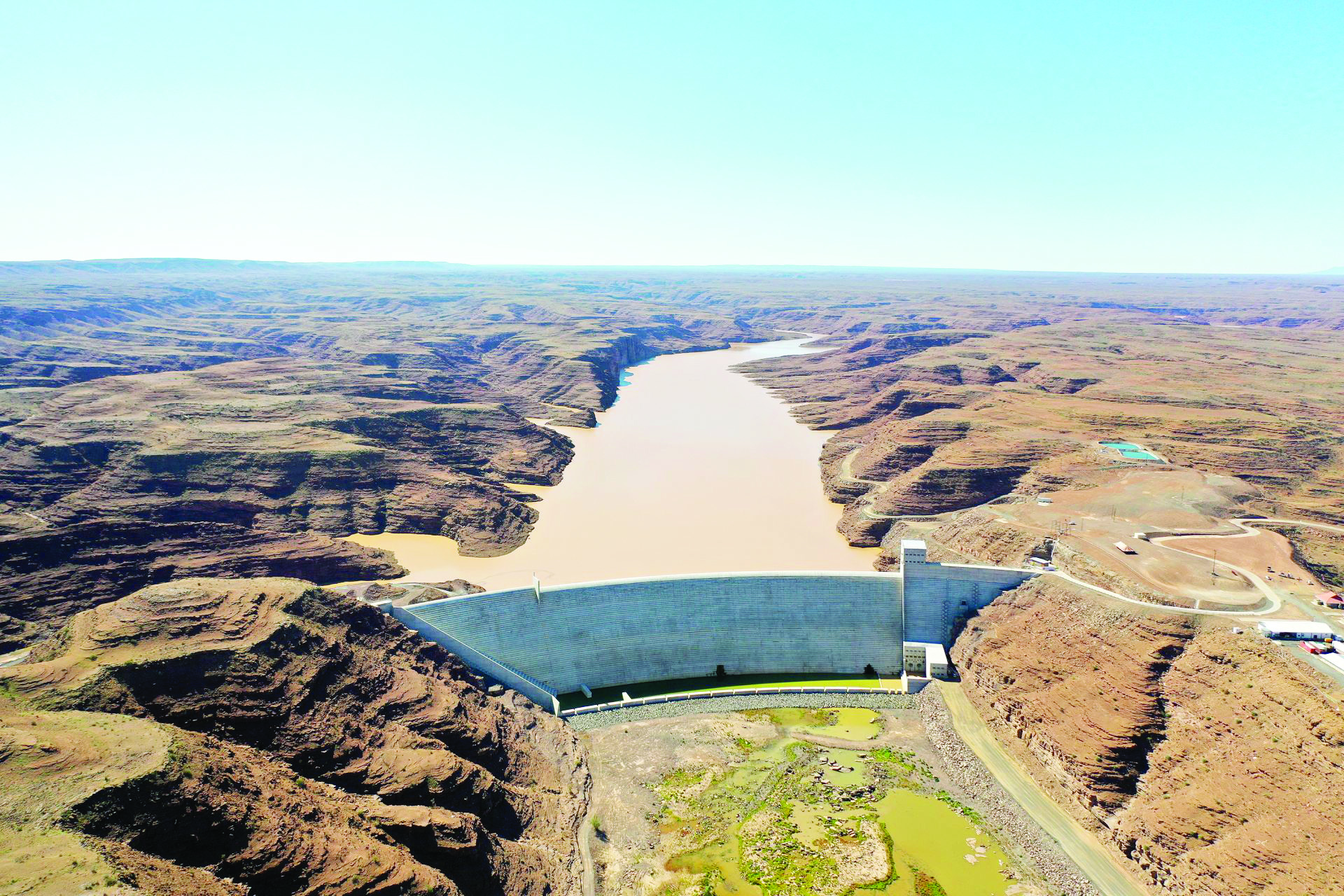
“Ndamanomhata said water reserves remain stable, with Naute Dam at 110.3% of capacity and Neckartal Dam at 99.9%.
“NamWater will continue to manage and conserve these water resources to ensure a reliable supply and encourage everyone to use water sparingly and wisely,” he says.
Southern dams remain the country’s strongest water source, with combined storage at 88.9%. Hardap Dam has dropped slightly to 58.8%.
The central dam system, which includes Swakoppoort, Von Bach and Omatako dams, has declined to 50.2%.
Swakoppoort stands at 74.4%, Von Bach at 61.7%, while Omatako remains critically low at 2.3%.
In Windhoek, Goreangab Dam is above capacity at 100.8%, while Friedenau Dam is 46.6% full, giving the city’s supply dams a combined storage of 65.6%.
Water levels in the Gobabis area remain low, with Otjivero Main Dam at 22.6% and Otjivero Silt Dam at 1.7%. Tilda Viljoen Dam is the area’s fullest dam at 85.2%.
In the north, Olushandja Dam rose slightly to 53.2%, while Omaruru Delta and Omatjenne dams remain empty.
Combined storage in the northern dam system has fallen to 64.2%.
The largest weekly decline was recorded at Calueque Dam, which dropped from 76.7% to 65.2% after losing 54.4 million cubic metres of water.
NamWater says telemetry readings were used to monitor Calueque Dam because the installed gauge plate is below the current water level.