



THE health ministry’s executive director, Ben Nangombe, on Monday said no single sector can provide total healthcare alone.
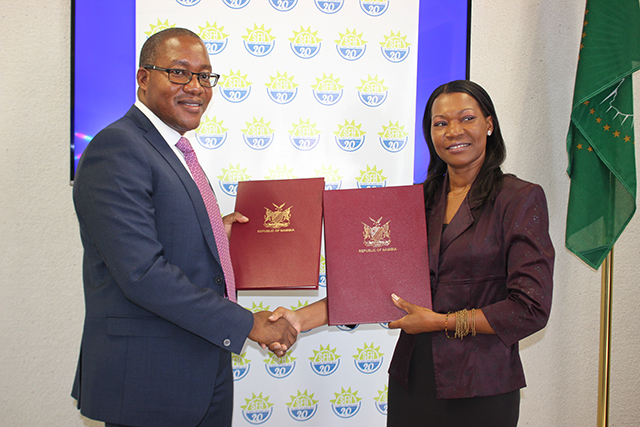
He made these remarks during the signing of a memorandum of understanding (MoU) between the ministry and the Society for Family Health (SFH) in Windhoek.SFH is a non-governmental organisation started in 1997 to provide malaria prevention and treatment, HIV prevention, maternal and child health, sexual and reproductive health, and family planning systems.
Nangombe said the ministry is working closely with the non-profit organisation to build health systems that can reliably and seamlessly deliver these community-based services.
“This MoU commits us to work together more closely towards our common goal, the pursuit of universal health through various interventions,” he added. The executive director noted that a successful development agenda requires partnerships between the government, the private sector and civil society, build on set principles and values.
“When we bring services, care and responsive health systems closer to those who need it, it does not only make sense and drives demand for these services, but it certainly also provides an excellent return on investment,” he stated.
Nangombe said the ministry and SFH had enjoyed a long-standing partnership which led to the establishment of many programmes in the fields of HIV prevention, care and treatment, community-based malaria prevention as well as reproductive health for adolescent girls and young women.
The purpose of the agreement is to provide a framework that will guide cooperation between the parties, allowing the maximum impact of their common and individual interventions regarding health promotion and disease prevention. Anna Ipangelwa, a member of the SFH board, said as much as communities aspire to prosper, they will continue facing new or re-emerging health challenges.
“The resilience of these communities is dependent on the extent to which we as NGOs, the government, development partners, the private sector and each one of us here prepare them to survive adverse situations,” she stressed.
Ipangelwa said they will also continue being at the centre of social transformation, and contribute to improving health outcomes for the most vulnerable groups.
SFH country director Taimi Amaambo said the organisation is present in all 14 regions, and will work with community health workers in different areas.
She added that they will help mobilise resources to make sure diseases are addressed, that there is community-based intervention, and also spread information.
In an age of information overload, Sunrise is The Namibian’s morning briefing, delivered at 6h00 from Monday to Friday. It offers a curated rundown of the most important stories from the past 24 hours – occasionally with a light, witty touch. It’s an essential way to stay informed. Subscribe and join our newsletter community.

The Namibian uses AI tools to assist with improved quality, accuracy and efficiency, while maintaining editorial oversight and journalistic integrity.
Stay informed with The Namibian – your source for credible journalism. Get in-depth reporting and opinions for
only N$85 a month. Invest in journalism, invest in democracy –
Subscribe Now!