





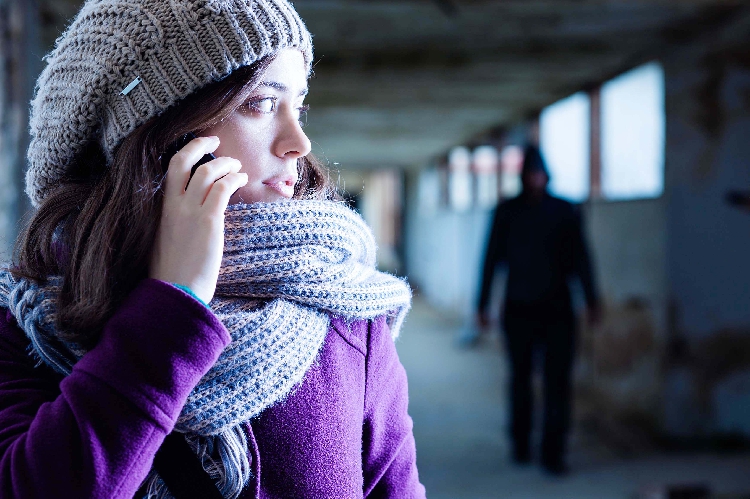
Being heckled by an unknown person has sadly become a cruel reality in this country. Almost everyone has experienced a case of harassment by a stranger, especially in a public space. We hear tales of men and women being physically or verbally assaulted by people they do not know because of how they look, what they are wearing, often by sheer virtue of their gender…
Sometimes issues such as xenophobia and racism rear their ugly heads and muggings are becoming all too common in the midst of other malicious attacks.
Nena Pohamba shared his story about how he was harassed, simply because he was from another country. “I came to Namibia in the spirit of Pan Africanism. In my country of origin, we were discouraged by brain draining where Africa trains people for the developed world. I decided to come to Namibia because I thought Namibia’s gain is my country’s gain, as fellow African brothers. Now, the verbal abuse I am getting from my own fellow Africans is deplorable,” he said.
“I am called an economic refugee, a pest fit to be killed. My mates who went to developed nations are treated with great respect while we suffer abuse from our own. Surely, as the saying goes, a prophet has no respect in his hometown. Why should we be blamed for all the wrong things happening from economic crises to perhaps climate change?”
In research done by the Legal Assistance Centre in Windhoek aimed at understanding xenophobic attacks against foreigners, it was revelaed that Namibians have been xenophobic towards fellow Africans, particularly those from Angola, Zimbabwe, Botswana, Nigeria and the Democratic Republic of Congo.
They’re our daily transportation, but a nightmare for some. An incident happened to Mayambi Sigried Kayunde who once took a taxi from Katutura Intermediate Hospital to town during her lunch hour. “There was one old Damara-speaking man who heard me speaking Thimbukushu over the phone. The moment I finished talking, the man started asking me questions like where I was from, where my ID was, what work I did, what language I spoke, and so on,” she revealed.
“I explained to him that I was a Namibian, but he refused to believe me. I showed him my ID and still, he refused. He started insulting me, telling me that I was a Zimbabwean who came to finish their jobs. Even the taxi driver failed to stop the old man. He took out his okapi, threatening to kill me and a pregnant woman who was in the cab tried to stop him. The driver then threatened to take him to the police station, and that was when he stopped talking. I was really surprised and disappointed that day.”
Jimmy Kwamba, a Namibian national, recalled the harassment he experienced from a taxi driver. “I take a taxi from town to home and I told the driver that he must bring me back again. When I reached home, I opened the door of the taxi quickly since I was in a hurry and the driver started shouting at me. How can I open the door when he did not park well? He started saying abusive words and I told him: ‘if I can manage to build my house, what will be so difficult for me to fix your car if it is damaged?’”
But the situation did not end there. “All my neighbors were watching us exchange words. Since we agreed that he must take me back to town, I jumped in again and all the way, we still argued. The driver told me that he would stop the car and fight. Another passenger jumped in and unfortunately, he was my Grade 9 teacher. He asked me what the argument was about and I told him. A few weeks later, my mother-in-law came to me with the driver and told me to greet him. She said he was one of the brother-in-law to my wife.”
Sometimes harassment comes in the form of road rage. Hilma Alfeus recently experienced this first hand.
“I had an experience with a cabbie recently at Ondangwa where I was crossing the road and he started hooting. I made space for him to pass and in return he asked me if this was my mom’s road. In retaliation, I asked if it was his mom’s. Long story short, it gained attention and he had to leave his cab with the motive of beating me up. Thanks to my sister, it didn’t lead to anything physical.”
Sadly, you could be walking down a street and be harassed randomly, just because you were being kind. “I was standing beside a much older lady waiting for the ice cream teller. When he arrived he asked who had arrived first. I said “serve her first because she’s a senior citizen”. She turned to me and began to curse like crazy,” Esther Shitaa shared. “She was so generous with insults. I suppose she still felt young at heart and wasn’t ready to accept that her shining moment had passed. The teller was equally surprised by this woman’s reaction.”
You could be minding your business along a street or simply withdrawing a few notes to survive the week at an ATM. The most common of crimes, muggings are quite traumatic experiences as you lose your valuable items and some are unlucky to get physically injured.
“I was attacked by two Damara/Nama boys in Khomasdal behind the houses where people walk to Katutura, having a small purse with 20 bucks in it,” Facebook user Dinosaur Waterberg said.
“I was unemployed. These boys just put me between them and hit the hand which carried the purse. I never looked back, I just left.”
Ruusa Nelly Amalovu’s experience was similar.
“I was attacked by a tsotsi. I was walking in the street and he came from behind and grabbed me with the hope that I had a cellphone in my pockets. Luckily, I left my phone at home. It happened at Golgotta cemetery. That area is very dangerous. They are always hiding in there.”
Sadly stories such as these are merely the tip of the iceberg and have become an unbearable reality of day-to-day life.