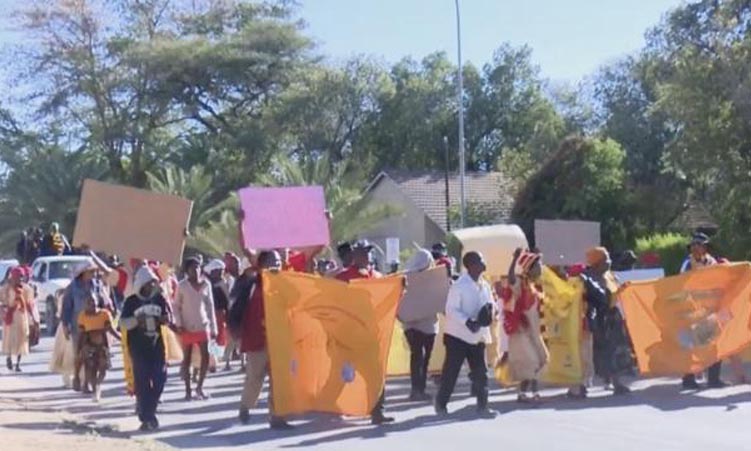
The Hai||om San Royal House has called on the government to consider relocate its people to resettlement farms acquired specifically in the Otavi, Otjiwarongo and Etosha Pan areas.
Hai||om Gaob Ananias Soroseb in a petition handed over on Thursday at Otjiwarongo says the indigenous group must be resettled on their ancestral land near Otavi, which they lost after the death of the first chief, Fritz Arebeb, in 1904 during the colonial war era.
The Hai||om are one of the various groups classified in the country as San, or “Bushmen” and among the marginalised communities in southern Africa in terms of education, employment, access to resources, land tenure and political representation opportunities.
“For all the burning issues of our royal leadership and communities in Namibia, we stand up with the word ‘enough is enough’ to being called marginalised in our own country.
“We are without land, be it communal or traditional ancestral land. We are also without recognition in our communities in Namibia. We appeal to our president, her excellency Netumbo Nandi-Ndaitwah, to intervene,” says Soroseb.
Soreseb says the community is awaiting feedback regarding their land demands, in accordance with the recommendations made during the second land conference.
The chief additionally wants the grave of their fallen leader Arebeb, at Okoruzu ||Uib Mountain to be officially recognised as a national heritage site.
“After 14 years, afford our indigenous marginalised Hai//om San royal traditional leadership to request our government that we be recognised as a traditional authority in the Otjozondjupa region of our royal leadership; and his grave site of Okoruzu /Uib be declared a national heritage site.”
A member of the Hai||om community Michael |Guiseb says currently a group of them who were living on Farm Tsumore near Lake Oshikoto are facing relocation from the land they have called home for years.
|Guiseb says the previous owner of Farm Tsumore was on good terms with them and allowed them to remain on the land but his daugther who took over the farm after his death, does not want them on the land anymore.
“This is the only home we know. You cannot evict people from their graves; you cannot evict people from their identity. We love our country, but we also love our ancestors. We will not abandon them.”
The community members say for now they remain hopeful that a solution can be found – one that recognises their historical connection to the land near Lake Oshikoto while giving them security to remain and build proper homes.
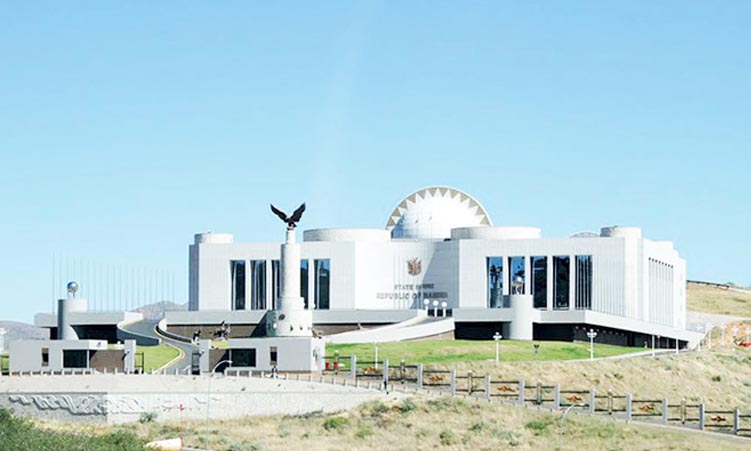
Otjozondjupa regional governor John ||Khamuseb received the petition.
“I will report back to you after the petition has been handed over to the president at the State House and to the relevant authorities. I thank you.”
Last month vice president Lucia Witbooi announced a government-led push to develop a comprehensive livelihood and development plan for the Hai-//om community living in and around the Etosha National Park.
She says a multidisciplinary technical team was deployed to assess conditions at Namutoni, Halali, Okaukuejo, Ombika and Hai-//om resettlement farms bordering the park on the request of the community.
“We also visited Ombika and the resettlement farms of Serringkop, Bellalaika and Nuchas this week, alongside ministers, governors and technical officials. The evidence we witnessed and the data we collected reaffirmed the need for a coordinated, practical and sustainable government response,” says Witbooi.