




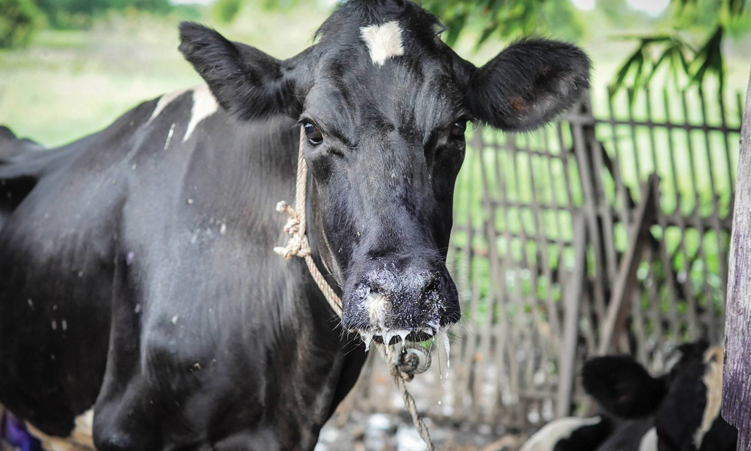
The Ministry of Agriculture, Fisheries, Water and Land Reform says Namibia’s animal health systems remain ready to respond to any potential risks as a result of the foot-and-mouth disease (FMD) outbreak in neighbouring countries.
On Sunday, ministry spokesperson Simon Nghipandulwa, speaking on behalf of line minister Inge Zaamwani-Kamwi, said the government has put measures in place to prevent the possible entry of the disease.
Zaamwani-Kamwi said vigilance remains necessary, adding that the country is capable of managing the situation.
The minister is urging the public and farmers not to panic over the risk of FMD spreading into Namibia.
The ministry also encouraged farmers and the public to take precautionary measures, comply with veterinary guidance and report any suspected cases promptly.
“The ministry will be issuing a statement outlining the measures the government has put in place to prevent the possible entry of FMD from neighbouring countries currently experiencing outbreaks. Citizens are instead encouraged to take precautionary measures, comply with veterinary guidance, and promptly report any suspected cases,” Zaamwani-Kamwi noted.
She stressed the importance of regional cooperation.
“The ministry further emphasises the importance of regional solidarity, noting that animal diseases know no borders. Namibia stands ready to support neighbouring countries with the necessary cooperation and assistance to help them contain and recover from the outbreak, as a collective regional response,” she said.
The outbreak in South Africa has affected KwaZulu-Natal, Mpumalanga, Gauteng, North West, Limpopo, and the Western Cape. KwaZulu-Natal alone has more than 207 affected sites.
Authorities in South Africa imposed trade restrictions and quarantine measures.
Namibia has a veterinary cordon fence, also known as the red line.
Livestock south of this fence are FMD free but remain at risk due to human and animal movement between Namibia and South Africa. The risk is particularly high in the ||Kharas, Omaheke, and Hardap regions.
Last September, the Namibian government imposed a ban on meat and dairy products from South Africa. The ban also covered live animals, semen, and embryos.
The Directorate of Veterinary Services has implemented controls at ports of entry, including disinfection of vehicles and passengers.
Two weeks ago, the Livestock and Livestock Products Board of Namibia, the chief veterinary officer, and engineers from the Roads Authority met with border-post stakeholders, including immigration officials.
They discussed the construction of disinfection drive-through wash bays at Noordoewer and Ariamsvlei.
Meat Corporation of Namibia acting chief executive Albertus !Aochamub says an outbreak would prevent the country from exporting red meat.
He says the European Union, China, and the United States would become inaccessible after years of compliance with veterinary requirements.
Savanna Beef Processors Ltd chairperson Siegfried Schneifer says all trade in livestock and livestock products would stop immediately.
The livestock products board urged livestock owners and stakeholders to increase biosecurity, follow veterinary rules, and report suspected FMD cases immediately.
Farmers returning from South Africa are advised to avoid direct contact with Namibian livestock for at least seven days and to ensure that vehicles returning from South Africa are washed and disinfected.
In an age of information overload, Sunrise is The Namibian’s morning briefing, delivered at 6h00 from Monday to Friday. It offers a curated rundown of the most important stories from the past 24 hours – occasionally with a light, witty touch. It’s an essential way to stay informed. Subscribe and join our newsletter community.

The Namibian uses AI tools to assist with improved quality, accuracy and efficiency, while maintaining editorial oversight and journalistic integrity.
Stay informed with The Namibian – your source for credible journalism. Get in-depth reporting and opinions for
only N$85 a month. Invest in journalism, invest in democracy –
Subscribe Now!