The government is instituting land reform through key policies and laws to address historical injustices that have deprived many Namibians of access to productive land and economic opportunities.
This was said by minister of agriculture, fisheries, water and land reform Inge Zaamwani in a speech read on her behalf by deputy agriculture minister Ruthy Masake in Windhoek yesterday.
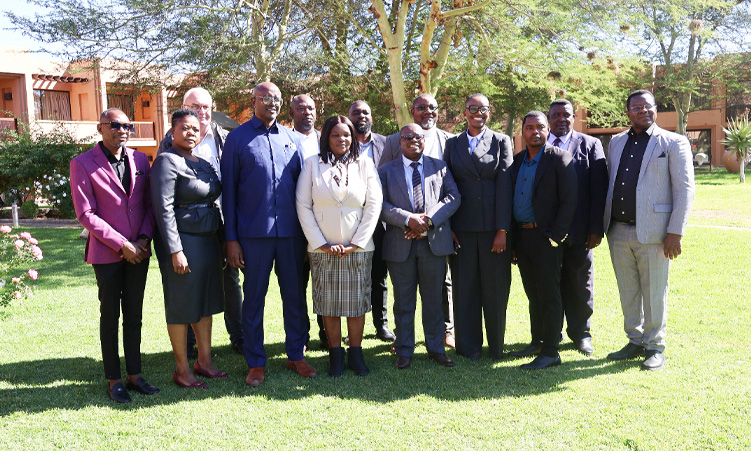
The minister was bidding the outgoing members of the Land Reform Advisory Commission farewell after their term came to an end, and welcomed incoming members.
The new members will serve for three years.
“Broadly speaking, the primary role of the Land Reform Advisory Commission is to advise the minister responsible for land reform on matters relating to the acquisition, allocation and administration of commercial agricultural land for land reform purposes,” Zaamwani said.
She said the commission therefore serves as an important advisory mechanism between government policy objectives, land acquisition and redistribution processes, and agricultural and socio-economic development priorities.
While recognising specific considerations, land reform must also remain forward looking, ensuring that land becomes a productive national asset capable of supporting rural livelihoods, creating jobs, strengthening our agricultural productive base and broadly speaking contribute to Namibia’s development goals, the minister said.
While thanking the outgoing commission, the minister said the new commissioners are assuming their term at a time when the importance of land reform has become even more pronounced within the broader Namibian development agenda.
“By accepting this great responsibility to be part of this special body, you have joined the national effort to eradicate poverty within our communities and country.
“Since the assumption of duty at this ministry, the Land Reform Advisory Commission has acted as an essential link between the minister’s office and society in general,” Zaamwani said.
“The commission has kept the minister informed on the expectations and aspirations of the people in as far as land reform in our country is concerned,” she said.
The minister said the issue of redressing past imbalances in land ownership can only be realised through hard work, a shared vision, and dedication by people who recognise that the land reform process is a necessary step in responding to the socio-economic and political injustices that were inherent within our past colonial society.
She said apart from advising the minister, the commission will also investigate and consider any matter relating to the exercise of the powers of the minister in relation to land redistribution and to make recommendations to the minister.
The outgoing commissioners are Aune Shipanga, Winnie Mwilima, Jacobina Amulungu, Maria Immanuel, Spendu Tjipe, Jan Jarson, Jason Emvula, Martin Hilbert and Emmanuel Masule.
The incoming commissioners are Alfred Sikopo, who will also serve as the new acting chairperson of the commission, Petrus Canisius Nangolo (reappointed as deputy chairperson), Charles Uugwanga (reappointed), Frans Kamati (reappointed), Paulus Hausiku (reappointed), Petrina Mpahleni (newly appointed), Alexandria Angala (newly appointed), Thomas Uuyuni (newly appointed), Adolf Muremi (newly appointed), Kay-Dieter Rumpf (newly appointed), Manfred Rukoro (newly appointed), and Nguvitjita Kapere (newly appointed).
– email: matthew@namibian.com.na