







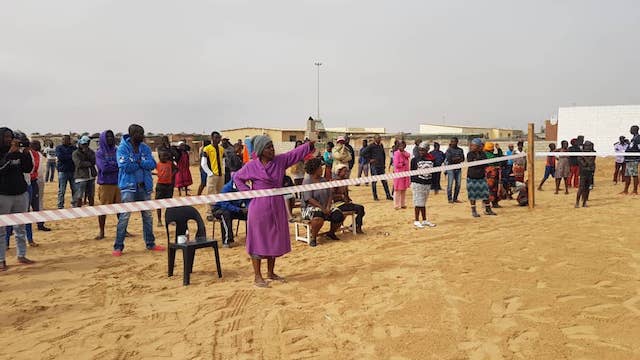
DESPITE the call to avoid large gatherings, the governor of the Erongo region, Walvis Bay local authority councillors and members of Namport’s leadership on Wednesday held an event with a crowd of more than 200 people at the Twaloloka informal settlement at Walvis Bay.
The Erongo region has so far seen two confirmed cases of the coronavirus and has been under a state-mandated lockdown since last Friday. The lockdown dictates that members of the public should limit social interaction, and encourages people to stay at home amidst the outbreak.
The measures were put in place by the Ministry of Health and Social Services to help “flatten the curve”, in hopes of slowing or halting the spread of Covid-19 within the country.
The event was held to celebrate the handover of 20 mobile toilets to the community of Twaloloka for use during the lockdown period.
“The reason for our short gathering this morning is precisely to demonstrate that we care for each other. The coronavirus has taught us one thing – we are all equal in this fight and there is no room for petty-mindedness. This is the time to forget about all our differences and stop the cheap politicking,” said the mayor of Walvis Bay, Immanuel Wilfried.
At the same event, Namport donated medical supplies, including ventilation machines, protective gear and cleaning chemicals, valued at N$105 000 to the Covid-19 isolation facility at the Walvis Bay district hospital.
“We will continue to monitor the requirements throughout the progression of the pandemic and, within our means, do our best to continue to contribute towards the national efforts to combat Covid-19,” said Namport’s acting chief executive officer, Kavin Harry.
Governor Cleophas Mutjavikua used the platform to urge the community to adhere to the lockdown measures put in place and cooperate with the law enforcement officials that are patrolling the streets.
Twaloloka informal settlement was established several years ago by the tenants of backyard flats who could no longer afford to pay rent, alongside those evicted by landlords to make way for additional backyard flats which were unaffordable to the tenants.
The informal settlement has a population of about 2 000 residents, with an average household of six people occupying a shack.