Elevated prices for gold, uranium, copper and zinc on the international market continue to boost Namibia’s export earnings and the profitability of producers.
According to the mining update for June-July by the Chamber of Mines of Namibia, the continued weakness in the diamond market, however, remains a significant drag, while high oil and energy prices have increased input, transport and logistics costs across mining operations.
“Overall, the global environment remains characterised by slower but resilient growth, favourable prices for several of Namibia’s key mineral exports, and heightened risks from energy costs, geo-political uncertainty and persistent weakness in the global diamond market,” the chamber says.
The report notes the Bank of Namibia had revised Namibia’s overall economic growth forecast for 2026 downward to 2.1%, from its previous projection, partly reflecting weaker activity in the primary industries, including mining.
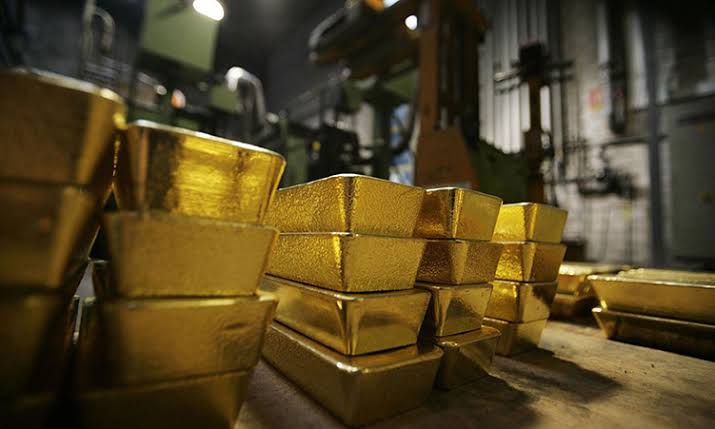
Looking at the prices, the chamber says gold remained strong overall in July, despite some short-term moderation.
On a year-to-date (YTD) basis, gold prices increased by 34%, reflecting substantial gains since the beginning of the year.
The average gold price in July rose by 18% compared to the average price of 2025, while prices were 22% higher year on year (y/y) compared with July 2025.
“However, prices declined by 4% month on month from June to July 2026, indicating continued correction following the strong gains recorded earlier in the year,” the chamber says.
This environment has also reinforced the strategic importance of gold within central bank reserve portfolios.
The central bank has developed a structured gold acquisition framework, informed by international best practice and engagements with peer central banks, as part of efforts to strengthen and diversify the country’s official reserve assets.
On uranium, the chamber noted that prices maintained a strong upward trend in July, supported by continued strength in the global uranium market.
Prices were 18% higher on a YTD basis, while the average price in July 2026 compared to the average price in 2025 increased by 19%.
“Compared with July 2025, uranium prices were also 19% higher y/y, confirming sustained price strength over the past year.
Monthly, prices increased by 1% from June to July 2026, suggesting that while the market remains firm, the pace of monthly price growth has moderated,” the chamber says.
Uranium prices remain favourable for Namibia, with strong annual gains continuing to support the revenue and investment outlook for uranium producers and developing projects.
The chamber highlight that diamond prices remained under sustained pressure during the review period, extending the broader downward trend observed since the second half of 2025.
The diamond price index declined from around 91 points in September 2025 to approximately 82 points by August 2026, despite brief episodes of recovery along the way.
“The index showed some improvement during May and June 2026, rising to above 85 points, but these gains proved temporary.
Prices fell sharply again towards the end of June and weakened further during July and August, with the index reaching below 82 points, among the lowest levels recorded over the period shown,” the chamber notes.
Prices of natural diamonds have been affected by lab-grown diamond prices, although both segments have experienced downward pressure.
Natural diamond prices declined from a peak of about US$5 920 per carat in 2022 to US$3 695 (about N$58 861) in July 2026, while lab-grown diamond prices fell sharply from US$3 410 in 2020 to US$576 (N$9 175).
Copper prices remained firm in July 2026, reflecting sustained strength in the global market.
On a YTD basis, prices increased by 32%, while the average price in July 2026 compared to the average price in 2025 rose by 36%.
Compared with July 2025, copper prices were 39% higher year-on-year, highlighting a significant price increase over the past year.
Tin prices remained exceptionally strong in July 2026, continuing the substantial gains recorded over the course of the year.
On a YTD basis, tin prices increased by 48%, while the average price in July 2026 compared to the average price in 2025 rose by 56%.
Compared with July 2025, prices were 58% higher y/y, pointing to significant and sustained upward pressure in the global tin market.
– matthew@namibian.com.na