


About N$45.3 million of the Government Institutions Pension Fund’s (GIPF’s) N$278-million investment in Mashare Irrigation and Mashare Berries Farming is likely unrecoverable, according to documents.
The national pension fund made a N$278-million investment in 2018 through Spitz Capital which is managed by Königstein Capital.
According to a 12-page report presented to the GIPF board of trustees on 24 September, the potential loss is due to a decline in the value of the portfolio.
“The fund experienced declines in value for Mashare Irrigation Pty Ltd due to missed targets of a thin cropping programme mainly for white maize,” states the report.
Of the total investment, about N$45.3 million has been set aside as a potential loss in the March 2025 annual financial statements.
This means GIPF has earmarked the money to cover expected losses, representing roughly 16% of the original investment.
The Namibian reported two weeks ago that GIPF is at risk of losing around N$1 billion after a series of underperforming investments, including an “irrecoverable” N$815 million placed with a South African investment firm.
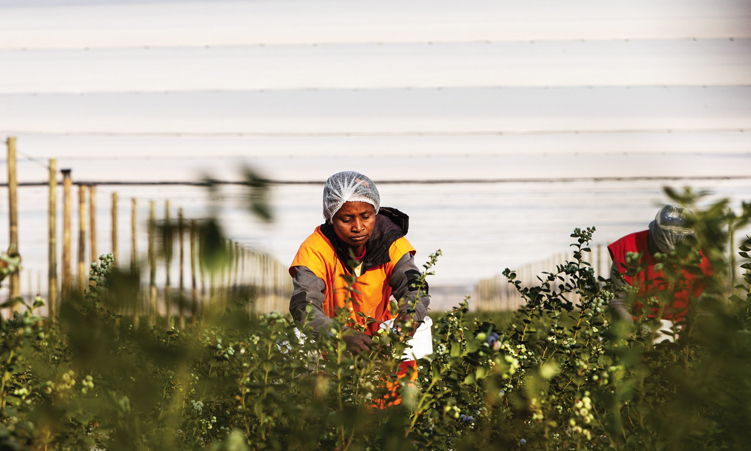
Mashare Berries Farming is located at Mashare in the Kavango East region, approximately 50km east of Rundu.
The farm lies close to the Okavango River and markets its produce under the brand Namib Blue. However, behind the fanfare are losses that could affect pensioners’ funds.
GIPF spokesperson Edwin Tjiramba says GIPF invested in Mashare Berries Farming in March 2019 and Mashare Irrigation in April 2018, which have now been consolidated into Mashare Agri Group.
“The initial investment into the two entities is a combined value of N$278.1 million. The latest valuation (March 2025) for Spitz Capital stake in Mashare Agri Group stands at N$232 million. This is N$45.43 million below costs,” says Tjiramba.
He says the project requires a 10- to 12-year holding period, as is typical for pioneering agribusiness ventures of this scale.
He adds that an impairment is a provision made for the likelihood that an investment may not be recoverable and does not mean that an actual financial loss has been realised.
Königstein Capital managing director Albert Basson confirms that an investment was made into the project through Spitz Capital – the special purpose vehicle (SPV) – but the investment manager is Königstein.
An SPV is a separate company created by a parent company to isolate financial risk and has its own balance sheet.
According to Basson, the project is still in its early phases and has faced the normal challenges of any pioneering venture.
“Mashare Agri Group, which includes Mashare Irrigation and Mashare Berries, remains operational. Grain farming in the Kavango faces known agronomic challenges and requires time and soil build-up to reach globally competitive yields. This does not indicate failure,” says Basson.
He adds that the impairments in the report are provisions and not realised losses – they are fair-value adjustments that may increase or reverse from year to year.
About a week ago The Namibian reported that GIPF had a total impairment of N$922 million at the end of March 2025. This amount is more than a 100% increase when compared to an accumulative impairment of N$170 million recorded in the previous financial year
The majority of this loss in value on the investment is coming from an ‘irrecoverable’ N$815 million placed with a South African investment firm.
The investment, made through a company called Signal Structured Finance Fund, was managed by South African-based TriAlpha Investment Management as part of GIPF’s offshore portfolio.
TriAlpha’s investments alone have been reduced by N$815.8 million, making it the biggest contributor to the pension fund’s potential losses.
Last week GIPF chief executive Martin Inkumbi issued a statement saying the close to a billion write-down is a small dent compared to GIPF’s asset portfolio.
According to Inkumbi, the impairment amount was below the fund’s materiality threshold of N$1.78 billion and only represented 0.4% of GIPF’s total assets
“The fund wishes to assure its stakeholders that while the impairment can be perceived to negatively impact the fund’s short-term results, this impairment – standing at 0.4% of the fund’s total assets and well below the materiality threshold of N$1.78 billion set by our external auditors – does not erode the fund’s short- and long-term sustainability,” he said.
He added that despite the impairment, the GIPF achieved a net investment return of N$18 billion for 2024 and N$16.7 billion for 2025.
Opposition political parties have blasted GIPF and called for accountability for the lost investments.
The Popular Democratic Movement (PDM) wrote to the chairperson of the parliamentary standing committee on economics, Ipumbu Shiimi, asking the committee to summon the leadership of GIPF to explain the potential loss of N$815 million from its investment in the Signal Structured Finance Fund.
“These funds belong to hard-working Namibian public servants who rely on their pensions for a dignified future. Any threat to the security of their savings must be treated with the utmost seriousness,” PDM leader McHenry Venaani said last week, adding that the issue warrants urgent national attention.
In an age of information overload, Sunrise is The Namibian’s morning briefing, delivered at 6h00 from Monday to Friday. It offers a curated rundown of the most important stories from the past 24 hours – occasionally with a light, witty touch. It’s an essential way to stay informed. Subscribe and join our newsletter community.

The Namibian uses AI tools to assist with improved quality, accuracy and efficiency, while maintaining editorial oversight and journalistic integrity.
Stay informed with The Namibian – your source for credible journalism. Get in-depth reporting and opinions for
only N$85 a month. Invest in journalism, invest in democracy –
Subscribe Now!