





As namibia marked its second Genocide Remembrance Day, the nation pauses in solemn reflection of one of the darkest chapters in its history.
This day is not merely ceremonial, it’s a religious, moral, political, and historical obligation that calls for remembrance, truth-telling, and a renewed commitment to restorative justice.
It’s a day set aside to remember the victims of the 1904 to 1908 genocide, to honour their inherent dignity, and to ensure the truth of what happened is neither forgotten nor denied.
It’s a day of mourning, a day of renewed commitment to restorative justice, genuine reconciliation, and the prevention of future atrocities.
It’s also a day of reflection, education, and renewed commitment to addressing the unfinished business chief Kuaima Riruako referred to when he declared: “I’m not here to refuse your apology and admission of guilt. There must now be dialogue to finish the unfinished business.”
At the heart of this commemoration lies the urgent need for the German government’s full and unequivocal acknowledgment to finish unfinished business.
While important steps have been taken in recent years, remembrance requires more than partial recognition or carefully worded statements.
It demands that Germany wholeheartedly accept responsibility for committing a genocide against Namibians such as the Ovaherero, Nama, Damara or ≠Nkhoen San peoples between 1904 and 1908.
Only after Germany makes a sincere public declaration acknowledging the genocide and commits to full reparations, in agreement with all Namibian representative bodies, can Namibians meaningfully receive an apology and extend forgiveness.
FORGIVENESS
Forgiveness and the acceptance of an apology, in this context, cannot be rushed or imposed; they must emerge as the final step only after all stakeholders are fully satisfied that justice has been achieved regarding the 1904 to 1908 genocide.
Otherwise, the unresolved pain, injustice and unfinished business will continue to haunt the Namibian nation each time Genocide Remembrance Day is observed.
This reality highlights the necessity for renewed dialogue. The joint declaration of June 2021, while an important step, remains contested and incomplete in the eyes of many Namibians.
On this second anniversary, there is a clear and compelling call for all stakeholders – particularly the Namibian government, the Nama Traditional Leaders Association, the Ovaherero Traditional Authority, and all other stakeholders as well as the government of Germany – to return to the round table.
As of May this year, the primary Namibian stakeholders in the genocide negotiations with Germany include the Presidency, the special political Cabinet committee, and the technical committee, now pushing for a conclusion via a reviewed joint declaration before the end of the year.
Affected Namibian communities, often represented by traditional authorities, continue to contest the government’s monopoly on negotiations.
Furthermore, international bodies such as the United Nations (UN) Declaration on the Rights of Indigenous Peoples, the UN Special Rapporteurs and Human Rights Council, the African Union, and the African Commission on Human and Peoples’ Rights do not generally endorse a state monopoly over genocide negotiations when those negotiations directly affect identifiable victim communities.
Instead, they consistently push for meaningful, structured, and respected participation of those communities, often through their own chosen representatives.
This is precisely why, in many contexts, including the Namibian context, international bodies support the participation of affected communities because it strengthens justice, legitimacy, truth, and long-term peace.
Exclusion, by contrast, risks reproducing the very injustices genocide processes are meant to address.
Therefore, a genuinely inclusive round-table process must be convened to renegotiate the terms of the joint declaration. Such a process should ensure Germany explicitly recognises the genocide and agrees to reparations that reflect the proposals, expectations, and aspirations of the affected Namibian communities themselves.
Only through such a renegotiated and just agreement can Namibia move forward with integrity.
JUSTICE BEFORE SPEED
The current timeline to conclude the Joint Declaration by the end of 2026 is not acceptable if it prioritises speed over justice, inclusivity, and meaningful redress.
Processes dealing with historical atrocities such as the 1904 to 1908 genocide require depth, transparency, and the full participation of the affected communities.
A deadline-driven approach risks sidelining critical voices, particularly those of descendant communities, traditional leaders, and civil society.
What is at stake is not merely an agreement between governments, but a moral and historical reckoning. Any declaration must be grounded in genuine acknowledgment, restorative justice, and equitable reparative measures.
If these elements are not fully realised, the outcome risks being perceived as incomplete or imposed rather than legitimate and healing.
The national ethos, captured in Swapo’s motto of ‘Solidarity, Justice, and Freedom’, will otherwise remain incomplete.
Solidarity must mean more than political unity; it must reflect a deep and shared commitment among all Namibians to stand with those whose histories carry the weight of genocide. Justice must move beyond rhetoric to tangible restoration.
And freedom, hard won in 1990, must be experienced fully and equally by all, without the lingering wounds of unresolved historical injustice.
Genocide Remembrance Day, therefore, is not only about the past. It must also resonate with Namibia’s national motto – ‘Unity, Liberty, Justice’.
It should reflect the country’s commitment to national unity, liberty, and justice for all its people, especially in light of its history of colonialism and the struggle for independence.
Ultimately, this day is about shaping the future. It challenges both the Namibian and German governments to confront history honestly, to act justly, and to build a relationship grounded not in denial, compromise, partial recognition, or distorted narratives, but in truth, justice, and restoration.
Only then can this day become not merely a remembrance of suffering, but also a celebration of resilience, dignity, and a shared victory for humanity.
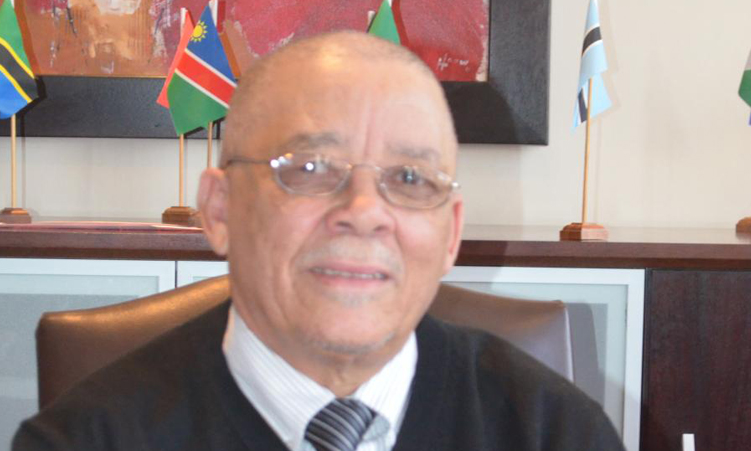
– Paul Isaak is a former professor at the University of Namibia, a former Electoral Commission of Namibia chief electoral officer, and former rector of Paulinum Lutheran Seminary.