



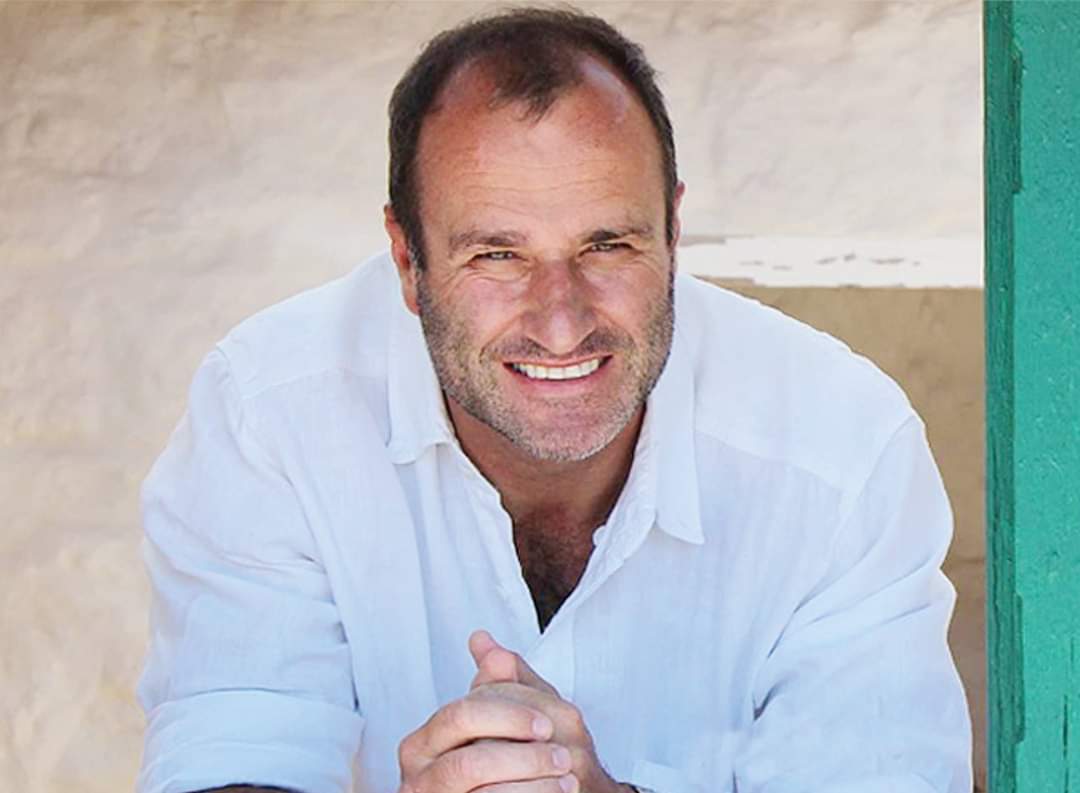
Lawyer Marén de Klerk, who is wanted in Namibia in connection with the Fishrot fraud, corruption and racketeering case, may testify via a video link in the High Court.
The case revolves around alleged corrupt agreements the National Fishing Corporation of Namibia (Fishcor) had entered into.
This comes after the Supreme Court yesterday ruled in favour of an appeal by Fishcor against a ruling in which a request to use a video link for De Klerk to testify in a case involving Fishcor was dismissed in October 2022.
The testimony to be given by De Klerk “relates to an alleged corrupt scheme involving potential criminality on a massive scale in the context of the Namibian economy”, acting judge of appeal Dave Smuts said in the Supreme Court’s judgement.
Smuts also noted that the Supreme Court has stressed in a previous judgement that “the interest of the public is served by the courts treating allegations of corruption in a serious manner, given its profoundly deleterious effect in undermining the rule of law and the principle of accountability inherent in the Constitution”.
Smuts added: “There is thus a compelling public interest in allowing Fishcor’s claim to be fairly litigated and for the evidence alleging wide-scale corruption to be heard.”
Fishcor wants De Klerk, who left Namibia in January 2020 and says he fears he would not be safe if he returned to the country, to testify through a video link in a case in which the state-owned fishing company is suing the companies African Selection Fishing (Namibia) and Seaflower Pelagic Processing in the Windhoek High Court.
Fishcor is claiming that agreements concluded between itself and former minister of fisheries and marine resources Bernhard Esau in 2016, and agreements between itself and African Selection Fishing (Namibia) were entered into in the context of a corrupt environment, are against public policy, were not in good faith and are in fraud of the law.
Fishcor is asking the High Court to declare the agreements are against public policy, not in good faith, in fraud of the law, and consequently null and void.
In terms of the agreement between Fishcor and Esau, the former fisheries minister undertook to allocate an annual horse mackerel quota of 50 000 tonnes to Fishcor for a period of 15 years.
Fishcor and African Selection Fishing (Namibia) also entered into a partnership agreement, through which the two companies became shareholding partners in Seaflower Pelagic Processing, and a quota usage agreement, in which Fishcor undertook to make the annual horse mackerel quota of 50 000 tonnes allocated to it available to Seaflower Pelagic Processing for 15 years up to the end of 2033, and also for 15 more years after that.
“According to Fishcor, those agreements arose and have their origin in a corrupt environment and formed part of a corrupt scheme and formed a central component of what has become widely known as the ‘Fishrot scandal’,” Smuts observed in his judgement.
He also noted: “According to Fishcor, the alleged corrupt activities are estimated to involve the unlawful appropriation of around N$2 billion in revenue from the Namibian fishing industry.”
SHANGHALA MEETING
Fishcor is claiming De Klerk would be a crucial witness in the case it has filed against African Selection Fishing (Namibia) and Seaflower Pelagic Processing, as he was intimately involved in giving advice and input about the agreements that formed the basis of the corrupt scheme alleged by Fishcor, Smuts said.
De Klerk has provided a detailed sworn statement to the Anti-Corruption Commission, in which he stated that the key role players in the Fishrot scandal included former attorney general and justice minister Sacky Shanghala, Esau, former Fishcor board of directors chairperson James Hatuikulipi, and the board chairperson of African Selection Fishing (Namibia) and Seaflower Pelagic Processing, Adriaan Louw, Smuts recounted.
De Klerk said in his affidavit that Shanghala asked him to attend a meeting with Louw near the end of December 2016.
During the meeting, which was also attended by Hatuikulipi, Shanghala said all of the people at the meeting stood to make a lot of money from a possible venture with Louw, according to De Klerk’s statement.
“In his capacity to vet all government agreements, he [Shanghala] stated that he was in a position to approve a proposed joint venture between Fishcor and a corporate vehicle to be created in the fishing industry (which subsequently became known as Seaflower),” Smuts recounted.
De Klerk also said Shanghala stated that discussions had already taken place between Esau and Louw, and that he was under instruction from Esau to ensure that agreements were concluded with Louw, Smuts recorded.
Smuts continued: “Mr De Klerk was stated to be under the impression that ‘Mr Louw had cut some secret deal with Messrs Esau and Shanghala to make sure he would be awarded the contracts’.”
Louw has vehemently denied allegations made against him and his companies, and has also denied the existence of a corrupt environment when agreements with Fishcor were entered into, Smuts noted.
He said the fact that De Klerk is a fugitive from justice in Namibia, where a warrant for his arrest has been issued, weighed heavily with High Court judge Orben Sibeya when he refused the request to have De Klerk testify through a video link.
“In doing so, the court erred in not taking into account that Mr De Klerk would be purely a witness in this matter and was not a party and did not stand to benefit from his testimony,” Smuts said.
He also remarked: “The administration of justice would not, in my view, be brought into disrepute if he were permitted to give evidence by video link, particularly given the public interest in receiving evidence of potential corruption on a massive scale.”
De Klerk has established in his personal circumstances and what is at stake in the Fishrot proceedings, in terms of the nature and scale of the alleged criminality involved, that it is reasonable for him to harbour a fear for his life, Smuts also said.
Appeal judge Elton Hoff and acting judge of appeal Hannelie Prinsloo agreed with Smuts’ judgement.
Senior counsel Andrew Corbett represented Fishcor in the appeal.
JP Jones represented African Selection Fishing (Namibia) and Seaflower Pelagic Processing.
In an age of information overload, Sunrise is The Namibian’s morning briefing, delivered at 6h00 from Monday to Friday. It offers a curated rundown of the most important stories from the past 24 hours – occasionally with a light, witty touch. It’s an essential way to stay informed. Subscribe and join our newsletter community.

The Namibian uses AI tools to assist with improved quality, accuracy and efficiency, while maintaining editorial oversight and journalistic integrity.
Stay informed with The Namibian – your source for credible journalism. Get in-depth reporting and opinions for
only N$85 a month. Invest in journalism, invest in democracy –
Subscribe Now!