




Many sex workers are often shunned by society, but this small house, situated in the heart of Katutura, was the one place where they felt safe and accepted.NEAR the Single Quarters section of Katutura is a small house that sits tightly between two houses, neighbouring rowdy shebeens. For many astray sex workers, this small house was a place of refuge that was started by the late Catholic father Herman Klein-Hitpass.
The house also served as a day care centre for sex workers’ children. It also provided the mothers with toiletries and food.
One of the sex workers *Aretha (not real name) and her sister *Regina from Aranos, a small town about 390km south-east of Windhoek, were regulars at the house.
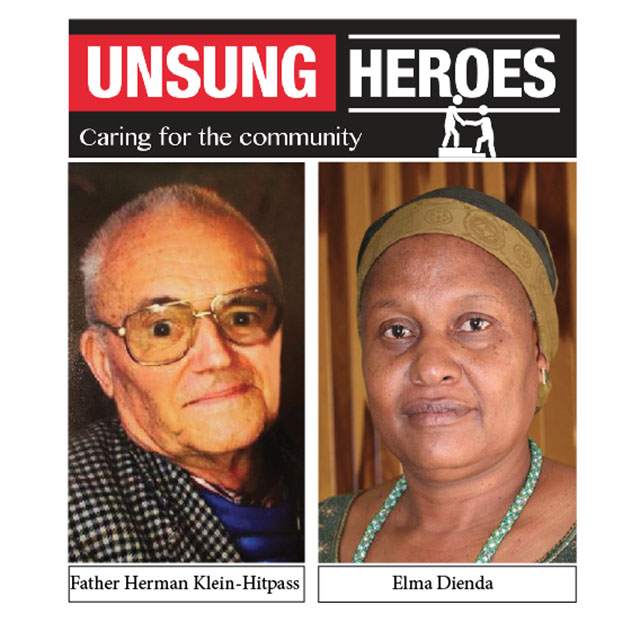
The late German-born Klein-Hitpass, who died on 24 April 2018, arrived in Namibia in 1971. Between 1972 and 1978, he worked in Nyangana in the then Kavango region, Tsumeb and Grootfontein before he came to Windhoek.
Throughout his priesthood, he spoke out against racism, violence and discrimination. During the apartheid era, he was banished to Walvis Bay in the late 1970s. Even then, the priest took up community service.
After independence, Klein-Hitpass resumed his priesthood at Rundu and devoted much of his time to humanitarian work, including helping sex workers.
Initially, sex workers would come to the Roman Catholic Church in the heart of Windhoek’s central business district seeking help. However, as the numbers grew over the years, a small establishment was made in Katutura.
Horror stories of these sex workers were part of the reason the priest felt the need to help them.
The extraordinary priest broke barriers in the Catholic community in his decision to stand by sex workers. Part of his mission was to fight against the spread of AIDS.
He started the day care centre in 1995 where he spent time consulting sex workers and keeping a record of them. This was known as the Stand Together project.
His humanitarian work earned him a Paul Harris Fellowship Award in 2016 from the Rotary Club in Windhoek.
In the documentary, ‘The Prostitutes and the Priest’, by Christian Bobst and Florian Mebes about the day care centre, Klein-Hitpass said many of the sex workers were abused.
He said there was a time a sex worker was brutally stabbed in her private parts after a client broke a bottle and hurt her. Other sex workers spoke about being thrown out of moving cars, being beaten up and raped.
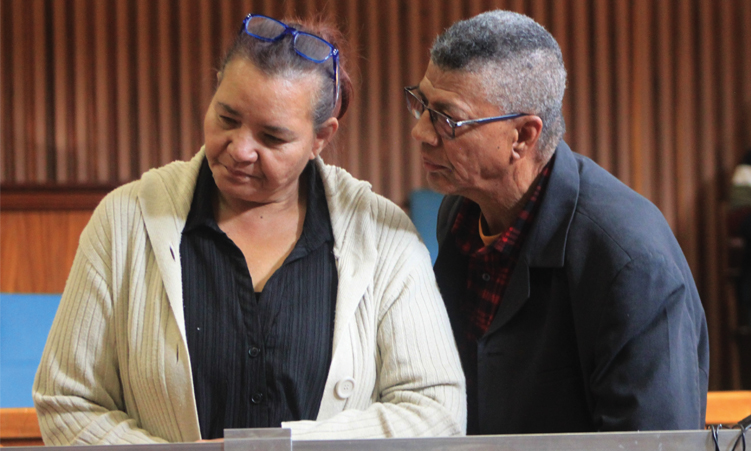
Although Aretha (49) died last month, Regina told that their bond was unbreakable. Regina says they grew up in a loving household and attended school – there were no problems.
“Aretha was a wonderful woman with good manners when she was young, she was not someone who liked quarrelling,” her sister remembers.
Regina says Aretha came to Windhoek when she was around 20 years after meeting her first love. She gave birth to twins – both girls. One, however, died.
In 2005, three men raped Aretha in a shebeen. Doctors told Aretha when she went to the hopsital after she was raped that she was HIV positive. When she was discharged, Aretha sold her house because she was not confident she would live long.
Apart from the rape incident, Regina said her sister suffered abuse on the hands of her boyfriend. Regina said the boyfriend would beat Aretha when she refused to be intimate with him.
One day, Regina said, she had to prepare a bath with salt water for her to sit in. There was a point when Aretha was in and out of relationships and moved from one lodging to another. There were many days when putting food on the table for herself and her children was very difficult.
“She told me: ‘There is no other way but to ‘zula’ for my kids. I have an ugly life. I don’t want my boys to know what I do,” Regina recalled, adding that her sister started going out at night. There were also times when Aretha would wait under ‘highway bridges’ for clients.
Although Aretha tried looking for a job, she would quickly relapse into sex work. She changed from getting clients under bridges to shebeens.
Popular Democratic Movement’s member of parliament, Elma Dienda, has made it her mission to re-equip and revamp the home for children whose mothers are in and out of sex work.
“When he (Klein-Hitpass) became sick, the centre also became dormant,” Dienda says.
“In 2018, another priest, father Werner Afunde contacted me, and he told me the bishop had asked whether I wanted to be part of the board that would take over the centre.”
The late father Klein-Hitpass, like many social workers, tried to rehabilitate sex workers but only a few managed to leave the streets.
However, experts say it is not easy to rehabilitate sex workers.
Windhoek social worker Elsabe GrÖtzinger believes that the main reason sex workers do not leave their line of work is they make ‘easy money’.