



THE Ministry of Agriculture, Fisheries, Water and Land Reform through the Directorate of Veterinary Services (DVS) wishes to provide an update on the recent outbreak of foot-and-mouth disease (FMD) in the Karasburg Veterinary District of the ||Kharas region and the initial restrictions imposed countrywide.
In line with the Animal Health Act (Act 1 of 2011), after a confirmation of the outbreak of the FMD, specific control measures were carried out.
These control measures include intensified disease surveillance, restriction of movement of livestock in the infected farm and tracing of the livestock movement from the infected farm which occurred prior to the detection of the outbreak.
The ministry, through DVS, would, therefore, like to inform the farmers and the general public of the following:
- The livestock which moved from the infected farm to the Otjozondjupa region prior to the detection of the outbreak have been traced and all tested negative to FMD, hence that herd has been cleared of infection.
- Preliminary findings through the traceability system and livestock inspection demonstrated that the disease remains localised in the ||Kharas region.
There is no evidence from the traceability system which suggests the risk of transmission to north of the veterinary cordon fence, which includes the Kunene, Ohangwena, Omusati, Oshana, Oshikoto, Kavango East, Kavango West and Zambezi regions.
Therefore, the ministry through the DVS wishes to announce the following partial lifting of the initial restrictions and measures:
- Areas north of the veterinary cordon fence:
a. The restrictions of movement on cloven-hoofed animals and their products are lifted with immediate effect;
b. The protocols related to the movement of commodities (such as cooked meat, pasteurised milk and butter) from north to south of the veterinary cordon fence will resume subject to the Animal Health Act 1 of 2011.
c. The movement of cloven-hoofed animals and their products (meat, skin, unpasteurised milk and butter, including kraal manure) to north of the veterinary cordon fence are still under restriction.
- Areas south of the veterinary cordon fence, excluding the ||Kharas region: The restriction on movement of the following products is hereby lifted:
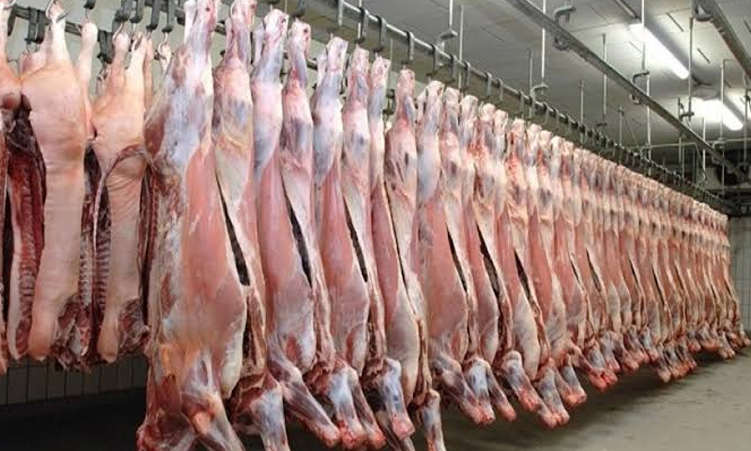
a. Raw meat currently in storage at registered facilities (abattoirs, butcheries, cold storage) under the Ministry of Agriculture, Fisheries, Water and Land Reform, Ministry of Health and Social Services and Ministry of Urban and Rural Development.
Documentation of the origin of such meat and meat products must be carried as proof of evidence.
b. Meat purchased from retailers and butcheries provided proof of purchase is presented.
c. Baled grass, lucerne, straw, forage, hay, silage and crop residue.
3. Provisions to slaughter animals within the areas south of the veterinary cordon fence, excluding the ||Kharas region:
a) Animals which have been standing in registered establishments with approved biosecurity measures (feedlots and quarantine stations) approved by veterinary officials whose retrospective tracing under the Namibia Livestock Traceability System shows no introduction of new animals for the past 30 days are allowed to move to the abattoirs for direct slaughter under a veterinary permit after clinical examination and negative FMD results.
b) Slaughtering of livestock at registered abattoirs is allowed provided that the animals have been isolated for 30 days prior to slaughter and tested negative against FMD.
c) Slaughtering for own home consumption is permitted on condition that the meat and meat products are not moved or transported from the premise of slaughter.
d) Slaughtering at the farm/homestead for sale purposes is prohibited until further notice.
4. Movement of processed animal products countrywide:
a) The movement and trade of the following animal processed products is allowed:
i. Cooked processed meat products
ii. Pasteurised milk and its products
iii. Hides processed up to wet-blue
The signs of animal suffering from FMD are as follow: sores, blisters and wounds in the mouth and between the hooves.
The animals which can be affected by the FMD are: cattle, goats, sheep, pigs and all cloven-hoofed wild animals.
– Kenneth Shoombe is the chief veterinary officer.